J Educ Community Health. 12(2):132-142.
doi: 10.34172/jech.3347
Review Article
A Quarter-Century of Extended Reality in Health Promotion: A Bibliometric and Co-Word Analysis
Zahra Sadeqi-Arani Conceptualization, Data curation, Formal analysis, Funding acquisition, Investigation, Methodology, Project administration, Resources, Software, Supervision, Validation, Visualization, Writing – original draft, Writing – review & editing, 1, * 
Alireza NazemiBidgoli Data curation, Formal analysis, Funding acquisition, Investigation, Methodology, Project administration, Resources, Software, Validation, Visualization, Writing – original draft, 2
Author information:
1Department of Management and Entrepreneurship, Faculty of Financial Science, Management and Entrepreneurship, University of Kashan, Kashan, Iran
2Sports Management, Collage of Farabi, University of Tehran, Qom, Iran
Abstract
Background: Immersive technologies such as virtual reality (VR), augmented reality (AR), and extended reality (XR) are transforming healthcare by enhancing diagnostics, training, and therapy. However, fragmented research has limited its widespread clinical adoption.
Methods: This study employed bibliometric and co-word analyses to examine English-language scientific research indexed in Web of Science, Scopus, and PubMed between 2000 and 2024. Advanced visualization tools, including VOSviewer and the R programming environment, were utilized for dataset analysis.
Results: A total of 3150 documents were retrieved from 1328 journals. The findings revealed a rapid growth trajectory in XR applications within healthcare research, with an annual growth rate of 18.76%. Key thematic areas include "Medical Education", "Mental Health", and "Rehabilitation", with emerging topics such as "Metaverse", "Digital Health", and "Artificial Intelligence" gaining prominence. Topic trends and word clouds underscore XR’s versatility across diverse healthcare domains such as pain management, mental health, and rehabilitation. The co-occurrence network analysis highlights the critical role of XR in health education, illustrating interconnections among themes such as medical education, training, nursing education, and simulation.
Conclusion: The findings emphasize XR’s expanding role in medical training, mental health care, and rehabilitation, advocating for stronger policymaker support to foster international collaborations and adapt regulatory frameworks. Such adaptations are critical to integrating emerging technologies, including artificial intelligence and AR, into healthcare systems. Despite these insights, limitations include language restrictions and potential database bias. Future research should aim to include non-English literature and broaden database coverage to ensure a more comprehensive and globally representative understanding of XR applications in healthcare.
Keywords: Extended reality, Virtual reality, Augmented reality, Healthcare, Medical education
Copyright and License Information
© 2025 The Author(s); Published by Hamadan University of Medical Sciences.
This is an open-access article distributed under the terms of the Creative Commons Attribution License (
https://creativecommons.org/licenses/by/4.0), which permits unrestricted use, distribution, and reproduction in any medium, provided the original work is properly cited.
Please cite this article as follows: Sadeqi-Arani Z, Nazemibidgoli A. A quarter-century of extended reality in health promotion: a bibliometric and co-word analysis. J Educ Community Health. 2025; 12(2):132-142. doi:10.34172/jech.3347
Introduction
The advent of immersive technologies such as virtual reality (VR), augmented reality (AR), and mixed reality (MR) marks a paradigm shift across multiple sectors, particularly healthcare (1). Collectively referred to as extended reality (XR), these technologies offer transformative potential for tackling complex medical challenges through immersive, interactive, and highly personalized solutions (2). VR provides fully immersive simulations of real or imagined environments, whereas AR overlays virtual elements onto the physical world. MR bridges the gap between the two by enabling real-time interaction between digital and physical objects (3). These innovations are applied in patient and nurse education (4,5), surgical training (6), rehabilitation (7), and mental health therapies (8), paving the way toward a more efficient, patient-centered healthcare system.
The integration of VR, AR, and MR into healthcare is driven by a global push for digital transformation and personalized medicine (9). As these technologies evolve, they offer unique advantages in enhancing diagnostic accuracy, surgical precision, therapeutic effectiveness, and healthcare accessibility (10). For instance, VR-based cognitive behavioral therapy has proven effective in treating anxiety disorders and post-traumatic stress disorder (PTSD) (11,12), while XR-assisted physical rehabilitation programs have improved motor function in post-stroke patients and individuals with Parkinson’s disease (13). In surgical settings, AR and VR systems enhance preoperative planning, intraoperative navigation, and resident training, leading to measurable improvements in precision and learning outcomes (6,14). VR-based surgical simulations allow trainees to practice complex procedures in a risk-free environment, while AR-assisted imaging facilitates real-time visualization of anatomical structures during surgery (15).
MR’s ability to integrate physical and virtual environments facilitates collaborative medical scenarios, enabling geographically dispersed healthcare professionals to jointly diagnose and treat patients (16). In education, AR supports appropriate educational solutions for online and blended learning (5). These advancements underscore XR’s critical role in modernizing healthcare and improving patient outcomes. Moreover, these technologies can enhance learning and teaching, reduce costs, and increase student motivation (17).
Despite its promise, XR integration into healthcare is hindered by several interdisciplinary challenges. Medicine, engineering, and psychology- the primary domains involved in XR research-operate under different paradigms, research methodologies, and regulatory standards. For example, engineers prioritize technical feasibility, system optimization, and user interface design (18), clinicians emphasize patient safety, ethical concerns, and evidence-based outcomes (19), and psychologists focus on user cognition, immersion, and long-term behavioral effects (20).
The rapid expansion of XR technologies in healthcare has generated a diverse but fragmented body of literature. Much of the existing research examines isolated applications or specific case studies, offering limited insight into the field’s broader thematic trends and intellectual structure (8). This fragmentation limits researchers’ ability to identify overarching trends and impedes the translation of XR technologies from experimental settings to widespread clinical adoption. Furthermore, the interdisciplinary nature of XR healthcare research, drawing from computer science, medicine, psychology, and engineering, further complicates efforts to map its knowledge landscape comprehensively (21).
Existing reviews are predominantly narrative or systematic, often focusing narrowly on technical implementations or clinical outcomes. However, they frequently fail to address the interdisciplinary synergies and thematic interconnections that shape the field. Bridging these gaps necessitates the use of robust methodologies, such as bibliometric and co-word analyses, which can systematically assess research productivity, reveal collaborative networks, and identify emerging themes and knowledge gaps.
This study aimed to fill these shortcomings by conducting a bibliometric and co-word analysis of VR, AR, and MR applications in healthcare. It sought to answer two critical research questions (RQs), including:
(RQ1): Which journals, publications, researchers, and nations demonstrate the highest productivity in advancing the use of XR within healthcare research?
(RQ2): What are the dominant themes and trends in XR healthcare research?
By addressing these questions, this study aimed to provide a comprehensive overview of XR’s impact on healthcare, identify gaps in knowledge and practice, and offer actionable insights to guide future research and innovation. The findings are expected to benefit researchers, practitioners, and policymakers in fostering interdisciplinary collaboration and promoting evidence-based XR applications in healthcare.
Materials and Methods
This study investigated the application of VR, AR, MR, and XR in healthcare through a systematic review combined with bibliometric analysis. It addresses a critical gap in understanding the trends, patterns, and impacts of immersive technologies, offering a comprehensive view of their current and potential uses in healthcare. The systematic review followed the Preferred Reporting Items for Systematic Reviews and Meta-Analyses (PRISMA) guidelines to ensure a transparent, structured, and replicable process. This approach was chosen to minimize bias and enhance the reliability of the findings (Figure 1) (22).
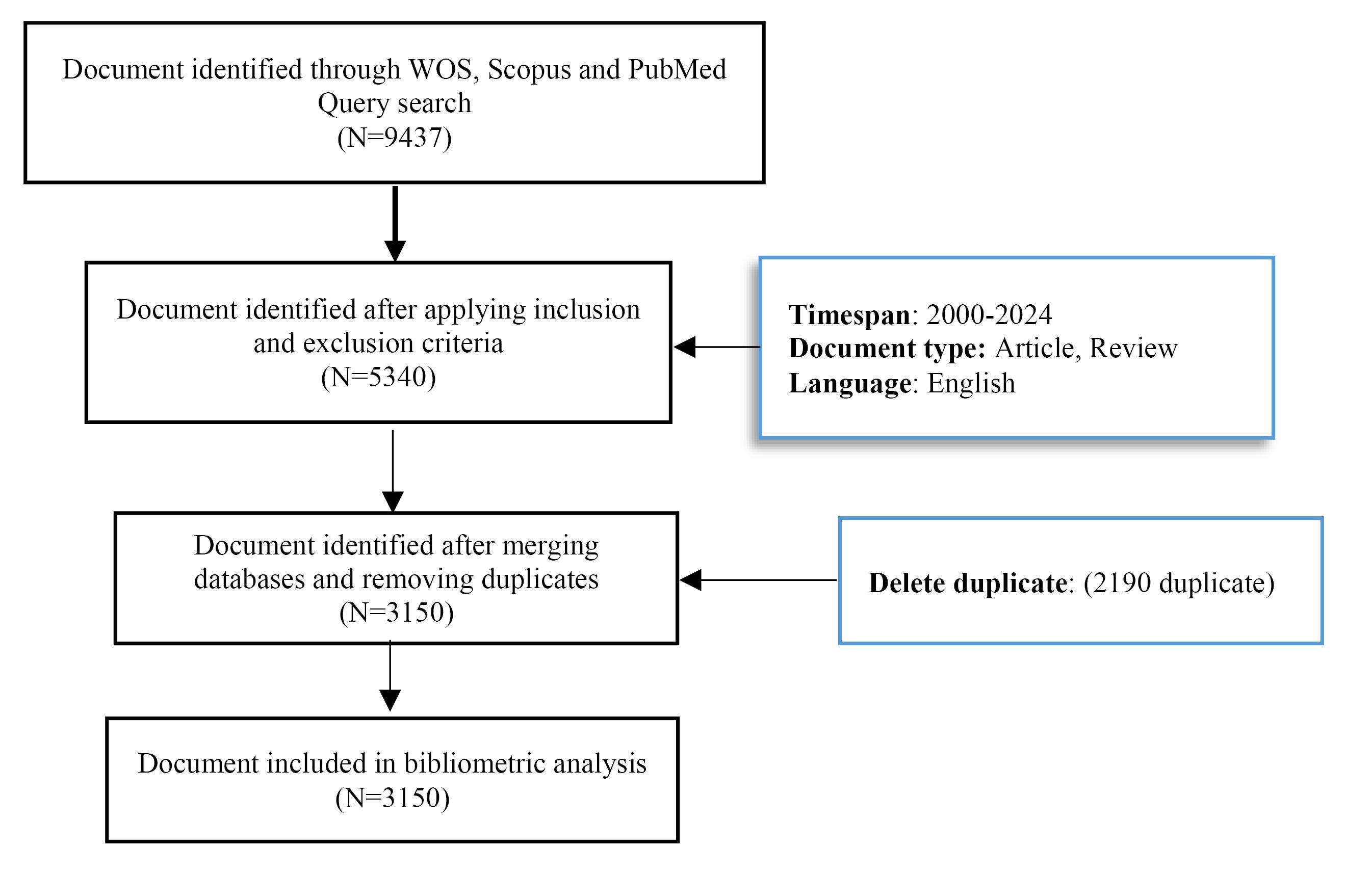
Figure 1.
Search Strategy Framework
.
Search Strategy Framework
The literature search was conducted using three comprehensive and reputable scientific databases: Web of Science (WoS), Scopus, and PubMed. These databases were selected for their extensive coverage of peer-reviewed journals and multidisciplinary content, ensuring a broad and inclusive collection of relevant literature. The search string for virtual reality (including terms such as “virtual reality” OR “augmented reality” OR “mixed reality” OR “extended reality”) was combined with healthcare-related terms (e.g., “healthcare” OR “medic” OR “health”) using the AND operator, focusing on the topic fields (title, abstract, and keywords).
The search was limited to articles published between 2000 and 2024 to ensure the inclusion of recent and relevant studies. Additionally, a language filter was applied to include only English-language articles, which represent the majority of globally disseminated scientific research.
Eligibility criteria were defined to ensure the selection of high-quality and relevant studies as follows:
-
The inclusion criteria included: (a) peer-reviewed articles published in English, (b) studies examining the application of VR, AR, MR, or XR in healthcare contexts, and (c) empirical research, including experimental or observational studies, as well as systematic reviews.
-
The exclusion criteria included: (a) conference abstracts, editorials, and opinion pieces, (b) articles not published in English, and (c) studies unrelated to healthcare or immersive technologies.
Data Analysis
Bibliometric methods were used to quantitatively examine the academic literature, including books, journal articles, and other forms of scholarly output. It employs mathematical and statistical techniques to measure and analyze publication, citation, and collaboration patterns within a specific domain of knowledge (23). In this study, analyses were conducted using specialized software tools, including VOSviewer and R packages. These tools are widely recognized for their robustness in visualizing and analyzing bibliometric data. They facilitated the creation of bibliometric maps, enabling the identification of key trends, thematic clusters, and relationships within the dataset (24,25).
Visualization
To enhance the interpretation and presentation of the findings, various advanced visualization techniques were employed, including network maps, co-occurrence analyses, and trend graphs. Visualizations generated using VOSviewer and R packages provided an intuitive and informative representation of the bibliometric data, offering significant insights into the structural and dynamic aspects of the research domain.
Limitations
It is important to acknowledge that this study has inherent methodological limitations. Restricting the analysis to English-language publications and relying exclusively on WoS, Scopus, and PubMed may have excluded relevant studies published in other languages or indexed in alternative databases (e.g., IEEE Xplore). Future research could expand linguistic and database inclusivity.
Results
The findings are presented in two distinct sections. The first section provides a comprehensive performance evaluation, analyzing the temporal distribution of published studies and examining additional dimensions such as influential authors, journals, documents, and countries. The second section focuses on identifying the key themes in XR applications within healthcare studies.
Performance Evaluation
Descriptive statistical analyses were performed based on data retrieved from three major academic databases, WOS, Scopus, and PubMed. A detailed statistical summary of the analyzed studies is presented in Table 1.
Table 1.
Statistical Summary of the Analyzed Studies
|
Description
|
Results
|
| Timespan |
2000:2024 |
| Sources (Journals) |
1328 |
| Documents |
3150 |
| Annual growth rate % |
18.76 |
| Average citations per doc |
17.47 |
| Authors |
12314 |
| Authors of single-authored docs |
150 |
| Single-authored docs |
169 |
| Co-authors per doc |
5.41 |
| International co-authorships % |
18.92 |
| Article |
2640 |
| Review |
510 |
Table 1 provides a comprehensive overview of the bibliometric trends in XR research within the healthcare domain over 25 years (2000-2024). The dataset comprises 3150 documents sourced from 1328 journals, reflecting the substantial body of knowledge in this field. An annual growth rate of 18.76% underscores the accelerating pace of research and the increasing recognition of VR’s transformative potential in healthcare. Additionally, the average citation rate of 17.47 per document signifies the academic influence and relevance of this research, evidencing its wide acceptance and influence within the scientific community.
Authorship and collaboration metrics further illustrate the global and interdisciplinary nature of XR healthcare research. A vast network of 12314 authors has contributed to this field, with 150 authors producing single-authored works and 169 single-authored documents. Despite these individual contributions, an average of 5.41 co-authors per document reflects a strong tendency toward collaboration, aligning with the interdisciplinary demands of XR research. Furthermore, an international co-authorship rate of 18.92% highlights the field’s extensive global interconnectedness and the vital role of cross-border collaborations in advancing XR applications in healthcare. These findings underscore a research ecosystem that values cooperative multidisciplinary approaches to tackling complex healthcare challenges through VR.
Figure 2 illustrates the exponential increase in the number of published articles focusing on the use of XR in healthcare, providing critical insights into the evolution of this research domain. The graph reveals a pronounced surge in publications beginning around 2015, marking a significant growth in research activity. This trend suggests rising interest and investment in XR applications within the healthcare sector, potentially driven by technological advancements, increased accessibility of XR tools, and increased recognition of their transformative potential in addressing healthcare challenges.
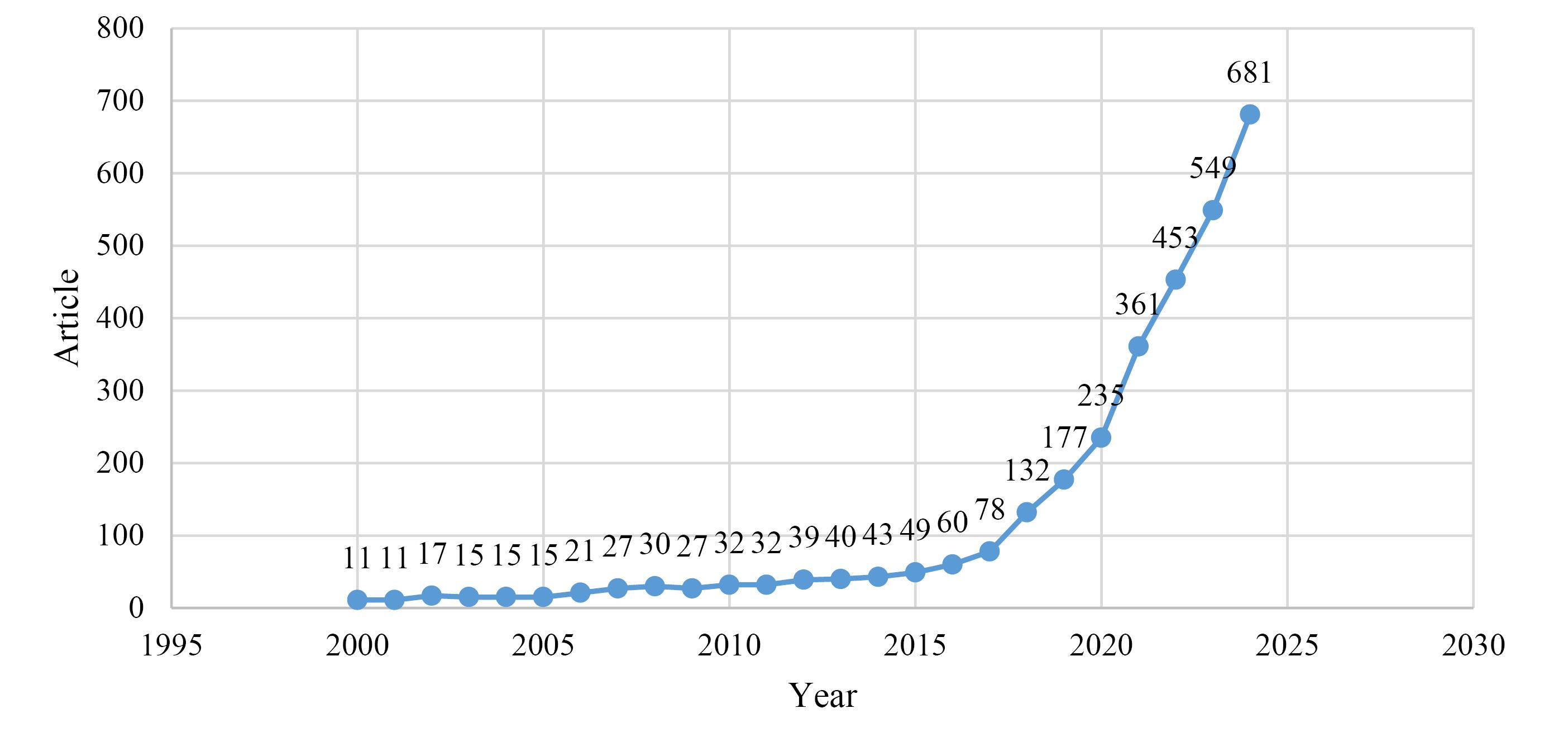
Figure 2.
Annual Scientific Production
.
Annual Scientific Production
To address RQ1, the frequency distribution of authors, journals, documents, and countries contributing to XR application in healthcare research was analyzed. The performance of the top 10 contributors is presented in Tables 2-4. Table 2 lists the 10 leading journals in XR healthcare research.
Table 2.
Top 10 Journals in XR Healthcare Research
|
Rank
|
Sources
|
Articles
|
| 1 |
JMIR Serious Games |
65 |
| 2 |
Journal of Medical Internet Research |
64 |
| 3 |
Cureus Journal of Medical Science |
49 |
| 4 |
BMJ Open |
46 |
| 5 |
Frontiers in Virtual Reality |
46 |
| 6 |
International Journal of Environmental Research and Public Health |
44 |
| 7 |
BMC Medical Education |
43 |
| 8 |
IEEE Access |
39 |
| 9 |
Virtual Reality |
39 |
| 10 |
Frontiers in Psychology |
32 |
The results show that “JMIR Serious Games” and “Journal of Medical Internet Research” have the highest contribution in this domain, publishing 65 and 64 articles, respectively (Table 2). Additionally, about half of all documents (1576) were published across the top 140 journals.
Table 3 provides a compilation of the 10 most frequently cited articles in the field of XR in healthcare. Among the most impactful publications is “The growing field of digital psychiatry: Current evidence and the future of apps, social media, Chatbots, and virtual reality” (26), which has achieved an annual citation rate of 89.75. Another highly influential article, “Virtual reality in the assessment, understanding, and treatment of mental health disorders” (27), has accumulated a total of 649 citations.
Table 3.
Top 10 Most Cited Articles in XR Healthcare
|
Rank
|
Reference
|
Title
|
Total Citations
|
Citations Per Year
|
| 1 |
(27) |
Virtual reality in the assessment, understanding, and treatment of mental health disorders |
649 |
81.13 |
| 2 |
(28) |
The effectiveness of virtual and augmented reality in health sciences and medical anatomy |
457 |
57.13 |
| 3 |
(29) |
State-of-the-art and applications of 3D imaging sensors in industry, cultural heritage, medicine, and criminal investigation |
436 |
27.25 |
| 4 |
(26) |
The growing field of digital psychiatry: Current evidence and the future of apps, social media, chatbots, and virtual reality |
359 |
89.75 |
| 5 |
(30) |
Systematic review on the effectiveness of augmented reality applications in medical training |
326 |
36.22 |
| 6 |
(31) |
Educational applications of the metaverse: Possibilities and limitations |
319 |
79.75 |
| 7 |
(32) |
Virtual reality for health professions education: Systematic review and meta-analysis by the Digital Health Education Collaboration |
318 |
53.00 |
| 8 |
(33) |
Neuroscience of virtual reality: From virtual exposure to embodied medicine |
307 |
51.17 |
| 9 |
(34) |
Can virtual reality improve anatomy education? A randomised controlled study of a computer-generated 3D anatomical ear model |
304 |
16.00 |
| 10 |
(35) |
Treatment of specific phobia in adults |
291 |
16.17 |
Table 3 details each article’s title, total number of citations, and average citations per year, highlighting various XR applications, including mental health treatment, medical education, and technological advancements. Key trends include the prevalence of systematic reviews on XR in medical training, as well as the emergence of new themes such as “Digital Psychiatry” and the “Metaverse”, reflecting the evolving nature of the field.
Table 4 lists the top 10 prolific authors in the field of XR in healthcare, with Lee J being the most productive, authoring 40 articles.
Table 4.
Top 10 Most Prolific Authors in XR Healthcare Research
|
Authors
|
Articles
|
Percent
|
| Lee J |
40 |
1.27 |
| Kim J |
28 |
0.89 |
| Riva G |
28 |
0.89 |
| Navab N |
23 |
0.73 |
| Kim S |
22 |
0.70 |
| Huang C |
20 |
0.63 |
| Lee S |
20 |
0.63 |
| Wang Y |
20 |
0.63 |
| Park J |
18 |
0.57 |
| Zhang Y |
17 |
0.54 |
Figure 3 displays a bar chart illustrating the number of VR-related publications in healthcare across the top 10 contributing countries. The data is divided into single-country publications (SCP), representing research conducted within one nation, and multi-country publications (MCP), which indicate international collaborations. This distinction offers insight into national research productivity and the global collaborative nature of the field, emphasizing the global scope of XR health research.
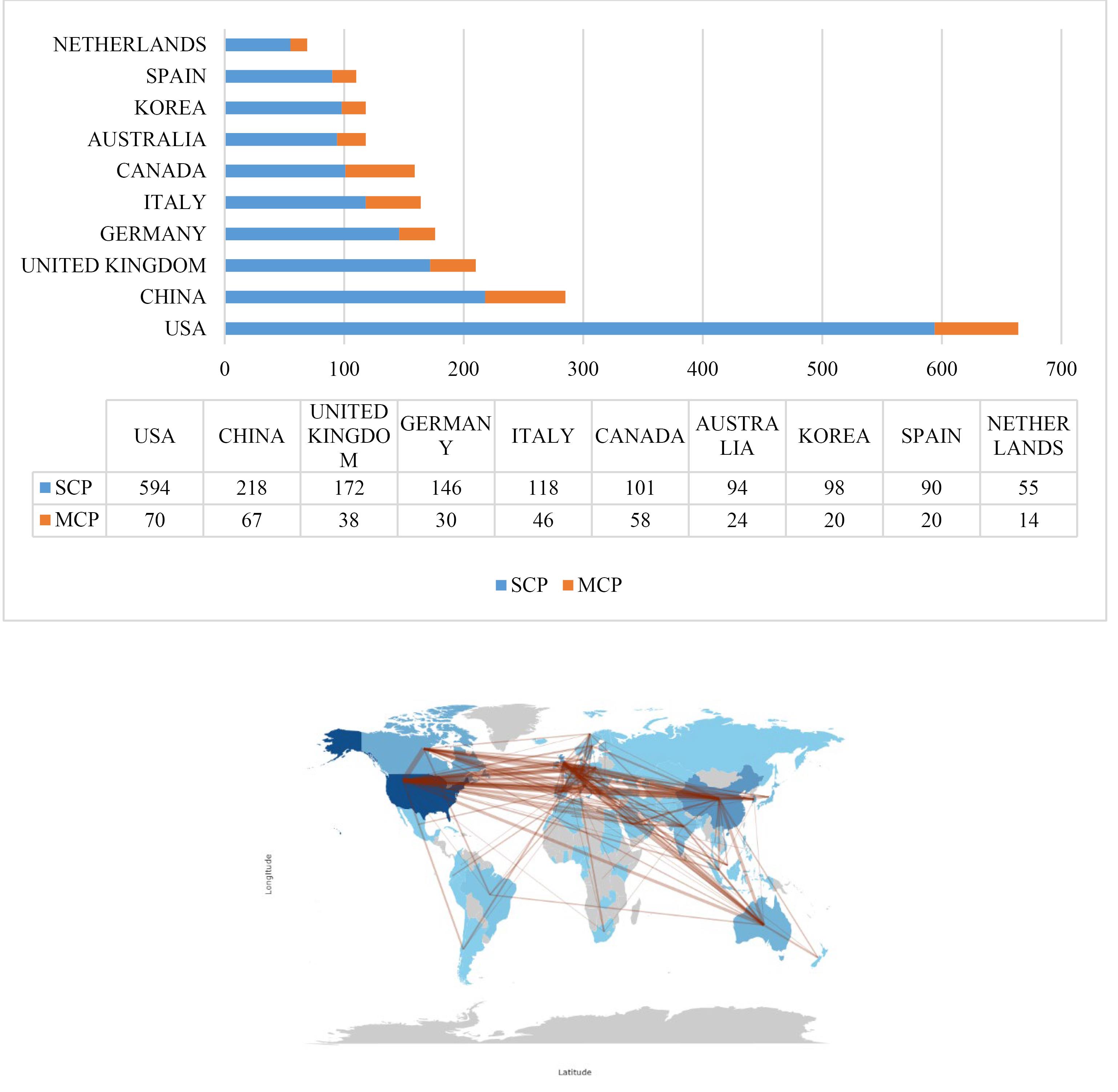
Figure 3.
Top 10 Country and Country Collaboration
.
Top 10 Country and Country Collaboration
According to Figure 3, the United States is the leading contributor to XR health research, with the highest number of publications in both SCP and MCP. This reflects the country’s robust research infrastructure and strong support for innovation in this sector. China and the United Kingdom follow closely, demonstrating substantial contributions and a high level of international collaboration. These trends highlight the pivotal roles of these countries as key players in shaping XR health research and fostering global cooperation through joint research initiatives.
Conceptual Structure
To elucidate the primary research themes associated with the application of XR in healthcare, a co-occurrence word analysis was conducted, accompanied by a visualization of the conceptual structure based on a network of terms spanning the period from 2000 to 2024. This methodological approach is instrumental in revealing the relationships among researched topics, identifying emerging trends, and highlighting pivotal hotspots in domains such as research, innovation, and development (36).
Figure 4 presents a word cloud visualization of XR-related healthcare publications, categorizing data by themes and topics. The largest word, “Virtual Reality,” emphasizes its dominance as the central technology in this research domain. Prominent categories such as “Medical Education” and “Training” highlight XR’s significant role in healthcare teaching and skill development. “Mental Health” and “Rehabilitation” also emerge as significant themes, showcasing XR’s potential in therapeutic applications.
The figure further highlights emerging trends such as “Metaverse”, “Digital Health”, and “Artificial Intelligence”, indicating the evolving landscape of XR applications in health. These smaller categories reflect the expanding scope of research beyond traditional XR uses.
Figure 5 presents a line graph depicting the cumulative occurrences of key terms related to XR in health from 2000 to 2024. The graph shows a significant exponential increase in the frequency of these terms over time, reflecting the growing research interest and activity in this field.
Key observations from the graph highlight the dominance of “Virtual Reality”, which shows the steepest growth, indicating its central role in health-related applications. Emerging trends, such as “Artificial Intelligence”, “Digital Health”, and “Metaverse”, display more recent surges, pointing to newer areas of research. Additionally, “Medical Education” and “Training” exhibit steady growth, reflecting VR’s increasing role in healthcare education.
Figure 6 presents a visual timeline tracking the evolution of research terms related to XR in health from 2002 to 2024. The vertical axis lists key terms, while the horizontal axis indicates the years, with dots marking the first appearance of each term in the literature.
Key observations highlight early research in terms such as “VR”, “AR”, and “Medical Education”, indicating longstanding areas of interest. Emerging terms such as “Metaverse”, “Digital Health”, and “Artificial Intelligence” appear later, signalling recent trends. The timeline also reflects a shift in focus, with terms related to “Medical Training” and “Simulation” appearing earlier, and “Mental Health” and “Rehabilitation” gaining prominence in recent years.
This timeline offers valuable insights into the historical development and changing landscape of XR applications in health research. While it highlights emerging trends and evolving focus areas, it does not account for the frequency, importance, or impact of terms over time. Additionally, the selection of terms may also be incomplete, and factors such as research quality are not considered.
The word co-occurrence network offers a powerful visualization of the interconnections between keywords and concepts within XR in healthcare. This method reveals both the thematic focus and the structural relationships among key terms. In the network, node size corresponds to the frequency of term occurrence, thereby reflecting their prominence within the dataset (37). Edge thickness indicates the strength of associations between terms, which is determined by their co-occurrence frequency in the literature (38). Together, these features provide a dynamic and multifaceted overview of how various concepts interact within the broader context of XR applications in healthcare.
According to Figure 7, the term “virtual reality” acts as the primary hub. This centrality underscores its pivotal role as the foundation of research in the XR healthcare domain. The dense web of connections radiating from this hub illustrates the broad reach and versatility of XR technologies in addressing diverse healthcare challenges. The co-occurrence network’s ability to reveal key themes and clusters offers invaluable insights into the scope of research, helping to identify areas of overlap and potential interdisciplinary integration. These insights form the basis for exploring the thematic clusters in the visualization.
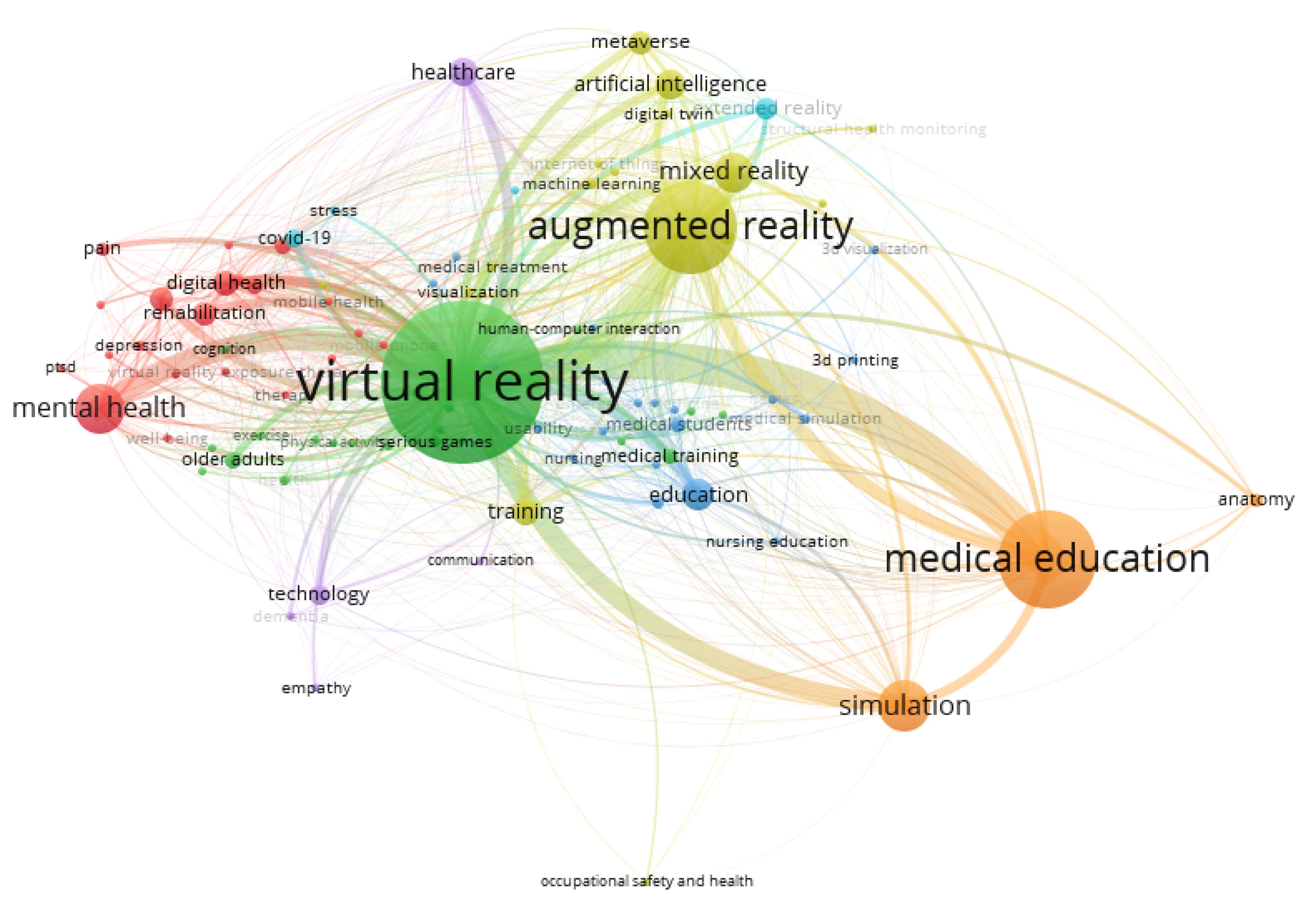
Figure 7.
Co-occurrence Network Visualization
.
Co-occurrence Network Visualization
The co-word analysis revealed three major thematic clusters: (a) medical education and training, (b) mental health and rehabilitation, and (c) technology and development. The co-occurrence network illustrates intriguing interconnections between these clusters, shedding light on how different thematic areas interact and evolve. For example, the strong link between “Medical Education” and “Simulation” suggests that simulation-based training is central to XR applications in healthcare education. This connection emphasizes the importance of immersive, realistic environments in equipping medical professionals with practical skills and confidence. Similarly, terms such as “pain” and “stress” serve as bridges between the “Mental Health” and “Medical Treatment” clusters. This indicates that XR is increasingly explored as a tool for managing pain and stress across various healthcare contexts, from chronic pain relief to perioperative care. These interconnections highlight the versatility of XR and its potential for cross-disciplinary integration, further underscoring the need for a comprehensive study of its applications.
The third cluster represents the convergence of XR with emerging technologies such as artificial intelligence and machine learning, illustrating innovative directions in personalized and predictive healthcare. These insights have enabled us to qualitatively synthesize the evolution and specialization of XR applications across diverse healthcare domains and user groups.
Discussion
This article offers a comprehensive analysis and overview of bibliometric trends in XR research within the healthcare sector over the past 25 years. The dataset encompasses 3,150 documents published across 1328 journals, highlighting the extensive and growing knowledge base in this field. The findings indicate a remarkable annual growth rate of 18.76%, reflecting the rapid expansion in research activity and increasing recognition of XR’s transformative potential in healthcare.
The results demonstrate that the United States, China, and the United Kingdom significantly contribute to XR health research. Several European countries, including Germany, Italy, and the Netherlands, also show significant involvement, particularly in the SCP category. This underscores the important role of European nations in advancing XR applications in healthcare. Moreover, the findings highlight an increasing trend of international research collaborations, where countries share resources and knowledge, accelerating the development and adoption of XR technologies in health (39,40).
The word cloud and trend topics visualization of key terms related to XR in health highlight major themes in the field. Dominant terms such as “VR” and “AR” reaffirm their central role in healthcare research, while “Medical Education”, “Training”, “Mental Health”, and “Rehabilitation” reflect their strong applications (1,4,16,17,41,42). Emerging trends, including “Metaverse”, “Digital Health,” and “Artificial Intelligence”, indicate evolving research directions (40,43-45). The word cloud offers valuable insights into the field’s focus areas, helping researchers identify key themes, relationships, and potential gaps for further investigation.
Beyond the quantitative bibliometric and co-word analyses, this study also incorporated a qualitative thematic categorization derived from the co-occurrence network. Several distinct clusters emerge from the co-occurrence network, each representing a thematic focus within the XR in the health domain. These clusters not only highlight the broad range of XR applications but also provide a lens into specific areas where its impact is most pronounced.
The first prominent cluster centers on medical education and training. This includes terms such as “Medical Education”, “Medical Training”, “Nursing Education”, “Simulation”, and “Anatomy”. The prevalence of these terms indicates that XR is widely used to enhance educational experiences across various healthcare disciplines. Notably, simulation-based training, in particular, has emerged as a critical application area, enabling medical professionals to develop and refine their clinical skills in a controlled, immersive environment (41).
The integration of XR into medical education offers significant advantages. It allows the replication of complex anatomical structures and surgical procedures, thus providing learners with hands-on practice opportunities without posing risks to patients (6,14,46,47). This cluster not only underscores XR’s transformative potential in medical education but also highlights ongoing research efforts aimed at refining and expanding its applications in this area.
Another prominent cluster pertains to mental health and rehabilitation, characterized by terms such as “Mental Health”, “Depression”, “PTSD,” and “Rehabilitation.” This cluster demonstrates VR’s growing role in addressing psychological and neurological conditions. For instance, XR-based therapeutic interventions have demonstrated promise in treating anxiety disorders, phobias, and PTSD by offering controlled and safe environments for exposure therapy (12,48-50). Additionally, XR’s immersive and engaging nature makes it a valuable tool in rehabilitation programs, particularly for stroke survivors and individuals with motor impairments (7,13,19,51,52). By facilitating tailored, patient-specific therapies, XR enhances both the effectiveness and accessibility of mental health and rehabilitation services.
A third major cluster focuses on technology and development, featuring terms such as “Artificial Intelligence”, “machine learning”, “AR”, and “MR”. This cluster highlights the convergence of XR with cutting-edge technologies, reflecting a forward-looking perspective in healthcare research. The integration of artificial intelligence and machine learning with XR over 25 recent years has enabled more sophisticated simulations, real-time analytics, and personalized healthcare solutions (21,33,40,53-55). AR and MR further extend the capabilities of VR by enabling hybrid environments where digital and physical elements coexist seamlessly. These technological advancements not only enhance the functionality of XR systems but also open new avenues for innovative healthcare applications.
One of the key limitations of this study lies in its reliance on bibliometric and co-word analysis, which, while valuable for mapping research trends and thematic structures, does not provide an in-depth evaluation of how XR technologies directly influence specific health promotion interventions, behaviour change mechanisms, or public health outcomes. Moreover, the study lacks a focused examination of how immersive technologies are applied to distinct target populations such as youth, the elderly, or underserved communities within community-based health promotion settings. Future studies should focus on evaluating the quality, effectiveness, and long-term impact of XR applications, particularly in underserved environments. Further investigation is also needed into the integration of XR with emerging technologies such as the metaverse and digital health platforms. Additionally, exploring mechanisms to optimize international collaborations is essential. These efforts can further enhance XR’s role in reducing health disparities and advancing healthcare innovation on a global scale.
Conclusion
This bibliometric and co-word analysis of 3,150 publications over the past 25 years reveals both the rapid growth and the thematic evolution of XR applications in healthcare worldwide. From these observations, several implications emerge. First, the central role of simulation-based training within the thematic network underscores XR’s integration into modern medical education, with significant implications for improving training outcomes and patient safety. Second, the strong emphasis on mental health and rehabilitation reflects a growing recognition of VR’s potential as a powerful tool for addressing complex psychological and neurological conditions. Third, integrating advanced technologies such as artificial intelligence and AR signals a dynamic, fast-evolving research landscape, in which innovation drives more sophisticated and effective XR solutions. This study highlights VR’s transformative potential in healthcare, advancing theoretical understanding of immersive learning and interdisciplinary approaches. Practically, it underscores XR’s applications in medical training, mental health, and rehabilitation, offering actionable insights for healthcare providers and educators. From a societal perspective, XR addresses critical health challenges, including improving access to mental health services and enhancing the training of healthcare professionals in underserved regions.
Acknowledgments
The authors express their gratitude to the Vice Chancellor for Research at the University of Kashan for facilitating access to the scientific resources used in this study.
Competing Interests
The authors declare no conflict of interests.
Ethical Approval
Not applicable.
Funding
The study received no financial support from any funding agency.
References
- Barteit S, Lanfermann L, Bärnighausen T, Neuhann F, Beiersmann C. Augmented, mixed, and virtual reality-based head-mounted devices for medical education: systematic review. JMIR Serious Games 2021; 9(3):e29080. doi: 10.2196/29080 [Crossref] [ Google Scholar]
- Kourtesis P. A comprehensive review of multimodal XR applications, risks, and ethical challenges in the metaverse. Multimodal Technol Interact 2024; 8(11):98. doi: 10.3390/mti8110098 [Crossref] [ Google Scholar]
- Bhowmik AK. Virtual and augmented reality: human sensory-perceptual requirements and trends for immersive spatial computing experiences. J Soc Inf Disp 2024; 32(8):605-46. doi: 10.1002/jsid.2001 [Crossref] [ Google Scholar]
- Plotzky C, Lindwedel U, Sorber M, Loessl B, König P, Kunze C. Virtual reality simulations in nurse education: a systematic mapping review. Nurse Educ Today 2021; 101:104868. doi: 10.1016/j.nedt.2021.104868 [Crossref] [ Google Scholar]
- Nazemi Bidgoli A, Alipour S, Sadeqi-Arani Z. Application of the unified theory of acceptance and use of augmented reality technology in the development and promotion sports with the moderating role of consumer inertia. Sports Bus J 2024; 4(4):13-27. doi: 10.22051/sbj.2024.46443.1142 [Crossref] [ Google Scholar]
- Mao RQ, Lan L, Kay J, Lohre R, Ayeni OR, Goel DP. Immersive virtual reality for surgical training: a systematic review. J Surg Res 2021; 268:40-58. doi: 10.1016/j.jss.2021.06.045 [Crossref] [ Google Scholar]
- Ehioghae M, Montoya A, Keshav R, Vippa TK, Manuk-Hakobyan H, Hasoon J. Effectiveness of virtual reality-based rehabilitation interventions in improving postoperative outcomes for orthopedic surgery patients. Curr Pain Headache Rep 2024; 28(1):37-45. doi: 10.1007/s11916-023-01192-5 [Crossref] [ Google Scholar]
- Bell IH, Pot-Kolder R, Rizzo A, Rus-Calafell M, Cardi V, Cella M. Advances in the use of virtual reality to treat mental health conditions. Nat Rev Psychol 2024; 3(8):552-67. doi: 10.1038/s44159-024-00334-9 [Crossref] [ Google Scholar]
- Singh B, Kaunert C, Ravesangar K, Arora MK, Lal S. Digital transformation in smart healthcare canvas of augmented and virtual reality: prominent health gateways in global context. In: Managing the Health Risks of Climate Change. Hershey, PA: IGI Global Scientific Publishing; 2025. p. 179-206. doi: 10.4018/979-8-3693-4183-4.ch008.
- Lastrucci A, Wandael Y, Barra A, Ricci R, Maccioni G, Pirrera A. Exploring augmented reality integration in diagnostic imaging: myth or reality?. Diagnostics (Basel) 2024; 14(13):1333. doi: 10.3390/diagnostics14131333 [Crossref] [ Google Scholar]
- López-Ojeda W, Hurley RA. Extended reality technologies: expanding therapeutic approaches for PTSD. J Neuropsychiatry Clin Neurosci 2022; 34(1):A4-5. doi: 10.1176/appi.neuropsych.21100244 [Crossref] [ Google Scholar]
- Menon A, Adwaidh CR, Joju A, Rithik VR, Krishnadas J. Virtual reality graded exposure therapy for phobia and PTSD. In: 2024 Parul International Conference on Engineering and Technology (PICET). Vadodara, India: IEEE; 2024. p. 1-5. doi: 10.1109/picet60765.2024.10716175.
- Demeco A, Zola L, Frizziero A, Martini C, Palumbo A, Foresti R. Immersive virtual reality in post-stroke rehabilitation: a systematic review. Sensors (Basel) 2023; 23(3):1712. doi: 10.3390/s23031712 [Crossref] [ Google Scholar]
- Birlo M, Edwards PJE, Clarkson M, Stoyanov D. Utility of optical see-through head mounted displays in augmented reality-assisted surgery: a systematic review. Med Image Anal 2022; 77:102361. doi: 10.1016/j.media.2022.102361 [Crossref] [ Google Scholar]
- Iqbal AI, Aamir A, Hammad A, Hafsa H, Basit A, Oduoye MO. Immersive technologies in healthcare: an in-depth exploration of virtual reality and augmented reality in enhancing patient care, medical education, and training paradigms. J Prim Care Community Health 2024; 15:21501319241293311. doi: 10.1177/21501319241293311 [Crossref] [ Google Scholar]
- Ali AA, Dafoulas GA, Augusto JC. Collaborative educational environments incorporating mixed reality technologies: a systematic mapping study. IEEE Trans Learn Technol 2019; 12(3):321-32. doi: 10.1109/tlt.2019.2926727 [Crossref] [ Google Scholar]
- Nazemi Bidgoli A, Hatefi Afhsar L, Sadeqi-Arani Z. Developing an augmented reality technology acceptance model in sports science education: a mix model of TRI 20 and UTAUT. AI Tech Behav Soc Sci 2024; 2(4):41-53. doi: 10.61838/kman.aitech.2.4.5 [Crossref] [ Google Scholar]
- Chakilam C, Kandalam Sunil DT, Sivakami R, Suresh K, Negi AS, Suresh T. Immersive augmented reality collaboration platforms for future workplace productivity team innovation and virtual co working spaces. In: Proceedings of the International Conference on Sustainability Innovation in Computing and Engineering (ICSICE 2024). Atlantis Press; 2025. p. 1583-93. doi: 10.2991/978-94-6463-718-2_132.
- Morgan JW, Patel RA, Campbell S. Practical considerations of clinical XR (AR/VR) deployments. Front Virtual Real 2025; 6:1517402. doi: 10.3389/frvir.2025.1517402 [Crossref] [ Google Scholar]
- Makransky G, Borre-Gude S, Mayer RE. Motivational and cognitive benefits of training in immersive virtual reality based on multiple assessments. J Comput Assist Learn 2019; 35(6):691-707. doi: 10.1111/jcal.12375 [Crossref] [ Google Scholar]
- Claudia tom Dieck M, Han DI, Jung T. When XR meets the metaverse: advancing new realities in an evolving space. Comput Human Behav 2025; 163:108481. doi: 10.1016/j.chb.2024.108481 [Crossref] [ Google Scholar]
- Page MJ, McKenzie JE, Bossuyt PM, Boutron I, Hoffmann TC, Mulrow CD. The PRISMA 2020 statement: an updated guideline for reporting systematic reviews. BMJ 2021; 372:n71. doi: 10.1136/bmj.n71 [Crossref] [ Google Scholar]
- Sadeqi-Arani Z, Roozmand O. A review of three decades using agent-based modelling and simulation in marketing and consumer behavior. J Optim Ind Eng 2024; 16(2):257-73. doi: 10.22094/joie.2023.1991052.2087 [Crossref] [ Google Scholar]
- Donthu N, Kumar S, Mukherjee D, Pandey N, Lim WM. How to conduct a bibliometric analysis: an overview and guidelines. J Bus Res 2021; 133:285-96. doi: 10.1016/j.jbusres.2021.04.070 [Crossref] [ Google Scholar]
- Sadeqi-Arani Z, Kadkhodaie A. A bibliometric analysis of the application of machine learning methods in the petroleum industry. Results Eng 2023; 20:101518. doi: 10.1016/j.rineng.2023.101518 [Crossref] [ Google Scholar]
- Torous J, Bucci S, Bell IH, Kessing LV, Faurholt-Jepsen M, Whelan P. The growing field of digital psychiatry: current evidence and the future of apps, social media, chatbots, and virtual reality. World Psychiatry 2021; 20(3):318-35. doi: 10.1002/wps.20883 [Crossref] [ Google Scholar]
- Freeman D, Reeve S, Robinson A, Ehlers A, Clark D, Spanlang B. Virtual reality in the assessment, understanding, and treatment of mental health disorders. Psychol Med 2017; 47(14):2393-400. doi: 10.1017/s003329171700040x [Crossref] [ Google Scholar]
- Moro C, Štromberga Z, Raikos A, Stirling A. The effectiveness of virtual and augmented reality in health sciences and medical anatomy. Anat Sci Educ 2017; 10(6):549-59. doi: 10.1002/ase.1696 [Crossref] [ Google Scholar]
- Sansoni G, Trebeschi M, Docchio F. State-of-the-art and applications of 3D imaging sensors in industry, cultural heritage, medicine, and criminal investigation. Sensors (Basel) 2009; 9(1):568-601. doi: 10.3390/s90100568 [Crossref] [ Google Scholar]
- Barsom EZ, Graafland M, Schijven MP. Systematic review on the effectiveness of augmented reality applications in medical training. Surg Endosc 2016; 30(10):4174-83. doi: 10.1007/s00464-016-4800-6 [Crossref] [ Google Scholar]
- Kye B, Han N, Kim E, Park Y, Jo S. Educational applications of metaverse: possibilities and limitations. J Educ Eval Health Prof 2021; 18:32. doi: 10.3352/jeehp.2021.18.32 [Crossref] [ Google Scholar]
- Kyaw BM, Saxena N, Posadzki P, Vseteckova J, Nikolaou CK, George PP. Virtual reality for health professions education: systematic review and meta-analysis by the digital health education collaboration. J Med Internet Res 2019; 21(1):e12959. doi: 10.2196/12959 [Crossref] [ Google Scholar]
- Riva G, Wiederhold BK, Mantovani F. Neuroscience of virtual reality: from virtual exposure to embodied medicine. Cyberpsychol Behav Soc Netw 2019; 22(1):82-96. doi: 10.1089/cyber.2017.29099.gri [Crossref] [ Google Scholar]
- Nicholson DT, Chalk C, Funnell WR, Daniel SJ. Can virtual reality improve anatomy education? A randomised controlled study of a computer-generated three-dimensional anatomical ear model. Med Educ 2006; 40(11):1081-7. doi: 10.1111/j.1365-2929.2006.02611.x [Crossref] [ Google Scholar]
- Choy Y, Fyer AJ, Lipsitz JD. Treatment of specific phobia in adults. Clin Psychol Rev 2007; 27(3):266-86. doi: 10.1016/j.cpr.2006.10.002 [Crossref] [ Google Scholar]
- Sadeqi-Arani Z, Janavi E. The global researches trends in customer knowledge management (CKM). Iran J Inf Process Manag 2024; 39(2):267-97. doi: 10.22034/jipm.2024.711532 [Crossref] [ Google Scholar]
- Concari A, Kok G, Martens P. Recycling behaviour: mapping knowledge domain through bibliometrics and text mining. J Environ Manage 2022; 303:114160. doi: 10.1016/j.jenvman.2021.114160 [Crossref] [ Google Scholar]
- Li T, Bai J, Yang X, Liu Q, Chen Y. Co-occurrence network of high-frequency words in the bioinformatics literature: Structural characteristics and evolution. Appl Sci 2018; 8(10):1994. doi: 10.3390/app8101994 [Crossref] [ Google Scholar]
- Zhao J, Mao J, Tan J. Global trends and hotspots in research on extended reality in sports: a bibliometric analysis from 2000 to 2021. Digit Health 2022; 8:20552076221131141. doi: 10.1177/20552076221131141 [Crossref] [ Google Scholar]
- Nguyen HS, Voznak M. A bibliometric analysis of technology in digital health: exploring health metaverse and visualizing emerging healthcare management trends. IEEE Access 2024; 12:23887-913. doi: 10.1109/access.2024.3363165 [Crossref] [ Google Scholar]
- Abbas JR, Chu MM, Jeyarajah C, Isba R, Payton A, McGrath B. Virtual reality in simulation-based emergency skills training: a systematic review with a narrative synthesis. Resusc Plus 2023; 16:100484. doi: 10.1016/j.resplu.2023.100484 [Crossref] [ Google Scholar]
- Kneebone R. Simulation in surgical training: educational issues and practical implications. Med Educ 2003; 37(3):267-77. doi: 10.1046/j.1365-2923.2003.01440.x [Crossref] [ Google Scholar]
- Ogundiya O, Rahman TJ, Valnarov-Boulter I, Young TM. Looking back on digital medical education over the last 25 years and looking to the future: narrative review. J Med Internet Res 2024; 26:e60312. doi: 10.2196/60312 [Crossref] [ Google Scholar]
- Chengoden R, Victor N, Huynh-The T, Yenduri G, Jhaveri RH, Alazab M. Metaverse for healthcare: a survey on potential applications, challenges and future directions. IEEE Access 2023; 11:12765-95. doi: 10.1109/access.2023.3241628 [Crossref] [ Google Scholar]
- Bhugaonkar K, Bhugaonkar R, Masne N. The trend of metaverse and augmented & virtual reality extending to the healthcare system. Cureus 2022; 14(9):e29071. doi: 10.7759/cureus.29071 [Crossref] [ Google Scholar]
- Neyem A, Cadile M, Burgos-Martínez SA, Farfán Cabello E, Inzunza O, Alvarado MS. Enhancing medical anatomy education with the integration of virtual reality into traditional lab settings. Clin Anat 2025; 38(3):249-68. doi: 10.1002/ca.24213 [Crossref] [ Google Scholar]
- Laspro M, Groysman L, Verzella AN, Kimberly LL, Flores RL. The use of virtual reality in surgical training: implications for education, patient safety, and global health equity. Surgeries 2023; 4(4):635-46. doi: 10.3390/surgeries4040061 [Crossref] [ Google Scholar]
- Cieślik B, Mazurek J, Rutkowski S, Kiper P, Turolla A, Szczepańska-Gieracha J. Virtual reality in psychiatric disorders: a systematic review of reviews. Complement Ther Med 2020; 52:102480. doi: 10.1016/j.ctim.2020.102480 [Crossref] [ Google Scholar]
- Ferraioli F, Culicetto L, Cecchetti L, Falzone A, Tomaiuolo F, Quartarone A. Virtual reality exposure therapy for treating fear of contamination disorders: a systematic review of healthy and clinical populations. Brain Sci 2024; 14(5):510. doi: 10.3390/brainsci14050510 [Crossref] [ Google Scholar]
- Shaikh TA, Dar TR, Sofi S. A data-centric artificial intelligent and extended reality technology in smart healthcare systems. Soc Netw Anal Min 2022; 12(1):122. doi: 10.1007/s13278-022-00888-7 [Crossref] [ Google Scholar]
- Ferreira B, Menezes P. Gamifying motor rehabilitation therapies: challenges and opportunities of immersive technologies. Information 2020; 11(2):88. doi: 10.3390/info11020088 [Crossref] [ Google Scholar]
- Denche-Zamorano A, Rodriguez-Redondo Y, Barrios-Fernandez S, Mendoza-Muñoz M, Castillo-Paredes A, Rojo-Ramos J. Rehabilitation is the main topic in virtual and augmented reality and physical activity research: a bibliometric analysis. Sensors (Basel) 2023; 23(6):2987. doi: 10.3390/s23062987 [Crossref] [ Google Scholar]
- Regassa Hunde B, Debebe Woldeyohannes A. Future prospects of computer-aided design (CAD) – a review from the perspective of artificial intelligence (AI), extended reality, and 3D printing. Results Eng 2022; 14:100478. doi: 10.1016/j.rineng.2022.100478 [Crossref] [ Google Scholar]
- Zhang Z, Wen F, Sun Z, Guo X, He T, Lee C. Artificial intelligence-enabled sensing technologies in the 5G/internet of things era: from virtual reality/augmented reality to the digital twin. Adv Intell Syst 2022; 4(7):2100228. doi: 10.1002/aisy.202100228 [Crossref] [ Google Scholar]
- Devagiri JS, Paheding S, Niyaz Q, Yang X, Smith S. Augmented reality and artificial intelligence in industry: trends, tools, and future challenges. Expert Syst Appl 2022; 207:118002. doi: 10.1016/j.eswa.2022.118002 [Crossref] [ Google Scholar]