J Educ Community Health. 12(2):110-121.
doi: 10.34172/jech.4732
Original Article
Can a Positive Activity Intervention Based on a Mobile Application Improve Well-Being?
Majid Barati Conceptualization, Funding acquisition, Investigation, Methodology, Project administration, Supervision, Validation, Writing – original draft, 1 
Hanieh Jormand Conceptualization, Data curation, Formal analysis, Investigation, Methodology, Project administration, Validation, Writing – original draft, Writing – review & editing, 2, *
Babak Moeini Conceptualization, Investigation, Methodology, 1
Saeid Bashirian Investigation, 1
Amir Keshavarzi Conceptualization, Methodology, 3
Salman Khazaei Formal analysis, Validation, 4
Negin Ahmadvand Data curation, 5
Author information:
1Social Determinants of Health Research Center, Department of Public Health, Hamadan University of Medical Sciences, Hamadan, Iran
2Urology and Nephrology Research Center, Hamadan University of Medical Sciences, Hamadan, Iran
3Behavioral Disorders and Substance Abuse Research Center, Hamadan University of Medical Sciences, Hamadan, Iran
4Department of Epidemiology, School of Public and Social Determinants of Health Research Center, Hamadan University of Medical Sciences, Hamadan, Iran
5Students Research Committee, Hamadan University of Medical Sciences, Hamadan, Iran
Abstract
Background: Positive psychology emphasizes the importance of mental well-being. This study evaluated the effectiveness of a mobile application-based positive psychology intervention (PPI) in improving the well-being of university students in Hamadan, Iran.
Methods: Using a multistage, cluster-randomized approach, this experimental study was conducted on 251 students from two universities in Hamadan, west of Iran, in 2021. The intervention consisted of fourteen educational courses delivered via a mobile app. Flourishing, depressive symptoms, and fear of COVID-19 were measured three months post-intervention. The obtained data were analyzed using SPSS-23 with chi-squared tests, independent samples t-tests, and IBM AMOS-26 software (P<0.05).
Results: At the initial assessment, there were no notable discrepancies between the educational and comparison groups in flourishing, positive affect, hope, need satisfaction, and person-activity fit. However, three months after the intervention, the academic group demonstrated significant improvements in the aforementioned variables, except for depressive symptoms and fear of COVID-19, which decreased significantly. Thus, 34% of the variance of flourishing, a 0.05% decrease in depression, and 28% fear of COVID-19 can be explained based on the PPI. In other words, PPI had more effects on flourishing, fear of COVID-19, and depressive symptoms, respectively.
Conclusion: The mobile app-based PPI could noticeably improve well-being indicators in the experimental group. Given the importance of enhancing happiness and well-being while reducing depression among the students, these findings underscore the need for serious actions, updated educational plans focused on well-being, and strategies to decrease health anxiety.
Keywords: Well-being, Happiness, Health anxiety, Youth, Positive psychology intervention, Mobile application
Copyright and License Information
© 2025 The Author(s); Published by Hamadan University of Medical Sciences.
This is an open-access article distributed under the terms of the Creative Commons Attribution License (
https://creativecommons.org/licenses/by/4.0), which permits unrestricted use, distribution, and reproduction in any medium, provided the original work is properly cited.
Please cite this article as follows: Barati M, Jormand H, Moeini B, Bashirian S, Keshavarzi A, Khazaei S, et al. Can a positive activity intervention based on a mobile application improve well-being?. J Educ Community Health. 2025; 12(2):110-121. doi:10.34172/jech.4732
Introduction
Positive Psychology Interventions
The field of positive psychology has recently gained prominence as a vital approach to enhancing mental well-being and fostering resilience. This discipline specifically focuses on cultivating positive emotions, personal strengths, and virtues to promote well-being (1). Over the last decades, positive psychology interventions (PPIs) have been developed to increase happiness, engagement in life, and psychological well-being by targeting positive emotions, thoughts, behaviors, and need satisfaction. These interventions are grounded in the belief that individuals can actively enhance their well-being through intentional practices and activities (2). In this regard, positive education, as PPI development and application, is considered in university and school settings (3,4). On the other hand, PPIs have the potential to improve healthy behaviors in individuals (5). More precisely, people with greater positive psychological well-being have been shown to engage in more healthy behaviors, independent of negative psychological states (e.g., depression and anxiety) that can impede circumstance management (6).
The Effectiveness of Positive Psychological Interventions on University Students’ Well-Being and Mental Health
University students often face various challenges, including academic pressures, social difficulties, and personal responsibilities, which can negatively impact their mental health (7). The COVID-19 pandemic has further exacerbated these challenges, contributing to increased anxiety and fear among the students (8). In this context, developing effective interventions to promote mental health and well-being among the students is crucial. In addition, PPIs in this setting can go further from improvement or prevention by developing positive effects (9). The pandemic has highlighted the need for accessible and flexible mental health support systems for students in their daily environments.
The Use and Effectiveness of Positive Psychology Interventions via Mobile Applications
Mobile app-based interventions offer a promising approach to addressing these challenges. They provide accessible, convenient, and personalized tools for students to engage in positive activities at their own pace and in their own environment (10). This flexibility is crucial for students facing barriers to traditional mental health services, such as time constraints or geographical limitations. Mobile apps can deliver interventions in a format that is engaging and easy to use, potentially increasing adherence and effectiveness.
Moreover, these apps can leverage technology to provide real-time feedback, reminders, and support, which can enhance the students’ engagement and motivation (11). The interactive nature of mobile apps allows for a more dynamic and personalized experience, which can be tailored to each student’s individual needs and preferences. This customized approach can help ensure that the intervention is more effective and sustainable. Geerling et al have reported high acceptability and adherence rates, with users appreciating the design and usability of these apps (12,13).
Research shows that mobile app-based positive psychology interventions can foster positive emotions, strengthen character traits, and improve overall mental health, especially for college students and adolescents. Users of these interventions commonly report benefits such as increased engagement, achievement, and adaptability in diverse environments. For example, the WELLBE BD-app received positive ratings from its users regarding the exercises it provided. However, existing studies generally find only small and statistically nonsignificant effects of these interventions on measurable mental health outcomes (12).
This study evaluates how effective a mobile app-based positive psychology intervention is in improving mental health among university students in Hamadan, Iran. It examines the intervention’s impact on students’ flourishing, depressive symptoms, and fear of COVID-19, while also exploring how positive cognition mediates the relationship between flourishing and depressive symptoms. By examining the effectiveness of this intervention, this study contributes to a broader understanding of how PPIs can be adapted and implemented in diverse settings to enhance mental health outcomes.
The findings of this study have important implications for universities seeking to promote student well-being and for policymakers interested in developing accessible mental health interventions. With the ongoing increase in mental health challenges among the students, innovative solutions, such as mobile app-based interventions, can play an essential part in promoting students’ mental well-being (14). These interventions can be integrated into university mental health services, thereby providing a comprehensive approach to student well-being.
Furthermore, this study highlights the potential of technology in mental health care. By using mobile apps and mental health services, it is possible to reach and support a wider audience—including those who may not have access to traditional face-to-face therapy (15). This may aid in bridging the gap in mental health care, particularly in regions with limited resources.
Nevertheless, considering the limitations of interventions based on happiness or PPIs in the students, especially in the context of Iran (16), the present study will evaluate the effectiveness of the mobile app-based PPI in improving the well-being of university students in Hamadan. In addition, the study seeks to investigate the mediating role of positive thoughts, behaviors, and need satisfaction in increasing well-being and to evaluate how PPIs affect well-being.
It is expected that the present study will provide a suitable and practical solution to improve mental health and, consequently, obtain beneficial results in enhancing the students’ quality of life.
Theoretical Frameworks
Recent practical investigations have explored whether giving thanks or performing kind acts can improve happiness. The positive activity model (PAM) presented by Lyubomirsky and Layous suggests that predictors for positive activities may be more (or less) effective in enhancing well-being. Accordingly, positive activities increase positive emotions, thoughts, behaviors, and need satisfaction, thereby enhancing well-being (11).
In this new theory, Lyubomirsky’s Theory of Sustainable Happiness, or the PAM, has several constructs. They include positive activity implementation, behavior characteristics, individual characteristics, individual-behavioral fit, and mediating variables (positive emotions, positive cognition, and positive behavior, and the need satisfaction that have the potential to help and improve mental health and well-being; it should be noted that well-being is regarded as the last construct of the model). Simply, positive psychological well-being is a broad construct encompassing a number of factors, such as positive affect, optimism, life purpose, personal growth, life satisfaction, and happiness. Importantly, it is not simply the absence of psychological distress. It should be noted that this study examines psychological outcomes, such as improved well-being or reduced depressive symptoms(Figure 1).
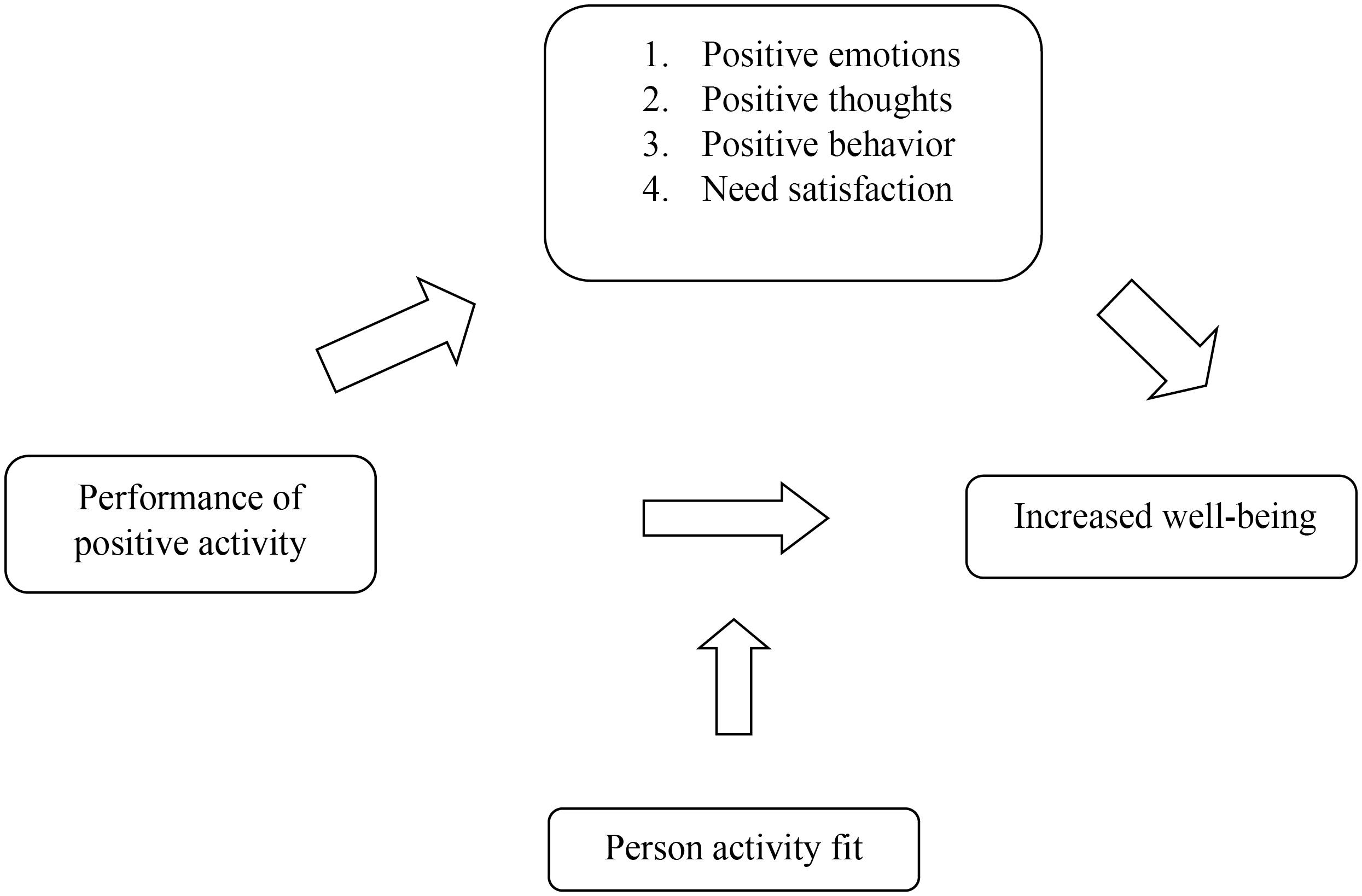
Figure 1.
Model of Lyubomirsky’s Theory of Sustainable Happiness, or the Positive Activity Model
Source. (11)
.
Model of Lyubomirsky’s Theory of Sustainable Happiness, or the Positive Activity Model
Source. (11)
Thus, this present study has focused on evaluating the effectiveness of the mobile app-based PPI in improving the well-being of university students in Hamadan and investigating the mediating role of positive cognitions and need satisfactions in increasing well-being (Figure 2).
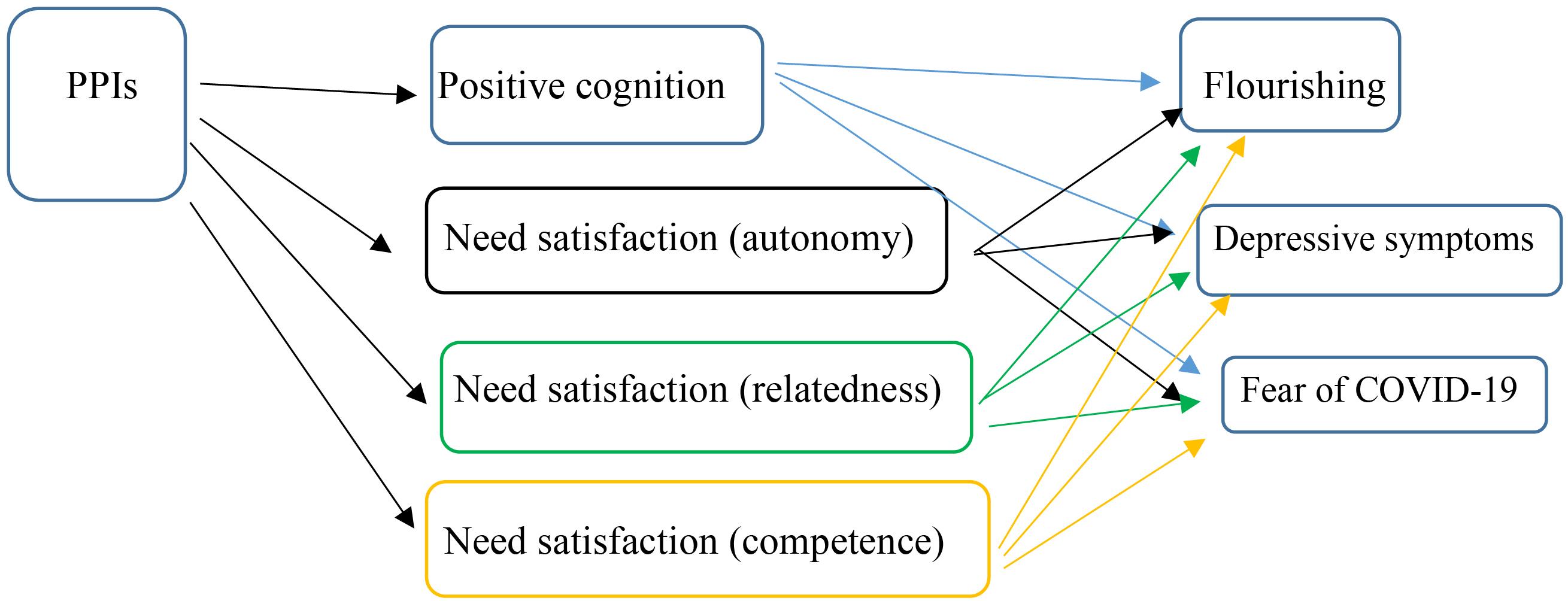
Figure 2.
The Framework of the Effect of PPIs on Flourishing, Fear of COVID-19, and Depressive Symptoms, and the Mediating Role of Positive Cognitions and Need Satisfaction in Increasing Well-Being. Note. PPI: Positive psychology intervention
.
The Framework of the Effect of PPIs on Flourishing, Fear of COVID-19, and Depressive Symptoms, and the Mediating Role of Positive Cognitions and Need Satisfaction in Increasing Well-Being. Note. PPI: Positive psychology intervention
Materials and Methods
This experimental study was conducted on 252 students from two universities in Hamadan, west of Iran, in 2021. The sample size was determined to be 256 students (17), considering a confidence level of 95% (α = 0.05), a test power of 80% (β = 0.2), and an expected difference of 0.37 (M1 – M2). Given a 10% attrition rate, 251 participants were selected for the experimental and control groups, with three students excluded and two students included who were willing to participate. A multistage, cluster-randomized approach was used for sampling. Out of 4 universities in Hamadan, one university was assigned to the intervention group and another to the control group through cluster sampling. Then, participants of the intervention and control groups were randomly selected from among the university students through simple random sampling.Figure 3 shows the related flow diagram.
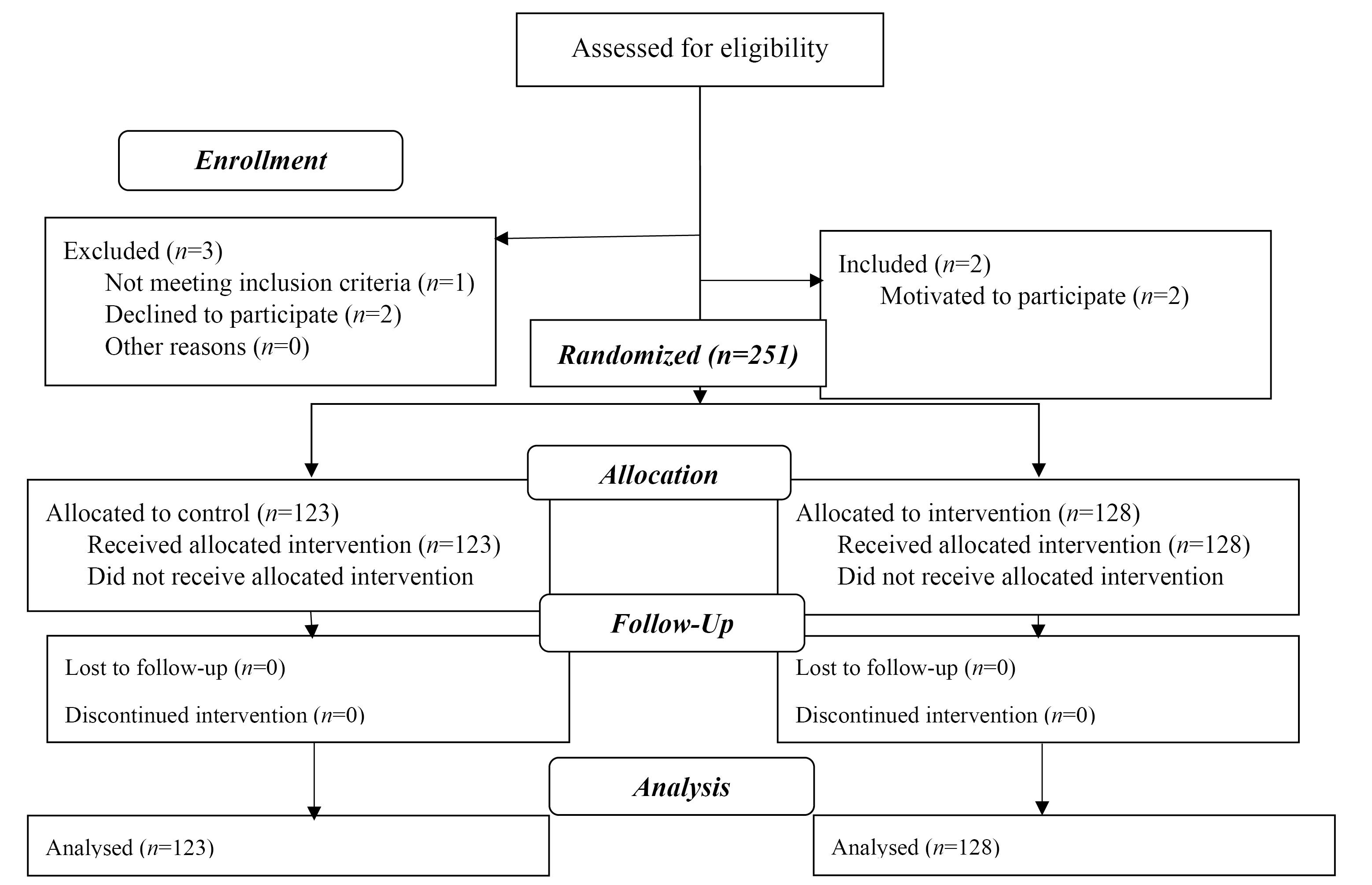
Figure 3.
Flow Chart of the Study
.
Flow Chart of the Study
The inclusion criteria were being a student of one Hamadan university, being aged > 18 years old, being able to complete the survey, not having a known history of or currently psychiatric disorders or psychiatric medications (self-statement), having access to a smartphone and the Internet 1–2 hours per day, and filling out a consent form to participate in the study.
On the other hand, the exclusion criteria included missing one educational session or more and not being available to fill out the questionnaire in the posttest phase.
The data-gathering instruments were a self-statement tool based on previous studies (18,19), which consisted of three sections, including demographic information (e.g., age, gender, marital status, educational level, and internet usage status) and the outcome measurements as follows:
Final Outcomes
Flourishing: The Flourishing Scale (F.S.) is the foundation of well-being and describes and evaluates the eudaimonic aspects of psychological functioning. The questionnaire and evaluation instrument of flowering (F.S.) has eight questions with a 7-option Likert-type scale (ranging from completely disagree to completely agree). The minimum and maximum scores are 8 and 56, and a higher score indicates a higher level (20). The Persian version of this scale was reported to have acceptable validity and reliability and a Cronbach’s alpha of 0.82 for the Iranian population (21).
Depressive symptoms: The Center for Epidemiological Studies in Depression has compiled a valid and reliable international questionnaire that is a combination of several questionnaires in the field of depression (CESD-10). This questionnaire has several versions of 4, 10, and 20 questions. In this research, a 10-question questionnaire will be used to examine depression during the last week, and a 4-point Likert-type scale will be used, ranging from 0 (never or no time) to 3 (all of the time). A higher score denotes a higher depression score (22). The Persian version of this tool has been measured in different populations; the validity and reliability of the scale were acceptable (23,24). It was suitable for the nonclinical, general population among the students.
Fear of COVID-19: The Fear of COVID-19 Scale (FCV-19S) is employed for evaluating the fear of COVID-19 (20,24). The Persian version of FCV-19S can be utilized as a scientific and valid tool (25).
Primary Outcomes
Positive emotion: The positive affect subscale in the Positive and Negative Affect Schedule (PANAS) consists of 20 items designed to measure the two mood dimensions of negative and positive affect during the past week. Each subscale has ten items and a 5-point Likert-type scale ranging from “very slightly or not at all” to 5 = “extremely”. A higher score indicates a higher score of the emotions (26,27); this research used ten questions related to measuring positive emotions (e.g., determined, interested, and proud). The minimum and maximum scores are 10 and 50, and a higher score represents higher positive emotions (26,27). The Persian version of this scale has acceptable validity and reliability and a Cronbach’s alpha of 0.79 (28).
Positive Cognition: This variable was measured using the eight items of the Adult Hope Scale (AHS) (29). According to Snyder et al, hope is a thought process with two components: active thinking and paths regarding goals, as well as a cognitive appraisal for achieving targets. Each dimension is necessary for forming and determining the amount of hope through purposeful behavior and causes adaptability and physical and mental health. This instrument has minimum and maximum scores of 8 and 32 and is on a 4-option Likert scale ranging from 1 (strongly disagree) to 4 (strongly agree) (29). The Persian version of this scale has acceptable validity and reliability and a Cronbach’s alpha of 0.86 (30).
Psychological need satisfaction: In the Basic Psychological Need Satisfaction and Frustration Scale (BPNSFS), three satisfaction subscales were used, including “autonomy”, “relatedness”, and “competence” satisfaction (31). The Persian version of this scale has acceptable validity and reliability and a Cronbach’s alpha for the overall psychological need satisfaction score of 0.81. For each of the satisfaction subscales of self-adherence, communication, and competence, the Cronbach’s alpha was 0.68, 0.70, and 0.76, respectively. This is a 5-point Likert-type scale ranging from 1, signifying “completely disagree”, to 5, indicating “completely agree” (32).
Person activity fit: It evaluates mobile app-based teaching methods and materials based on previous studies (22). Person activity fit, the perceived suitability, satisfaction, and availability of educational material of the intervention were measured using a checklist with four items on a 5-point Likert-type scale, where 1 to 5 represent completely disagree up to (completely agree). The items asked for (1) whether they enjoy the education, (2) whether they find the education easy to practice, (3) whether they want to continue to practice, and (4) whether they are interested in knowing more about similar education (αPosttest = 0.70; αprevious study = 0.68).
Developed Educational Intervention
The educational intervention was based on the mobile app CHOCOLATE, which has several functional services: a menu of chat boxes for the forum and educational films, video clips, audiobooks, e-books, and PowerPoint points, and an interesting messages menu (Supplementary file 1, Table S1). Then, based on previous studies, the educational intervention designed only for the intervention group was probably implemented in 14 90-minute group sessions based on positive psychotherapy sessions (18,23). To familiarize and introduce the application, training sessions on how to use this app and send exercises and assignments were held for the participating students.
Moreover, the first session focused on the purpose of the training classes, positivity, and positive thinking, and the second session concentrated on empowerment and identification of personal strengths. The third session emphasized positive emotions and affect and goal achievement. The fourth session stressed good memories against bad memories. The fifth session was allocated to understanding the power of forgiveness, and session six involved gratitude and thanksgiving. Session seven focused on reviewing previous sessions and highlighted self-esteem, self-worth, and self-confidence. Session eight addressed hope and positivity, and the last session concentrated on reviewing held sessions (goals, educational topics, durations, and teaching methods and materials are presented in Supplementary file 1).
One psychologist, a health education and promotion specialist, and another research team performed the educational package. Positivity, positive thinking, positive emotions and affect, hope, anger management, an understanding of the power of forgiveness, methods of expressing gratitude, reduction of the fear of COVID-19, self-esteem, strengthening the sense of self-efficacy, practical communication skills, the skill of happiness, and the way to overcome procrastination were discussed.
Students in the intervention group were allocated to two groups with 64 members; the educational program was performed for 128 students through online courses on the Android platform and the learning management system of Hamadan University of Medical Sciences, once a week in a friendly atmosphere. In addition, an educational and motivational message was sent to the subjects at the end of weekly educational sessions. Further, a social media group was provided for information exchange and other communication. Three months after the educational intervention, one follow-up session was held to review the contents and activities. Moreover, at the end of the study, one educational session was held for the control group, and educational content was provided to them.
For ethical concerns, in addition to the license from the Ethics Committee of Hamadan University of Medical Sciences, written informed consent was received from all participants. Furthermore, the study was registered in the Iranian Registry of Clinical Trials (IRCT) website (identifier: IRCT20200914048719N2).
Results
Overall, 251 students aged between 18 years old and 43 years old studying in Hamadan universities were examined in this study. The average age of the experimental and control groups was 21.57 ± 3.23 years and 21.42 ± 2.76 years, according to the independent t-test. None of the groups showed significant differences (P = 0.698, Table 1).
Table 1.
The Comparison of the Frequency Distribution of Experimental and Control Group Characteristics at Baseline
|
Variables
|
Experimental group (n=128)
|
Control group (n=123)
|
P
value
|
|
Number
|
%
|
Number
|
%
|
| Marital status |
Single |
123 |
96.1 |
112 |
91.1 |
0.102*a |
| Married |
5 |
3.9 |
11 |
8.9 |
| Educational level |
BSc |
122 |
95.3 |
120 |
97.6 |
0.572*a |
| MSc, and PhD |
6 |
4.6 |
3 |
2.4 |
| Gender |
Male |
38 |
29.7 |
48 |
39 |
0.119*a |
| Female |
90 |
70.3 |
75 |
61 |
Internet usage
(h/wk) |
Low (1-3) |
4 |
3.1 |
4 |
3.3 |
0.646*b |
| Medium (4-7) |
36 |
28.1 |
41 |
33.3 |
| High (8-10) |
40 |
31.2 |
41 |
33.3 |
| Very high ( > 10) |
48 |
37.5 |
37 |
30.1 |
Note. aP values based on the independent samples t-test; bP-valuesbased on the chi-square test. * The level of significance was set at P < 0.05.
Based on results, the experimental and control groups demonstrated no significant differences in flourishing, the Positive Affect Schedule, Adult Hope Scale, need satisfaction, and person activity fit before the educational intervention. However, 3 months after the education, the experimental group indicated significant enhancement in each of the variables, except in fear of COVID-19 and depressive symptoms, which had more significant reductions (Table 2). It is essential to mention that all 128 individuals participated in fourteen educational sessions.
Table 2.
The Comparison of the Average Scores of Outcomes in Experimental and Control Groups Before and Three After the Intervention
|
Variables
|
Group
|
Before the intervention
M±SD
|
Three months after the intervention M±SD
|
P
value
|
| Flourishing |
Experimental |
45.42 ± 6.25 |
45.81 ± 4.50 |
0.058 |
| Control |
43.81 ± 6.53 |
42.44 ± 7.54 |
0.131 |
|
P value |
0.048 |
0.001 |
|
| Depressive symptoms |
Experimental |
10.79 ± 3.92 |
11.54 ± 4.42 |
0.115 |
| Control |
11.72 ± 4.69 |
12.53 ± 3.61 |
0.078 |
|
P value |
0.090 |
0.055 |
|
| Fear of COVID-19 |
Experimental |
14.89 ± 2.20 |
11.76 ± 3.84 |
0.001 |
| Control |
16.46 ± 6.89 |
17.89 ± 7.27 |
0.092 |
|
P value |
0.058 |
0.001 |
|
| The positive affect schedule |
Experimental |
32.72 ± 7.14 |
32.83 ± 8.18 |
0.097 |
| Control |
31.54 ± 6.79 |
31.78 ± 7.35 |
0.791 |
|
P value |
0.182 |
0.286 |
|
| Adult Hope Scale |
Experimental |
24.38 ± 3.55 |
24.69 ± 3.83 |
0.895 |
| Control |
23.54 ± 3.94 |
23.34 ± 4.53 |
0.716 |
|
P value |
0.077 |
0.011 |
|
| Need satisfaction |
Experimental
control |
Experimental |
14.79 ± 2.78 |
15.67 ± 2.45 |
0.008 |
| Control |
14.21 ± 3.21 |
13.93 ± 3.58 |
0.536 |
|
P-value |
0.131 |
0.001 |
|
Experimental
control |
Experimental |
15.57 ± 2.67 |
15.57 ± 2.43 |
0.980 |
| Control |
14.93 ± 2.95 |
14.63 ± 3.34 |
0.497 |
|
P-value |
0.069 |
0.012
|
|
Experimental
control |
Experimental |
16.57 ± 2.50 |
16.67 ± 1.76 |
0.682 |
| Control |
16.07 ± 2.55 |
15.58 ± 2.81 |
0.173 |
|
P-value |
0.117 |
0.001
|
|
| Person activity fit |
Experimental |
14.77 ± 2.90 |
15.36 ± 2.62 |
0.106 |
| Control |
13.95 ± 3.45 |
13.69 ± 3.44 |
0.533 |
|
P value |
0.045 |
0.001
|
|
Note. M: Mean; SD: Standard deviation; BPNSFS: The Basic Psychological Need Satisfaction and Frustration Scale.
The results of the paired t-test (P = 0.05) revealed that the mean score of flourishing and the satisfaction of the needs were significantly increased in the experimental group, while the mean score of fear of COVID-19 decreased in this group (P = 0.01, Table 2). It is essential to mention that in the effect of PPIs framework (Figure 2), 3 months after PPIs, the experimental group demonstrated no significant enhancement in the positive affects variable (Tables 1 and 2). Therefore, the present study sought to examine the effectiveness of PPIs in other variables in this framework rather than that of PPIs in the positive affect variable (Figure 2).
Evaluation of the Structural Model (the Inner Model)
The AMOS analysis highlighted the model’s predictive capability by examining the coefficient of determination (R2) for endogenous latent variables and presenting the analysis outcomes: the positive psychological interventions, 34% of the variance of flourishing, a 0.05% decrease in depression, and 28% fear of COVID-19 (Figure 3 and Table 3) can be explained based on the PPI. In other words, in the present study, the PPI was more effective in flourishing, fear of COVID-19, and depressive symptoms, respectively.
Table 3.
Results of the Structural Model
|
Relationship
|
R2(Path coefficient)
|
P
value
|
Direction
|
Decision
|
| Intervention ≥ Positive cognition |
0.160 |
0.011 |
Positive |
Supported * |
| Intervention ≥ Autonomy |
0.277 |
0.000 |
Positive |
Supported ** |
| Intervention ≥ Relatedness |
0.161 |
0.010 |
Positive |
Supported * |
| Intervention ≥ Competence |
0.231 |
0.000 |
Positive |
Supported ** |
| Positive cognition ≥ Flourishing |
0.318 |
0.000 |
Positive |
Supported ** |
| Positive cognition ≥ Fear of COVID-19 |
0.104 |
0.051 |
Positive |
Not supported |
| Positive cognition ≥ Depressive symptoms |
-0.155 |
0.254 |
Negative |
Not supported |
| Autonomy ≥ Flourishing |
0.164 |
0.002 |
Positive |
Supported ** |
| Autonomy ≥ Fear of COVID-19 |
-0.127 |
0.024 |
Negative |
Supported * |
| Autonomy ≥ Depressive symptoms |
-0.155 |
0.015 |
Negative |
Supported * |
| Relatedness ≥ Flourishing |
0.228 |
0.000 |
Positive |
Supported ** |
| Relatedness ≥ Fear of COVID-19 |
-0.018 |
0.747 |
Negative |
Not supported |
| Relatedness ≥ Depressive symptoms |
-0.043 |
0.489 |
Negative |
Not supported |
| Competence ≥ Flourishing |
0.270 |
0.000 |
Positive |
Supported ** |
| Competence ≥ Fear of COVID-19 |
-0.183 |
0.000 |
Negative |
Supported ** |
| Competence ≥ Depressive symptoms |
-0.128 |
0.043 |
Negative |
Supported * |
Note. Research hypotheses were significant at **P < 0.01 and *P < 0.05.
Structural Model Analysis
Based on the results, there was no significant PPI association for positive emotions. Thus, positive cognition and all subscales of need satisfaction, including the sense of autonomy (BPNSFS-A), relatedness (BPNSFS-R), and competence (BPNSFS-C), were involved for additional mediation analysis (Figure 3 and Table 3).
However, an association was found between PPI (β = 0.160, t = 2.56, P < 0.01) and positive cognition, autonomy (β = 0.277, t = 4.56, P< 0.001), relatedness (β = 0.161, t = 2.57, P < 0.01), and competence (β = 0.231, t = 3.76, P < 0.001). In other words, there was a positive association between PPI and positive cognition and need satisfaction (P < 0.01). Therefore, autonomy was the best predictor of PPI compared to others.
Positive cognition was related to flourishing (β = 0.32, t = 6.107, P< 0.001). Hence, positive cognition was the best predictor of flourishing rather than other mediator outcomes.
Among three satisfaction subscales, including “autonomy”, “relatedness”, and “competence” satisfaction, competence was associated (β = 0.270, t = 5.108, P< 0.001) with flourishing. Accordingly, it was a better predictor of flourishing than the other subscales.
Moreover, competence was negatively associated (β = -0.183, t = 3.302, P< 0.001) with fear of COVID-19 and depressive symptoms (β = -0.128, t = 2.028, P< 0.043) (Figure 4).
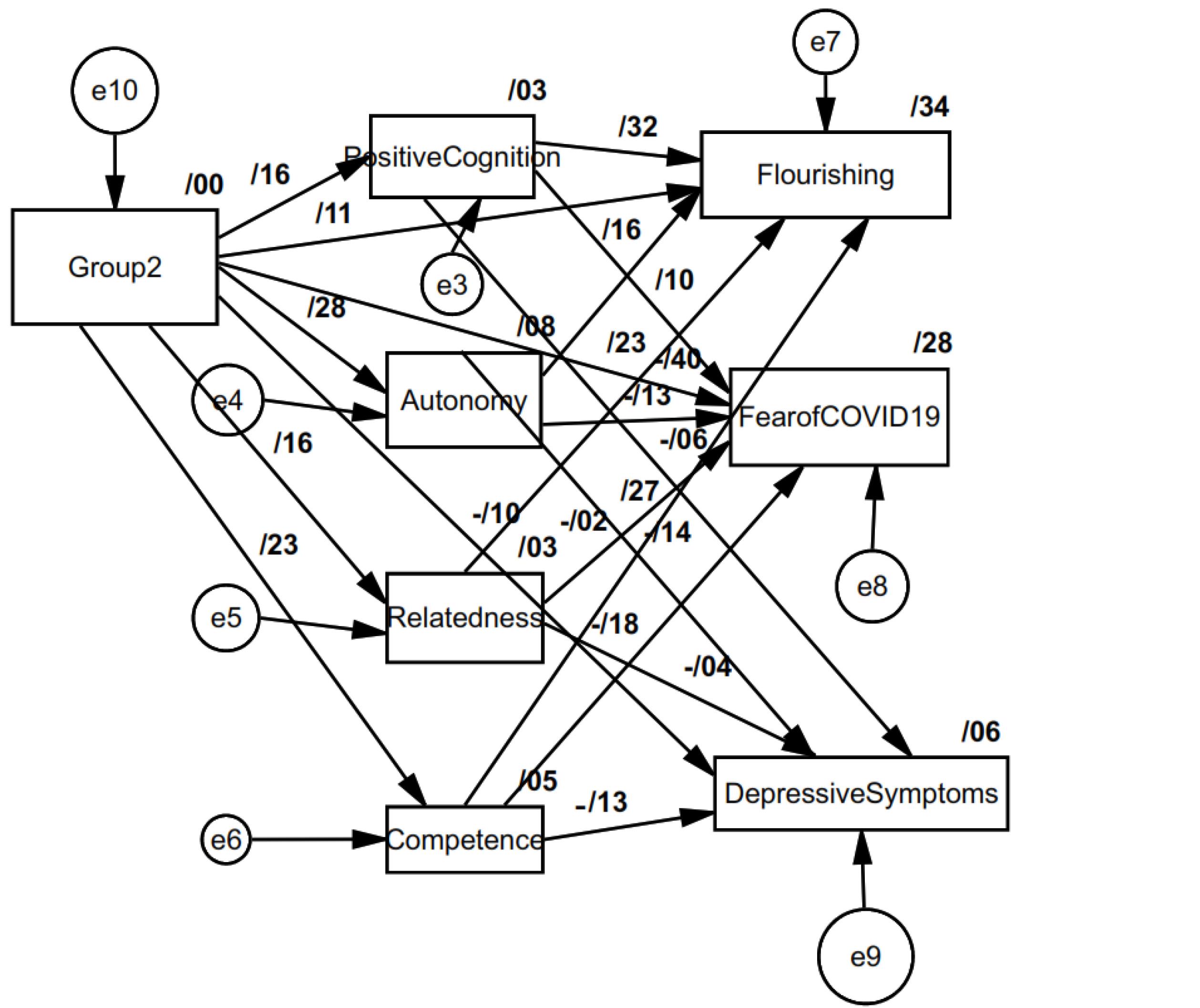
Figure 4.
Path Coefficients of the Mediation Role of Positive Cognition and Need Satisfaction in Increasing Well-Being and Determining How the PPI Affects Well-Being. Note. PPI: Positive psychology intervention
.
Path Coefficients of the Mediation Role of Positive Cognition and Need Satisfaction in Increasing Well-Being and Determining How the PPI Affects Well-Being. Note. PPI: Positive psychology intervention
Mediation Analysis
On the other hand, the mediating analysis demonstrated partial mediation on the relationship between the PPI and flourishing through positive cognition and a sense of autonomy, relatedness, and competence. The results revealed the significant indirect effect of PPI on flourishing (P = 2.114, 90% confidence interval [CI]: 1.201 ~3.126).
Likewise, PPI had a significant indirect impact on fear of COVID-19 (P = -1.402, 90% CI: -1.402~ -0.351).
Furthermore, the results indicated the significant direct effect of PPI on positive cognition (b = 1.346, P = 0.011), and the direct impact of positive cognition on flourishing was found to be significant (b = 0.409, P = 0.001).
Hence, positive cognition partially mediated the relationship between PPI and flourishing, and positive cognition completely mediated the relationship between PPI and fear of COVID-19. No mediation effect was observed between PPI and depressive symptoms. Table 4 provides a summary of the mediation analysis.
Table 4.
Results of Mediation Analysis
|
Relationship
|
Direct
effect
|
Indirect
effect
|
Confidence interval
|
P
value
|
Conclusion
|
|
Lower bound
|
Upper bound
|
| PPI ≥ positive cognition ≥ flourishing |
0.409 (0.001) |
2.114 |
1.201 |
3.126 |
0.001 |
Partial mediation |
| PPI ≥ positive cognition ≥ fear of COVID-19 |
0.161 (0.057) |
-0.832 |
-1.402 |
-0.351 |
0.003 |
Full mediation |
| PPI ≥ positive cognition ≥ Depressive symptoms |
-0.059 (0.329) |
-0.217 |
-0.548 |
0.061 |
0.193 |
No mediation effect |
| PPI ≥ autonomy ≥ flourishing |
0.280 (0.001) |
2.220 |
1.201 |
3.126 |
0.001 |
Partial mediation |
| PPI ≥ autonomy ≥ fear of COVID-19 |
-0.262 (0.024) |
-1.301 |
-1.402 |
-0.351 |
0.003 |
Partial mediation |
| PPI ≥ autonomy ≥ depressive symptoms |
-0.184 (0.025) |
-0.287 |
-0.548 |
0.061 |
0.193 |
No mediation effect |
| PPI ≥ relatedness ≥ flourishing |
0.420 (0.001) |
2.220 |
1.201 |
3.126 |
0.001 |
Partial mediation |
| PPI ≥ relatedness ≥ fear of COVID-19 |
-0.039 (0.747) |
-1.301 |
-1.402 |
-0.351 |
0.003 |
Full mediation |
| PPI ≥ relatedness ≥ depressive symptoms |
-0.060 (0.489) |
-0.287 |
-0.548 |
0.061 |
0.193 |
No mediation effect |
| PPI ≥ competence ≥ flourishing |
0.613 (0.001) |
2.220 |
1.201 |
3.126 |
0.001 |
Partial mediation |
| PPI ≥ competence ≥ fear of COVID-19 |
-0.502 (0.001) |
-1.301 |
-1.402 |
-0.351 |
0.003 |
Partial mediation |
| PPI ≥ competence ≥ depressive symptoms |
0.219 (0.043) |
-0.287 |
-0.548 |
0.061 |
0.193 |
No mediation effect |
Note. PPI: Positive psychology intervention.
Table 5 represents the model fit indices, indicating that the fit of the model was adequate.
Table 5.
Measurement Model-Fit Index
|
Measure
|
Recommended Value
|
Result Value
|
Remark
|
| Chi-square/degree of freedom |
< 3 |
2.492 |
Good fit |
| Comparative fit index |
> 0.8 |
0.751 |
Good fit |
| Goodness-of-fit index |
> 0.9 |
0.881 |
Good fit |
| Root mean square error of approximation |
< 0.1 |
0.031 |
Good fit |
Discussion
This research explored the impact of a PPI delivered via a mobile app on the mental health of university students in Hamadan, Iran. The PPI consisted of fourteen lessons within a mobile app to target positive emotions, thoughts, behaviors, and psychological need satisfaction. Our findings revealed that the group using the app showed significantly more considerable improvements in flourishing, positive affect, hope, and need satisfaction three months after the program compared to the control group. Notably, three months following the educational component, the app-using group also demonstrated a more significant decline in fear of COVID-19 than the control group. Although the app was associated with decreased depressive symptoms, the reduction was not statistically significant. Mediation analysis results indicated that positive thinking completely accounted for the relationship between flourishing and lower depressive symptoms.
The enhanced levels of flourishing, positive emotions, hope, and need fulfillment are consistent with the core principles of positive psychology, prioritizing cultivating positive emotions, strengths, and virtues to enhance well-being (1). Specifically, the rise in flourishing, measured by the Flourishing Scale (20), suggests that the intervention effectively boosted eudaimonic well-being, characterized by positive relationships, competence, and a sense of purpose. Similarly, the improvements in positive affect, as measured by the Positive and Negative Affect Schedule (27), confirmed that the intervention successfully increased positive emotions, such as interest, determination, and pride. Furthermore, the increased hope, measured via the AHS (29), represents that the intervention promoted a sense of agency and pathways toward achieving personal goals, which are key elements for psychological well-being. Finally, the improved satisfaction of psychological needs (31) indicates that the app helped students feel more independent, connected to others, and capable.
These findings should be interpreted through Lyubomirsky’s Theory of Sustainable Happiness, also known as the PAM (11). The PAM proposes that engaging in positive activities can boost overall well-being through various factors, including the way these activities are put into practice, individual characteristics, the degree of fit between the person and the activity, and mediating elements (positive emotions, positive thinking, positive behaviors, and satisfaction of needs). The positive changes in the experimental group highlight that the mobile app-based PPI successfully activated these mechanisms.
A particularly noteworthy finding is the significant reduction in COVID-19-related fear in the intervention group three months after the program, suggesting that the PPI had a later, yet important, effect on diminishing anxiety linked to the pandemic. As the students participated in positive activities and nurtured positive emotions, they might have developed more effective strategies for coping with their fears and anxieties. It is possible that the educational content in the app taught better coping mechanisms and assisted in reframing negative thoughts related to the fear of COVID-19. As these new strategies became more established over time, this may have led to a more significant reduction in fear. This finding is in line with the results of earlier studies, demonstrating that perceived control and positive reappraisal are effective coping mechanisms during stressful events (33). Further, with the evolution of the pandemic, improved public health information and increased vaccination rates may have resulted in a more informed and potentially less fearful outlook (34).
Based on the results, 34% of the variance of flourishing, a 0.05% decrease in depression, and 28% fear of COVID-19 can be explained based on the PPI. In other words, in the present study, PPI played a more effective role in flourishing, fear of COVID-19, and depressive symptoms. Our results confirmed a decrease in depressive symptoms following the positive activity intervention; however, the actual reduction was merely 0.05%, which is extremely small and statistically significant. The effect size was negligible, suggesting a slight impact on depression. While the intervention demonstrated more robust positive effects on flourishing and reduction of fear of COVID-19, the near-zero improvement in depressive symptoms should be transparently communicated. This ensures that future interventions, policies, and educational efforts are based on the realistic appraisals of what such programs can achieve, particularly for depression.
Another finding of the present study was that autonomy was the best predictor of PPI rather than other subscales of need satisfaction. These results that may corroborate those of Kiltz et al (35), and may allow a free discussion about opinions and expressing emotions in the chat box, caused students to feel more autonomous.
In addition, competence was the best predictor of flourishing rather than other subscales of need satisfaction, indicating that online collaboration together in small groups and interaction with teachers in the mobile app might have caused more competence, which conforms to the results of other studies (36,37).
Our findings also demonstrated that positive cognition was the best predictor of flourishing rather than other mediator outcomes. Some studies emphasize the important role of positive cognition in mental health (38,39); it may reduce negative thinking while increasing positive thinking in students, thereby causing flourishing.
It is noteworthy that the intervention did not result in statistically significant reductions in depressive symptoms. In this regard, some studies suggested that positive psychology can be applied to benefit youths and focused on directly promoting positive psychology constructs (e.g., hope and quality of life) so as to reduce adverse symptomatology (e.g., anxiety and depression) (9,40).
However, other factors (e.g., access to mental health care, pre-existing conditions, and socioeconomic factors) could also influence levels of depression (41).
It was found that PPI partially mediated the flourishing relationship, suggesting that PPI may have indirectly promoted more positive thought patterns, subsequently boosting flourishing. The mediation effect provides further evidence for the influence of cognitive processes on the connection between well-being and mental health, underscoring the potential for cognitive interventions to enhance overall psychological health (42).
When interpreting these results, several limitations need to be taken into consideration. First, the study sample was restricted to university students in Hamadan, Iran, which may have limited the generalizability of our findings to other populations. To remove this limitation and make the findings applicable, it is suggested that further studies focus on other populations, such as non-student adults or individuals from different cultural backgrounds. Second, reliance on self-report measures may have introduced social desirability bias. Third, while the sample size was determined using power analysis (17), a larger sample size could identify significant changes in depressive symptoms. Fourth, the study did not assess the long-term impacts of the intervention beyond the three-month follow-up.
Additionally, the research took place amid the COVID-19 pandemic, a circumstance that may have influenced participants’ responses and experiences. Accordingly, future research should address these limitations by including more diverse samples, employing objective measures of well-being, and conducting longer-term follow-up assessments. It would also be valuable to investigate which specific components of the PPI are most effective and to identify individual factors that may moderate the intervention’s effectiveness. For instance, future research can examine the role of personality traits, coping styles, and social support in predicting the response to PPIs. Qualitative research methods can also provide valuable insights into the lived experiences of participants and the impact of interventions on their daily lives. Comparing the effectiveness of mobile app-based PPIs to other forms of intervention, such as face-to-face therapy, can be useful as well. Moreover, assessing the cost-effectiveness of such interventions can inform policy decisions related to mental health resource allocation (43).
The study recognizes that PPIs, as developed in Western contexts, may not automatically transfer successfully to all cultures due to differences in social norms, values, and expectations. However, our current methodology did not systematically assess or adapt PPI content for cultural relevance in Iran. Thus, future research should employ established adaptation frameworks (e.g., Bernal’s Ecological Validity Model) and engage Iranian clinical experts and students in the co-development and review of intervention materials. In addition, steps should be taken to culturally tailor examples, activities, and delivery formats to align with collectivist, family-oriented, and religious values prevalent in Iranian society. Additionally, feedback loops (e.g., pilot testing and interviews) should be established to iteratively refine intervention components. Addressing these considerations will strengthen the local impact, enhance participant engagement, and provide a model for culturally sensitive applications of PPIs worldwide.
Despite these limitations, the findings of our study have significant implications for promoting mental health among university students. The results suggest that mobile app-based PPIs can take practical and effective steps to improve well-being and reduce psychological distress within this population. Given the rising prevalence of mental health problems among students, universities should consider implementing such interventions as a component of their extensive mental health services. It is worth mentioning that the mobile app format provides a convenient and accessible means for students to engage in positive activities at their own pace and in their own environment. Universities could also promote the app with student mental health campaigns.
Furthermore, the finding that positive cognition mediates the relationship between flourishing suggests that interventions targeting cognitive processes may be particularly effective in improving mental health. Accordingly, universities can consider incorporating cognitive restructuring techniques into their mental health programs. Integrating these programs with existing counseling services can provide a more holistic approach to student well-being (44).
In general, this study offers evidence that a mobile app-based positive activity intervention can improve the mental health of university students in Hamadan, Iran. The findings support the use of PPIs as a promising strategy for enhancing well-being while reducing psychological distress in this population. Further research is required to address the limitations of this study and explore the potential for broader implementation of these interventions.
Conclusion
Our findings revealed that the mobile app-based education PPI increased the average score of the Positive Affect Schedule, AHS need satisfaction, and person activity fit. Finally, the intervention group had better well-being than the comparison group. As stated, the importance of increasing happiness and well-being, the essential role of decreasing depression in students, the call for presenting critical actions, an updated educational plan for well-being, and decreasing hypochondriasis for students have become priorities. Thus, the central role of better well-being performance in lowering depression and fear of COVID-19 was emphasized, and the mobile-app-based PAM was employed in this study.
Based on the results, before the educational intervention, there were no significant differences between intervention and non-intervention groups in terms of the Positive Affect Schedule, AHS, need satisfaction, and person activity fit. Conversely, three months after the education, the experimental group indicated significant improvements in each of the stated variables, except for fear of COVID-19 and depressive symptoms, which represented a decrease; these two factors showed more significant reductions in the intervention group compared to the comparison group.
Acknowledgments
We would like to express our appreciation to the participants who took part in this study.
Competing Interests
The authors have no conflict of interests to declare.
Consent for Publication
Not applicable.
Data Availability Statement
The datasets used and/or analyzed during the current study are available upon reasonable request.
Ethical Approval
The study procedures were performed following the Declaration of Helsinki. This study was approved by the Ethics Committee of Hamadan University of Medical Sciences (IR.UMSHA.REC.1400.055). Informed consent was obtained from all the participants. There was an emphasis on maintaining privacy in keeping and delivering the information accurately without mentioning the names of the participants.
Funding
The present study was approved by the Vice-Chancellor for Research and Technology of Hamadan University of Medical Sciences (No. 140002281477), who financially supported this study. This funding source had no role in data analysis and interpretation, article writing, or the decision to submit it for publication.
Supplementary Files
Supplementary file 1 contains Table S1.
(pdf)
References
- Seligman ME, Steen TA, Park N, Peterson C. Positive psychology progress: empirical validation of interventions. Am Psychol 2005; 60(5):410-21. doi: 10.1037/0003-066x.60.5.410 [Crossref] [ Google Scholar]
- Lyubomirsky S. The How of Happiness: A Scientific Approach to Getting the Life You Want. Penguin; 2008.
- Chodkiewicz AR, Boyle C. Positive psychology school-based interventions: a reflection on current success and future directions. Rev Educ 2017; 5(1):60-86. doi: 10.1002/rev3.3080 [Crossref] [ Google Scholar]
- Mendes de Oliveira C, Santos Almeida CR, Hofheinz Giacomoni C. School-based positive psychology interventions that promote well-being in children: a systematic review. Child Indic Res 2022; 15(5):1583-600. doi: 10.1007/s12187-022-09935-3 [Crossref] [ Google Scholar]
- Feig EH, Madva EN, Millstein RA, Zambrano J, Amonoo HL, Longley RM. Can positive psychological interventions improve health behaviors? A systematic review of the literature. Prev Med 2022; 163:107214. doi: 10.1016/j.ypmed.2022.107214 [Crossref] [ Google Scholar]
- Huffman JC, Beale EE, Celano CM, Beach SR, Belcher AM, Moore SV. Effects of optimism and gratitude on physical activity, biomarkers, and readmissions after an acute coronary syndrome: the gratitude research in acute coronary events study. Circ Cardiovasc Qual Outcomes 2016; 9(1):55-63. doi: 10.1161/circoutcomes.115.002184 [Crossref] [ Google Scholar]
- Asghari SZ, Seid-Mohammadi A, Roshanaei G, Arbabpoori F, Panahi S. Mental health status among Iranian medical university students: a cross-sectional study. J Educ Community Health 2022; 9(2):111-7. doi: 10.34172/jech.2022.17 [Crossref] [ Google Scholar]
- Nuser M, Alrashdan W, Banibaker Q. Impact of COVID-19 pandemic on students’ mental health: a case study of Jordanian universities. J Educ Community Health 2021; 8(4):229-35. doi: 10.52547/jech.8.4.229 [Crossref] [ Google Scholar]
- Owens RL, Waters L. What does positive psychology tell us about early intervention and prevention with children and adolescents? A review of positive psychological interventions with young people. J Posit Psychol 2020; 15(5):588-97. doi: 10.1080/17439760.2020.1789706 [Crossref] [ Google Scholar]
- Simla W, Thanapop S, Khunpol S, Boonrod T, Liamputtong P, Suwankhong D. Effectiveness of a mobile app (Hhoung Pha-tum) on breast health literacy among at-risk women in rural community in Southern Thailand. J Educ Community Health 2025; 12(1):42-9. doi: 10.34172/jech.3276 [Crossref] [ Google Scholar]
- Lyubomirsky S, Layous K. How do simple positive activities increase well-being?. Curr Dir Psychol Sci 2013; 22(1):57-62. doi: 10.1177/0963721412469809 [Crossref] [ Google Scholar]
- Geerling B, Kelders S, ten Klooster P, Stevens A, Kupka R, Bohlmeijer E. Can digital positive psychology interventions improve the quality of life in bipolar disorder? Authorea [Preprint]. February 3, 2023. Available from: https://www.authorea.com/doi/full/10.22541/au.167541845.58088187.
- Uechi H, Shimazaki T, Takenaka K. Effects of mobile app-based positive psychology intervention for well-being. Jpn Psychol Res. 2024. doi: 10.1111/jpr.12535.
- Shah K, Kamrai D, Mekala H, Mann B, Desai K, Patel RS. Focus on mental health during the coronavirus (COVID-19) pandemic: applying learnings from the past outbreaks. Cureus 2020; 12(3):e7405. doi: 10.7759/cureus.7405 [Crossref] [ Google Scholar]
- Salmani R, Kazemi H, Sarbakhsh P, Mousazadeh Y. Hypochondriasis and self-medication among medical sciences students during the COVID-19 pandemic: a descriptive cross-sectional study in Northwestern Iran. Work 2023; 75(4):1139-51. doi: 10.3233/wor-220368 [Crossref] [ Google Scholar]
- Kazemi M, Honarvar B, Heydari ST, Joulaei H, Rahmanian Haghighi MR, Bagheri Lankarani K. Happiness in marginalized populations: a community-based study in South Central Iran. BMC Psychol 2021; 9(1):58. doi: 10.1186/s40359-021-00545-2 [Crossref] [ Google Scholar]
- Auyeung L, Mo PK. The efficacy and mechanism of online positive psychological intervention (PPI) on improving well-being among Chinese university students: a pilot study of the best possible self (BPS) intervention. J Happiness Stud 2019; 20(8):2525-50. doi: 10.1007/s10902-018-0054-4 [Crossref] [ Google Scholar]
- Matvienko-Sikar K, Dockray S. Effects of a novel positive psychological intervention on prenatal stress and well-being: a pilot randomised controlled trial. Women Birth 2017; 30(2):e111-8. doi: 10.1016/j.wombi.2016.10.003 [Crossref] [ Google Scholar]
- Shankland R, Rosset E. Review of brief school-based positive psychological interventions: a taster for teachers and educators. Educ Psychol Rev 2017; 29(2):363-92. doi: 10.1007/s10648-016-9357-3 [Crossref] [ Google Scholar]
- Diener E, Wirtz D, Tov W, Kim-Prieto C, Choi DW, Oishi S. New well-being measures: short scales to assess flourishing and positive and negative feelings. Soc Indic Res 2010; 97(2):143-56. doi: 10.1007/s11205-009-9493-y [Crossref] [ Google Scholar]
- Moradi Siah Afshadi M, Ghasemi N, Ghamarani A. Evaluating the validity and reliability of flourishing scale and determining the relation between flourishing and academic achievement in students of medicine school. Iran J Med Educ 2015;15(42):330-7. [Persian].
- Andresen EM, Malmgren JA, Carter WB, Patrick DL. Screening for depression in well older adults: evaluation of a short form of the CES-D (Center for Epidemiologic Studies Depression Scale). Am J Prev Med 1994; 10(2):77-84. [ Google Scholar]
- Malakouti SK, Pachana NA, Naji B, Kahani S, Saeedkhani M. Reliability, validity and factor structure of the CES-D in Iranian elderly. Asian J Psychiatr 2015; 18:86-90. doi: 10.1016/j.ajp.2015.08.007 [Crossref] [ Google Scholar]
- Rezaei S, Afsharnejad TA, Moosavi SV, Yousefzadeh S, Soltani R. Validation of the Persian version of pain self-efficacy scale: a psychometric chronic low back pain patients. Fundamentals of Mental Health 2012; 13(4):328-45. doi: 10.22038/jfmh.2011.922.[Persian] [Crossref] [ Google Scholar]
- Ahorsu DK, Lin CY, Imani V, Saffari M, Griffiths MD, Pakpour AH. The fear of COVID-19 scale: development and initial validation. Int J Ment Health Addict 2022; 20(3):1537-45. doi: 10.1007/s11469-020-00270-8 [Crossref] [ Google Scholar]
- Mackinnon A, Jorm AF, Christensen H, Korten AE, Jacomb PA, Rodgers B. A short form of the Positive and Negative Affect Schedule: evaluation of factorial validity and invariance across demographic variables in a community sample. Pers Individ Dif 1999; 27(3):405-16. doi: 10.1016/s0191-8869(98)00251-7 [Crossref] [ Google Scholar]
- Watson D, Clark LA, Tellegen A. Development and validation of brief measures of positive and negative affect: the PANAS scales. J Pers Soc Psychol 1988; 54(6):1063-70. doi: 10.1037//0022-3514.54.6.1063 [Crossref] [ Google Scholar]
- Mazaheri M, Bahramian SH. Prediction of psychological well-being based on the positive and negative affection and coping self-efficacy. Positive Psychology Research 2016;1(4):1-14. [Persian].
- Snyder CR, Harris C, Anderson JR, Holleran SA, Irving LM, Sigmon ST. The will and the ways: development and validation of an individual-differences measure of hope. J Pers Soc Psychol 1991; 60(4):570-85. doi: 10.1037//0022-3514.60.4.570 [Crossref] [ Google Scholar]
- Kermani Z, Khodapanahi M, Heidari M. psychometrics features of the Snyder Hope Scale. J Appl Psychol 2011;5(3):7-23. [Persian].
- Chen B, Vansteenkiste M, Beyers W, Boone L, Deci EL, van der Kaap-Deeder J. Basic psychological need satisfaction, need frustration, and need strength across four cultures. Motiv Emot 2015; 39(2):216-36. doi: 10.1007/s11031-014-9450-1 [Crossref] [ Google Scholar]
- Sheikholeslami R, Yazdani F, Razavi Estahbanati Z. Psychometric properties of basic psychological needs satisfaction and frustration scale. J Psychol 2019; 89(1):66-82. [ Google Scholar]
- Folkman S, Lazarus RS, Dunkel-Schetter C, DeLongis A, Gruen RJ. Dynamics of a stressful encounter: cognitive appraisal, coping, and encounter outcomes. J Pers Soc Psychol 1986; 50(5):992-1003. doi: 10.1037//0022-3514.50.5.992 [Crossref] [ Google Scholar]
- Roozenbeek J, Schneider CR, Dryhurst S, Kerr J, Freeman AL, Recchia G. Susceptibility to misinformation about COVID-19 around the world. R Soc Open Sci 2020; 7(10):201199. doi: 10.1098/rsos.201199 [Crossref] [ Google Scholar]
- Kiltz L, Fokkens-Bruinsma M, Jansen EP. Promoting university students’ well-being and resilience by means of a game-approach basic psychological need intervention: a case study. Int J Appl Posit Psychol 2024; 9(3):1721-44. doi: 10.1007/s41042-024-00189-8 [Crossref] [ Google Scholar]
- Anderson A, Austin D, Walton C, Wood A, Houlihan A, Hard E. Planning for co-curricular design-student voice, power dynamics and threshold learning: a thematic analysis of the student perspective. International Journal for Students as Partners 2023; 7(1):18-38. doi: 10.15173/ijsap.v7i1.4937 [Crossref] [ Google Scholar]
- Baik C, Larcombe W, Brooker A. How universities can enhance student mental wellbeing: the student perspective. High Educ Res Dev 2019; 38(4):674-87. doi: 10.1080/07294360.2019.1576596 [Crossref] [ Google Scholar]
- Macleod AK, Moore R. Positive thinking revisited: positive cognitions, well-being and mental health. Clin Psychol Psychother 2000; 7(1):1-10. doi: 10.1002/(sici)1099-0879(200002)7:1<1::aid-cpp228>3.0.co;2-s [Crossref] [ Google Scholar]
- Mak WW, Ng IS, Wong CC. Resilience: enhancing well-being through the positive cognitive triad. J Couns Psychol 2011; 58(4):610-7. doi: 10.1037/a0025195 [Crossref] [ Google Scholar]
- Carver CS, Scheier MF. Dispositional optimism. Trends Cogn Sci 2014; 18(6):293-9. doi: 10.1016/j.tics.2014.02.003 [Crossref] [ Google Scholar]
- World Health Organization (WHO). Depression and Other Common Mental Disorders. WHO; 2017. Available from: https://iris.who.int/bitstream/handle/10665/254610/WHO-MSD-MER-2017.2-eng.pdf?sequence=1.
- Beck AT, Dozois DJ. Cognitive therapy: current status and future directions. Annu Rev Med 2011; 62:397-409. doi: 10.1146/annurev-med-052209-100032 [Crossref] [ Google Scholar]
- Chisholm D, Sanderson K, Ayuso-Mateos JL, Saxena S. Reducing the global burden of depression: population-level analysis of intervention cost-effectiveness in 14 world regions. Br J Psychiatry 2004; 184:393-403. doi: 10.1192/bjp.184.5.393 [Crossref] [ Google Scholar]
- Eisenberg D, Gollust SE, Golberstein E, Hefner JL. Prevalence and correlates of depression, anxiety, and suicidality among university students. Am J Orthopsychiatry 2007; 77(4):534-42. doi: 10.1037/0002-9432.77.4.534 [Crossref] [ Google Scholar]