J Educ Community Health. 12(1):33-41.
doi: 10.34172/jech.3303
Original Article
Integration of Health Literacy and Local Cultural Approaches for Preeclampsia Prevention: A Qualitative Study in Maros District, Indonesia
Musliha Mustary Conceptualization, Data curation, Formal analysis, Methodology, Project administration, Resources, Validation, Writing – original draft, Writing – review & editing, 1, 2, * 
Muhammad Syafar Conceptualization, Methodology, Project administration, Supervision, Validation, Writing – review & editing, 3
Ansariadi Ansariadi Conceptualization, Methodology, Supervision, 4
Shanti Riskiyani Data curation, Methodology, Validation, Writing – review & editing, 3
Apik Indarty Moedjiono Formal analysis, Software, Visualization, Writing – review & editing, 5
Kadek Ayu Erika Data curation, Resources, Software, Writing – original draft, 6
Abdul Rahman Sakka Formal analysis, Software, Writing – review & editing, 7
Author information:
1Department of Public Health, Faculty of Public Health, Hasanuddin University, Makassar, Indonesia
2STIKES Salewangang Maros, Maros, Indonesia
3Department of Health Promotion and Behavior Science, Faculty of Public Health, Hasanuddin University, Makassar, Indonesia
4Department of Epidemiology, Faculty of Public Health, Hasanuddin University, Makassar, Indonesia
5Department of Biostatistics & Population, Family Planning, Faculty of Public Health, Hasanuddin University, Makassar, Indonesia
6Department of Nursing, Nursing Faculty, Hasanuddin University, Makassar, Indonesia
7Department of Sharia Economic Law, Faculty of Sharia and Law, Alauddin State Islamic University, Makassar, Indonesia
Abstract
Background: Preeclampsia is a serious pregnancy complication that increases the risk of maternal morbidity. Barriers to health literacy, socio-cultural norms, and economic limitations exacerbate the prevention of this condition, especially in Maros District, South Sulawesi.
Methods: Using a qualitative approach with a case study design, this research was conducted from July to October 2024. The required data were obtained through in-depth interviews with six pregnant women and focus group discussions (FGDs) with seven health workers. Finally, the data were thematically analyzed using NVivo 12 software.
Results: The main barriers included low health literacy, cultural myths, and lack of family support. The proposed strategies included a family-based approach, provision of printed educational media (e.g., booklets), and utilization of social media (e.g., WhatsApp and TikTok) to improve pregnant women’s understanding of the risks of preeclampsia.
Conclusion: This study highlighted key barriers to preeclampsia prevention in the Maros District, including low health literacy, the influence of socio-cultural norms, and economic limitations. The findings suggest that family- and community-based approaches integrated with health literacy can increase pregnant women’s and their families’ awareness of preeclampsia risk. In addition, using digital and visual media (e.g., WhatsApp, TikTok, and illustrated booklets) is effective for reaching groups with low literacy levels. Practical implications include the need for cross-sector collaboration to expand the reach of health education and subsidize affordable nutrition and health services. The results of this study offer a strategic framework for improving maternal health through sustainable, local, culture-based interventions.
Keywords: Health literacy, Information science category, Information science, Communication, Information literacy, Local culture, Culture, Pre-eclampsia, Preeclampsia
Copyright and License Information
© 2025 The Author(s); Published by Hamadan University of Medical Sciences.
This is an open-access article distributed under the terms of the Creative Commons Attribution License (
https://creativecommons.org/licenses/by/4.0), which permits unrestricted use, distribution, and reproduction in any medium, provided the original work is properly cited.
Please cite this article as follows: Mustary M, Syafar M, Ansariadi A, Riskiyani S, Moedjiono AI, Erika KA, et al. Integration of health literacy and local cultural approaches for preeclampsia prevention: a qualitative study in maros district, Indonesia. J Educ Community Health. 2025; 12(1):33-41. doi:10.34172/jech.3303
Introduction
Preeclampsia is a serious complication of pregnancy characterized by hypertension and organ dysfunction, contributing to global maternal morbidity and mortality, especially in low-income and middle-income countries (1,2). The condition often presents without obvious symptoms, making early detection difficult, especially in developing countries with limited resources (3). Preeclampsia is at higher risk in women with a history of hypertension in previous pregnancies, chronic diseases such as renal, autoimmune, diabetes, or hypertension, as well as those who are ≥ 40 years old, nulliparous, have a body mass index ≥ 35 kg/m2, pregnancy intervals of > 10 years, or a family history of preeclampsia. Other issues, including alcohol consumption, primigravida, lack of vegetable consumption, certain ABO blood groups, and sociodemographic and clinical factors, also contribute to the risk of preeclampsia (4,5). In Indonesia, preeclampsia is one of the leading causes of maternal death, especially in rural areas such as Maros District, South Sulawesi. Low health literacy, socio-cultural norms, and access to health services exacerbate maternal health risks (4).
Health literacy plays a crucial role in raising awareness of health risks, preventing disease, and maintaining and improving health (6). Individuals with low health literacy often have difficulty understanding medical information, reporting symptoms, or following health recommendations, including pregnancy complications (7). This problem is exacerbated by health education materials that use overly technical language, making them inaccessible to vulnerable groups, such as pregnant women (8).
In Maros District, South Sulawesi, Indonesia, local culture and beliefs influence pregnancy practices and infection prevention efforts. For example, foods such as pineapple and squid are considered abstinent for pregnant women because they are believed to harm the fetus, even though they are not supported by medical evidence and can reduce the intake of essential nutrients. Myths such as seizures in pregnant women that are thought to be the result of mystical disturbances are also still common, hindering access to health services, especially for complications such as preeclampsia. The role of families in pregnancy decisions is significant but often limited by a lack of understanding of danger signs. These beliefs are strongly influenced by education and access to information. Groups with low health literacy are more tradition-bound, whereas pregnant women who are educated or exposed to digital media are more likely to understand correct health practices. This emphasizes the need for community-based approaches that integrate local culture with evidence-based medical information to improve health literacy and infection prevention during pregnancy.
Previous studies have shown that low health literacy is closely related to educational, economic, and socio-cultural factors (9,10). However, the existing literature focuses more on clinical interventions (11-13) without considering the specific needs of local communities. Culture-based educational approaches involving families and communities are prioritized to improve the health literacy of pregnant women in rural areas (14).
Health literacy refers to a person’s capacity to access, analyze, and understand basic health information needed to make informed health-related decisions (15). Low health literacy is correlated with increased hospitalization rates, barriers to appropriate medication use, reduced overall health outcomes, and high maternal mortality rates (16). The urgency of this study lies in the high rate of maternal morbidity and mortality due to preeclampsia, which often occurs due to low health literacy among pregnant women, especially in rural areas, including the Maros District. Although pregnant women’s class programs and antenatal visits have been conducted, the results have not been optimal in improving pregnant women’s understanding of the risks of preeclampsia. This is exacerbated by local cultural influences, such as myths and taboos, which hinder the receipt of correct medical information. These barriers point to the need for strategies that focus not only on providing information but also on tailoring educational methods to local social and cultural conditions. By comprehensively exploring health education needs, this study offers an approach to solving the problem from its roots, namely, by improving health literacy in a relevant and sustainable manner.
Maros district, an area with distinctive social and cultural dynamics, faces significant health literacy challenges, especially in understanding the risks and early signs of preeclampsia. The existence of myths and traditional beliefs exacerbates the acceptance of accurate medical information. In addition, the lack of active involvement from the family as the main support unit of pregnant women often results in delays in recognizing danger signs and taking appropriate medical steps. Therefore, this study aimed to explore health education needs in preeclampsia prevention in Maros District, Indonesia, by highlighting health literacy barriers, socio-cultural norms, and economic challenges. The study also designed locally based education strategies relevant to the needs of pregnant women, their families, and health workers. The results of this study are expected to provide practical guidance in developing effective and inclusive maternal health interventions.
Materials and Methods
This research used a qualitative approach with a case study design to explore health literacy as an effort to prevent preeclampsia in pregnant women in Maros District, Indonesia, which was performed from July to October 2024. The data were collected through in-depth interviews and focus group discussions (FGDs) organized based on Creswell’s guidelines (17), involving six pregnant women and seven health workers from various health centers in Maros District.
Pregnant women were selected using the purposive sampling technique and in-depth interview data collection method. The inclusion criteria used in the selection of participants included a minimum gestational age of 19 weeks, domicile in Maros Regency, and willingness to participate in the study. In addition, participants had diverse social, economic, and cultural backgrounds in order to provide a more comprehensive perspective in understanding the health literacy of pregnant women related to preeclampsia prevention.
Health workers were selected using convenience sampling and FGD data collection methods. Convenience sampling was employed because the health workers met the inclusion criteria, such as having experience in antenatal care and involvement in maternal health programs at the health center, being easier to contact, and showing willingness to participate in this study. Instruments for in-depth interviews and FGDs were developed to support more systematic and comprehensive data analysis. Table 1 contains details on the in-depth interview instruments for pregnant women, and Table 2 presents the FGD instruments used for health workers at the health center.
Table 1.
In-Depth Interview Instruments for Pregnant Women
|
No.
|
Dimension
|
Items
|
Sample Questions
|
| 1 |
Introduction to health literacy |
An understanding of pregnant women related to health literacy |
How do mothers understand health literacy for the prevention of preeclampsia? |
| 2 |
Health literacy challenges |
Inhibiting factors in improving health literacy |
What are some of the challenges that mothers face in understanding health information during pregnancy? |
| 3 |
Economic influence in pregnancy |
The impact of economic limitations on the health of pregnant women |
How do economic conditions affect maternal pregnancy efforts? |
| 4 |
Preeclampsia prevention experience |
Efforts that have been made to prevent preeclampsia |
What do you do to prevent the risk of preeclampsia during pregnancy? |
| 5 |
Cultural prohibitions and dietary taboos |
Cultural influence on the health behavior of pregnant women |
Are there any specific cultural prohibitions or taboos that you follow during pregnancy? |
| 6 |
Media or communication tools |
Health information media preferences |
Would you rather get information through books, leaflets, or social media, or get it directly from health workers or midwives? |
| 7 |
The role of health centers/health workers |
Quality and effectiveness of health services |
What is your assessment of the role of health workers or midwives in supporting maternal health literacy? |
Source. The methodology used in this study was developed by the authors.
Table 2.
Focus Group Discussion Instrument for Health Workers
|
No.
|
Dimension
|
Items
|
Sample Questions
|
| 1 |
Health literacy prevention of preeclampsia |
The level of public understanding of health literacy |
What is your view on the importance of health literacy for the prevention of preeclampsia? |
| 2 |
Preeclampsia prevention experience and barriers |
Obstacles faced in the implementation of preeclampsia prevention |
What are the obstacles encountered by health workers in conveying preeclampsia information to the public? |
| 3 |
Material proposal in health literacy media |
Ideas or suggestions for health media development |
What are your suggestions for increasing the appeal of health information media used for pregnant women? |
| 4 |
Collaboration and role of health office/health center |
The role of health institutions in supporting health literacy |
How can the collaboration between the Health Office and the Health Center in Maros Regency be more optimal in supporting the prevention of preeclampsia? |
Source. The methodology used in this study was developed by the authors.
The required data were collected through in-depth interviews using structured interview guides and FGDs. The use of a structured guide aimed to ensure uniformity in extracting information, allowing for more consistent and measurable results that included questions on health literacy, information media preferences, and challenges in preeclampsia prevention, with an average duration of 30–60 minutes. FGDs were conducted for two hours, discussing barriers, educational strategies, and cross-sector collaboration. All sessions were recorded with respondents’ consent and transcribed verbatim. The obtained data were analyzed using a case study approach based on Yin’s methodology (18), which included iteratively reading the transcripts, coding the data into semantic units, grouping the codes into major themes and subthemes, and reviewing the themes to ensure relevance to the research objectives. This process was supported by NVivo 12 software.
Data validity was ensured through triangulation of methods, data sources, and analysis, as well as confirmation of interview results with respondents (member checks), where interview results were reconfirmed with respondents to ensure appropriate interpretation of the data (19). Transferability was strengthened by the variety of participants’ backgrounds and systematic data collection methods, while reliability was maintained through peer debriefing with two co-researchers to evaluate the consistency of themes (20,21).
Results
The number of participants in the in-depth interviews consisted of six pregnant women with an average age of 27 years, while in FGDs, there were seven health workers with an average age of 34 years. The results of the study were grouped into four main themes, including barriers, challenges, strategies, and recommendations. Each theme was divided into four subcategories, namely, socio-cultural beliefs, family support, health education, and media recommendations. The total codes extracted from the interviews and FGDs were 33 (Figure 1).
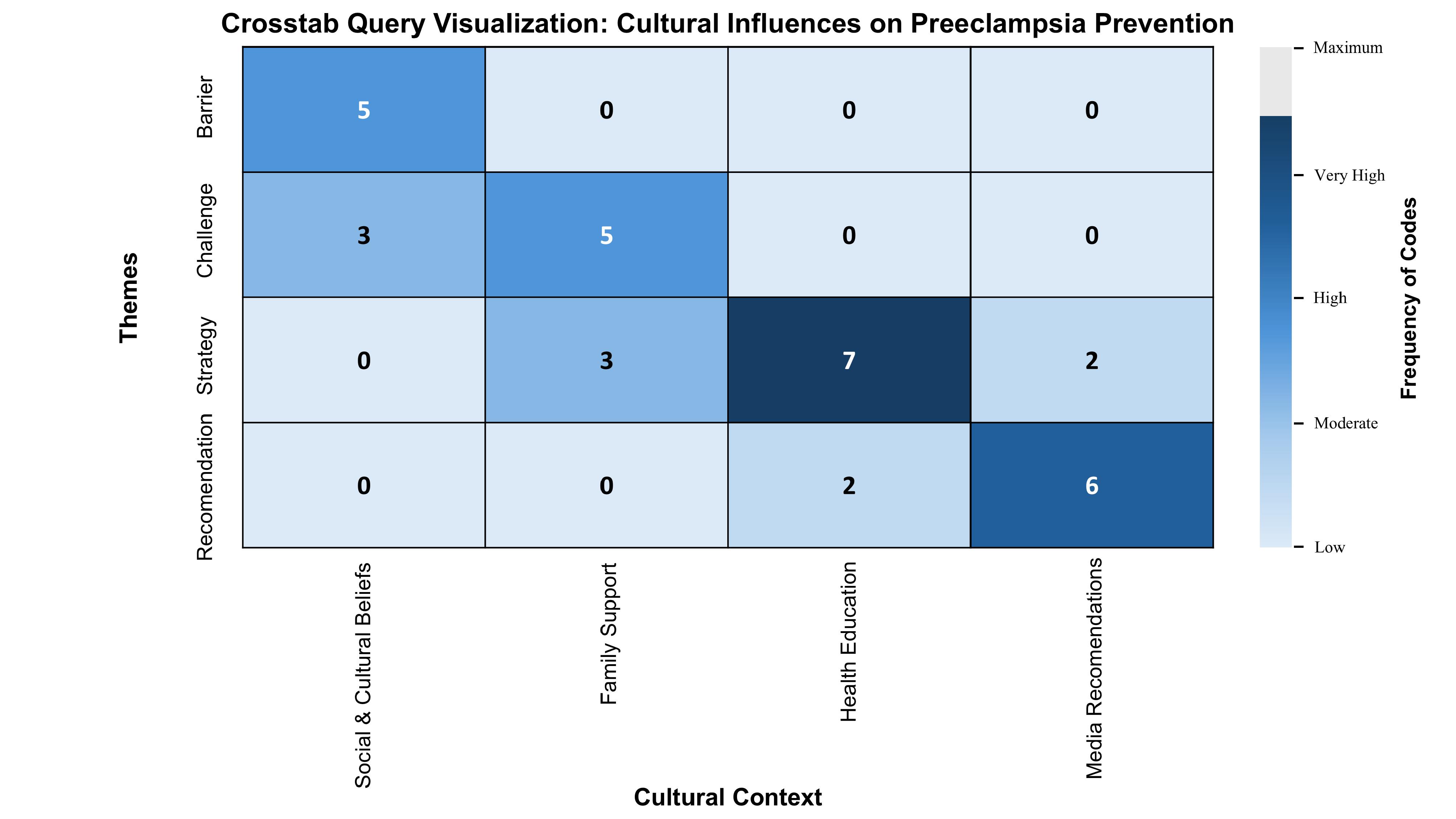
Figure 1.
Crosstab Query: Main Theme Preeclampsia Prevention
.
Crosstab Query: Main Theme Preeclampsia Prevention
Barriers
Socio-Cultural Beliefs
Socio-cultural beliefs developed in the community are a major obstacle in the prevention of preeclampsia. Many pregnant women still believe in myths and traditional restrictions that have no medical basis. This prevents them from receiving and applying correct health information.
Excerpts From In-Depth Interviews
“There is a prohibition. If there is wood, you cannot step over it. Don’t eat pears if you are young and pregnant.” (FTR, 20 years old)
“You can’t stand in front of the door, you can’t eat shrimp, and the child will come and go.” (IS, 18 years old)
Quotes From Focus Group Discussions
“There are still pregnant women who believe that seizures during pregnancy are caused by spirit or mystical disturbances, not preeclampsia.” (ML, Midwife at Turikale Health Center)
“There are still people in our society who think that if there are symptoms of preeclampsia, it is always linked to mystical events. Especially if it’s a seizure.” (HN. Midwife of Mandai Health Center)
Challenge
Socio-Cultural Beliefs
Despite the efforts of health workers to provide education, it is still difficult to change strong community perceptions of traditional beliefs. Health education is often rejected or ignored because it goes against customs that have been passed down for generations.
Excerpt From In-Depth Interviews
“I was told that high blood pressure is normal in pregnancy, so I didn’t feel worried.” (FTM, 38 years old)
“I can’t eat a big plate of food. I have to eat a small amount of food or a towel wrapped around my neck because my parents say the baby will be big and I will have difficulty giving birth, so I eat more light food.” (HKM, 26 years old)
Excerpt From Focus Group Discussions
“There are patients who believe in parental advice more than medical advice. They think preeclampsia is not something dangerous.” (ML, Midwife of Turikale Health Center)
“We often encounter patients who are afraid to eat nutritious foods because of myths in the community. In fact, the foods they avoid are important to prevent high blood pressure in pregnancy. For us in Mandai, I see that preeclampsia is not only caused by parity but also lifestyle. Especially now that we are presented with ready-to-eat products or food, pregnant women are also less mobile because they just need to play on cellphones to order food; it’s already there.” (HN, Midwife of Mandai Health Center)
Family Support
Family support is highly important for pregnant women in accessing antenatal check-ups and understanding the prevention of preeclampsia. Although pregnant women routinely attend antenatal check-ups, many come without their husbands or family members, so only the mother receives education. Lack of information transfer prevents families from understanding preeclampsia and its management. In emergency conditions, such as impending symptoms, decisions are made by the family. However, due to a lack of understanding, they are more likely to call a traditional healer or choose non-medical measures rather than immediately taking the mother to a health facility.
Excerpt From In-Depth Interviews
“My husband said you don’t need to go to the health center if you feel fine.” (HKM, 26 years old)
“I wanted to go to the health center, but my husband said there was no need if I wasn’t sick unless I felt dizzy or had complaints. My blood pressure just went up suddenly after 7–8 months of pregnancy.” (FTM, 38 years old)
Quotes From Focus Group Discussions
“Pregnant women often come to the health center alone without their husbands or families, so only the mother understands, while the family does not know about preeclampsia. When the pregnant woman has a seizure, the family is confused and calls the traditional healer because they do not realize that it is a symptom of preeclampsia.” (ML, Midwife at Turikale Health Center)
“The family called a shaman because they thought the victim was possessed, mystical. Only after the impending signs appeared did the mother die on the road. The family does not know what to do when there are signs of impending labor in pregnant women; they should be immediately taken to the hospital” (NT, Midwife of Bantimurung Health Center)
Strategy
Family Support
Family support, especially from husbands and other family members, is essential to encourage pregnant women to undergo regular check-ups and follow medical recommendations, including preeclampsia prevention. Family involvement (both emotional and financial) increases pregnant women’s motivation to maintain good health during pregnancy.
Excerpt From In-Depth Interviews
“I feel happy when my husband takes me to pregnancy education classes.” (STK, 18 years old)
“My husband supported me to go to the health center because he knew I needed to be checked properly.” (FTR, 20 years old)
Quotes From Focus Group Discussions
“When families participate in pregnancy education classes, they are more supportive of pregnant women’s decisions to go to the health center.” (DY, Nurse at Bantimurung Health Center)
“When pregnancy classes are held, mothers often come alone without their families. This is a challenge because health decisions are often made by the family.” (ML, Midwife Coordinator at PKM Turikale)
Health Education
Health education is a key strategy for preeclampsia prevention to increase pregnant women’s understanding of the risks and signs. Counseling through relevant and accessible educational media (e.g., handbooks, videos, and pregnancy education classes) has proven effective in improving the knowledge of pregnant women and their families.
Excerpt From In-Depth Interviews
“The pregnancy education class that I attended really helped me to understand more about preeclampsia.” (YNR, 36 years old)
“In the past, some people believed that eating squid during pregnancy could make the baby’s skin dark. However, I was told by the midwife that eating squid was okay because it was a good source of protein, so I ate it anyway.” (STK, 18 years old).
Excerpt From Focus Group Discussions
“Counseling that uses easy-to-understand language is more effective than the one that is too technical.” (AT, Midwife of Lau Health Center)
“We collaborate with the Office of Communication and Information to disseminate educational videos on the Maros District Government website and social media.” (HS, Health Officer, Maros District Health Office)
Media Recommendations
The use of digital and visual media (e.g., WhatsApp, TikTok, and illustrated booklets) is effective for reaching pregnant women, especially those with low literacy levels. Such media can improve pregnant women’s understanding of preeclampsia in an engaging and accessible way.
Excerpt From In-Depth Interviews
“I prefer booklets. It’s easier to read because I rarely open my phone.” (IS, 18 years old)
“I usually lie down every day while scrolling TikTok and look for pregnancy issues.” (YNR, 36 years old)
Quotes From Focus Group Discussions
“In the form of a pocket book, it is made attractive and not too thick. Nowadays, mothers need occasional visualization.” (HN, Midwife at Mandai Health Center)
“Maybe it is more effective like a pocket book module. So, it can be carried everywhere by pregnant women. Then, the content is in the form of interesting pictures.” (ML, Midwife at Turikale Health Center)
Recommendations
Health Education
An effective education program should consider the health literacy level of pregnant women, and a family- and community-based approach is needed to ensure information is well received.
Excerpt From In-Depth Interviews
“Sometimes we don’t know, so my husband thinks there is no need to check because he feels I am healthy.” (IS, pregnant woman, 18 years old)
“I often see information on Facebook, but it’s better to discuss it in person, if it’s a face-to-face meeting, so that it can be better understood.” (HKM, pregnant woman, 26 years old)
Quotes From Focus Group Discussions
“Education for pregnant women should involve the family because they are the closest people who can remind and provide support.” (HS, Health Worker, Maros District Health Office)
“We try to change this habit by providing education in pregnant women’s classes. We explain it with real examples, such as showing pictures or photos so that they believe it more.” (ML, Midwife at Turikale Health Center)
Media Recommendation
Educational media play an important role in improving the understanding of the community, especially pregnant women who find it difficult to access direct health information. Social media (e.g., WhatsApp and TikTok) have been effective in disseminating information to groups with low literacy. In addition, print media (e.g., illustrated booklets) are an effective alternative to explain the risks of preeclampsia simply and attractively.
Excerpt From In-Depth Interviews
“I understand more easily if there are videos or pictures explaining preeclampsia, rather than just listening to a long explanation.” (YNR, 36 years old)
“Sometimes I get information from TikTok. It’s easier to remember if there are pictures.” (STK, 18 years old)
Quotes From Focus Group Discussions
“Social media like WhatsApp and TikTok are very effective. Many pregnant women can understand more quickly and present the information there more often.” (HS, Health Officer, Maros District Health Office)
“Illustrated booklets are easier to understand, especially for pregnant women who do not have much access to information.” (ML, Midwife at Turikale Health)
Figure 2 presents a concept map entitled “Preeclampsia Prevention Strategies” that illustrates the relationship between barriers, challenges, and strategies (marked in red, yellow, and green, respectively) in preeclampsia prevention efforts. This visualization shows how each element is systematically connected, from barriers such as low health literacy to recommended community-based strategies to improve understanding and interventions related to preeclampsia risk. Table 3 summarizes the barriers, challenges, strategies, and recommendations in preeclampsia prevention based on cultural context.
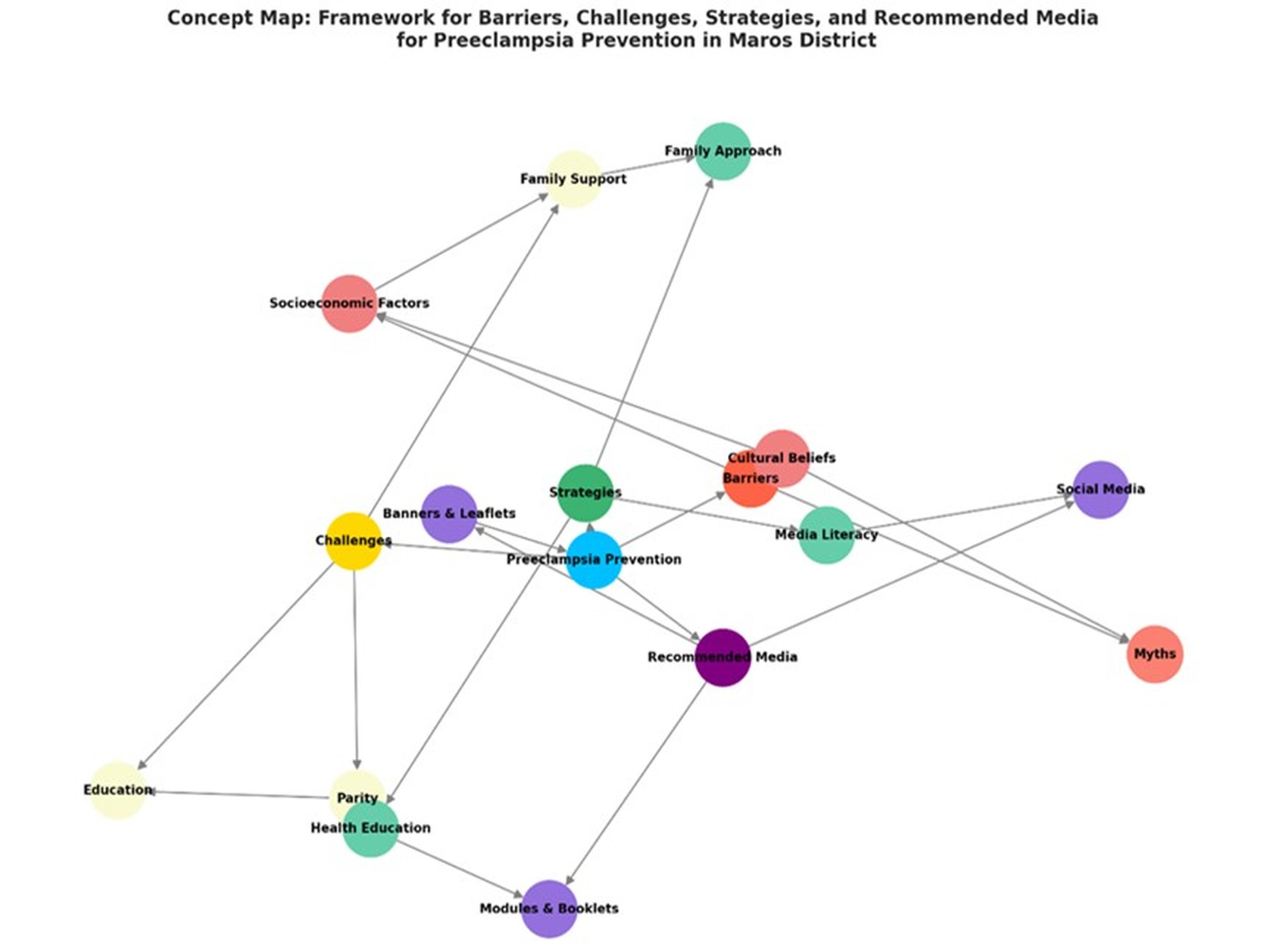
Figure 2.
Concept Map: Preeclampsia Prevention Strategies
.
Concept Map: Preeclampsia Prevention Strategies
Table 3.
Barriers, Challenges, Strategies, and Recommendations for Preeclampsia Prevention
|
Category
|
Subcategory/Cultural Context
|
Main Theme
|
| Barriers |
Belief |
Ignorance about preeclampsia |
| Cultural myths |
Influence of myths and culture |
| Traditional prohibitions |
Prohibition of consumption of certain foods |
| Challenge |
Family support |
Limited family support |
| False beliefs |
False cultural beliefs |
| Low health literacy |
Low health literacy |
| Economic constraints |
Economic barriers |
| Limited information |
Lack of understanding of medical information |
| Strategy |
Media digital |
Utilization of digital media |
| Literacy improvement family |
Improving family literacy |
| Media visual |
Use of modules and visual media |
| Cross-agency collaboration |
Inter-institutional cooperation for education |
| Education for pregnant women |
Education during ANC visits |
| Recommendations |
Health literacy |
Improving health literacy |
| Social media |
Utilization of social media |
| Family involvement |
Educational classes for families |
| Media visual |
Pocket book with illustrations |
| Community programs |
Community-based programs |
Note. ANC: Antenatal care.
Discussion
The results of this study underscore the importance of a multidimensional approach in preeclampsia prevention efforts with complex socio-cultural and economic dynamics. Qualitative data analysis revealed that cultural influences on preeclampsia prevention can be categorized into four main themes (barriers, challenges, strategies, and recommendations). Each of these themes is closely linked to relevant cultural contexts, such as social beliefs, family support, health education, and media utilization. These findings are in line with the literature, highlighting cultural and socio-economic barriers to the implementation of health interventions and providing a basis for the development of community-based strategies.
Barriers and Challenges in Preeclampsia Prevention
The prevention of preeclampsia is faced with multiple interrelated barriers, including cultural norms, socio-economic inequality, and low health literacy. Deep-rooted cultural beliefs (e.g., the prohibition of eating certain foods that are considered harmful to the fetus) hinder the adoption of healthy behaviors and exacerbate resistance to evidence-based medical information. This is in line with the findings of Shahin et al (22), showing that cultural norms can undermine people’s trust in medical advice (23).
Socio-economic inequality, particularly limited access to health services, exacerbates the situation. The high cost of medical check-ups is often the reason for delaying visits to health facilities, especially in rural areas. These barriers are compounded by low health literacy (24), resulting in a lack of understanding of the early signs of preeclampsia and the importance of early intervention. Osman et al reported that economic barriers are major factors in inequalities in health care in developing countries (25).
In addition, the lack of family support increases the risk of delays in the detection and treatment of preeclampsia. In many cases, family members do not have sufficient knowledge to recognize warning signs, leaving pregnant women without support in making informed medical decisions. Therefore, a family-based approach is needed to raise collective awareness about the risks and preventive measures of preeclampsia.
Another challenge is the low level of health literacy, hindering pregnant women’s understanding of the symptoms and risks of preeclampsia. Unfamiliarity with the medical terms and symptoms of preeclampsia reflects a lack of access to easy-to-understand information. Considering that educational materials that use technical formats are difficult for people with low education levels to understand, a visual-based approach and simple language are needed to ensure health messages are well received (27).
Furthermore, incorrect cultural beliefs, such as myths about preeclampsia symptoms being attributed to mystical causes or epilepsy, may deter pregnant women from seeking necessary medical attention. Boene et al (27) found that these myths make the situation worse, so community-based interventions are essential to dismantle myths and replace them with evidence-based information. Involving community leaders and families as partners in health education can increase the acceptance of medical information among local communities.
Moreover, disharmonious family dynamics can hinder the education process. Families who do not understand the signs of preeclampsia are less likely to provide adequate support, so collective education involving all family members is highly important. Family-based programs that integrate health education into antenatal care sessions can strengthen social support and improve early detection (28).
Economic limitations, especially in low-income families, are also a major challenge, as pregnant women often struggle to meet their adequate nutritional needs, which are important in the prevention of pregnancy complications. Therefore, a subsidized nutrition-based approach is needed (29), along with improved access to affordable health services at the community level. Misconceptions about medical information (e.g., the notion that hypertension during pregnancy is normal) point to the need for more targeted education. Engaging families in education during antenatal care visits or pregnancy classes can improve family health literacy, strengthen social support for pregnant women, and encourage adherence to medical recommendations and healthy behavior change. In addition, culturally based training for health workers can help change community views and encourage better medical decision-making by pregnant women (30).
Preeclampsia Prevention Strategies and Recommendations
Preeclampsia prevention requires an integrated approach that combines community-based education, digital technology, and social support to address key challenges, such as low health literacy, unsupportive cultural norms, and economic limitations. Utilizing digital platforms (e.g., WhatsApp, Instagram, and TikTok) allows for wide and rapid dissemination of information, especially for pregnant women and communities in remote areas. Including concise and accessible educational content plays an important role in improving an understanding of the risks of preeclampsia, while visual-based educational materials (e.g., illustrative booklets and short videos) can help reach communities with low literacy levels (31).
Cross-sector cooperation, including with government agencies and communication offices, is essential to expand access to information through official channels and local communities. This will strengthen the distribution of health messages in areas with limited digital access, ensuring that they are well understood by a wide range of people (32). Family-based approaches are also key in improving social support, as the role of the family in making appropriate health decisions is vital, especially in the early detection of preeclampsia.
The main recommendation is to improve the health literacy of pregnant women by integrating digital media as an interactive educational tool (33). In addition, the distribution of educational materials through government channels and local leaders can expand information coverage and increase the effectiveness of health messaging. Family-based approaches need to be strengthened through educational classes that not only educate pregnant women but also other family members to create more sustainable collective behavior change. Cross-sector collaboration involving government (34), media, and local communities, coupled with the use of technological innovations, will strengthen preeclampsia prevention efforts and ensure the inclusiveness of maternal health programs in areas with multidimensional challenges.
Limitations of the Study
The main limitation of this study lies in its restricted scope, encompassing a relatively small number of participants and a confined geographical area within the Maros Regency. Additionally, the qualitative approach, while offering a nuanced and in-depth understanding, inherently limits the generalizability of findings.
Conclusion
This study identified key barriers to preeclampsia prevention in the Maros District, including low health literacy, socio-cultural influences, and economic limitations. It was revealed that pregnant women with low health literacy have a limited understanding of preeclampsia, often experiencing delays in early detection and medical decision-making. Moreover, the findings confirmed that socio-cultural barriers, such as pregnancy myths and traditional restrictions, further deteriorate the quality of nutritional intake and hinder the receipt of correct medical information. On the other hand, economic limitations were found to reduce pregnant women’s access to health services and adequate nutrition, which are important factors in the prevention of pregnancy complications.
This study recommends a family-based education approach that involves family members in understanding the risks of preeclampsia. In addition, the provision of print media, such as booklets with attractive illustrations, can help reach communities with low literacy levels, while the use of digital media, such as WhatsApp and TikTok, provides an opportunity to educate younger generation groups more effectively. Community-based interventions that integrate social, cultural, and technological approaches are expected to increase the awareness of pregnant women and their families of the risks of preeclampsia and minimize preventable pregnancy complications.
The results of this study provide significant practical, policy, and academic implications. Practically, a family-based approach can strengthen social support and improve community health literacy. In the policy context, the government needs to develop educational programs based on local contexts, provide transportation subsidies for access to health services, and distribute educational booklets to pregnant women. Academically, this study provides a theoretical basis for developing a maternal health literacy measurement tool and evaluating the effectiveness of broader community-based interventions. This approach also opens up further research opportunities on the integration of digital technology in supporting health behavior change in communities.
Acknowledgments
We would like to express our gratitude and appreciation for the support and encouragement provided by Indonesian Education Scholarship (BPI), Center for Higher Education Funding and Assessment (PPAPT), the Education Fund Management Institution (LPDP), Ministry of Higher Education, Science, and Technology of Republic Indonesia.
Competing Interests
None.
Ethical Approval
This study was approved by the Research Ethics Committee of Hasanuddin University (No. 1610/UN4.14.1/TP.01.02/2024). All respondents signed written informed consent prior to participating in the study.
Funding
None.
References
- Chappell LC, Cluver CA, Kingdom J, Tong S. Pre-eclampsia. Lancet 2021; 398(10297):341-54. doi: 10.1016/s0140-6736(20)32335-7 [Crossref] [ Google Scholar]
- Dimitriadis E, Rolnik DL, Zhou W, Estrada-Gutierrez G, Koga K, Francisco RP. Pre-eclampsia. Nat Rev Dis Primers 2023; 9(1):8. doi: 10.1038/s41572-023-00417-6 [Crossref] [ Google Scholar]
- Chaemsaithong P, Sahota DS, Poon LC. First trimester preeclampsia screening and prediction. Am J Obstet Gynecol 2022;226(2S):S1071-S1097.e2. doi: 10.1016/j.ajog.2020.07.020.
- Burton GJ, Redman CW, Roberts JM, Moffett A. Pre-eclampsia: pathophysiology and clinical implications. BMJ 2019; 366:l2381. doi: 10.1136/bmj.l2381 [Crossref] [ Google Scholar]
- Mustary M, Ansariadi Ansariadi, Syam A, Riskiyani S, Erika KA, Moedjiono AI. Preeclampsia: etiology, pathophysiology, risk factors, impact and prevention: a narrative review. Iran J Public Health 2024; 53(11):2392-403. doi: 10.18502/ijph.v53i11.16941 [Crossref] [ Google Scholar]
- Phommachanh S, Essink DR, Wright PE, Broerse JEW, Mayxay M. Maternal health literacy on mother and child health care: a community cluster survey in two southern provinces in Laos. PLoS One 2021; 16(3):e0244181. doi: 10.1371/journal.pone.0244181 [Crossref] [ Google Scholar]
- Tavananezhad N, Mohamadi Bolbanabad A, Ghelichkhani F, Effati-Daryani F, Mirghafourvand M. The relationship between health literacy and empowerment in pregnant women: a cross-sectional study. BMC Pregnancy Childbirth 2022; 22(1):351. doi: 10.1186/s12884-022-04686-z [Crossref] [ Google Scholar]
- Meldgaard M, Gamborg M, Terkildsen Maindal H. Health literacy levels among women in the prenatal period: a systematic review. Sex Reprod Healthc 2022; 34:100796. doi: 10.1016/j.srhc.2022.100796 [Crossref] [ Google Scholar]
- Naja S, Elyamani R, Al Ibrahim A, Al Kubaisi N, Itani R, AbdulRouf P. ‘The newest vital sign among pregnant women attending women wellness and research centre in Qatar: a cross-sectional study’. BMC Pregnancy Childbirth 2021; 21(1):73. doi: 10.1186/s12884-021-03542-w [Crossref] [ Google Scholar]
- Stormacq C, Wosinski J, Boillat E, Van den Broucke S. Effects of health literacy interventions on health-related outcomes in socioeconomically disadvantaged adults living in the community: a systematic review. JBI Evid Synth 2020; 18(7):1389-469. doi: 10.11124/jbisrir-d-18-00023 [Crossref] [ Google Scholar]
- Shao Y, Hu H, Liang Y, Hong Y, Yu Y, Liu C. Health literacy interventions among patients with chronic diseases: a meta-analysis of randomized controlled trials. Patient Educ Couns 2023; 114:107829. doi: 10.1016/j.pec.2023.107829 [Crossref] [ Google Scholar]
- Nawabi F, Krebs F, Lorenz L, Shukri A, Alayli A, Stock S. Health literacy among pregnant women in a lifestyle intervention trial. Int J Environ Res Public Health 2022; 19(10):5808. doi: 10.3390/ijerph19105808 [Crossref] [ Google Scholar]
- Wang L, Fang H, Xia Q, Liu X, Chen Y, Zhou P. Health literacy and exercise-focused interventions on clinical measurements in Chinese diabetes patients: a cluster randomized controlled trial. EClinicalMedicine 2019; 17:100211. doi: 10.1016/j.eclinm.2019.11.004 [Crossref] [ Google Scholar]
- Iswanti DI, Erwansyah RA, Saifudin IM, Pujiyanto TI. Cultural diversity in maternity care in improving the quality of care services: a systematic review. Int J Public Health 2024; 13(3):1258-67. doi: 10.11591/ijphs.v13i3.24143 [Crossref] [ Google Scholar]
- Sørensen K, Van den Broucke S, Fullam J, Doyle G, Pelikan J, Slonska Z. Health literacy and public health: a systematic review and integration of definitions and models. BMC Public Health 2012; 12:80. doi: 10.1186/1471-2458-12-80 [Crossref] [ Google Scholar]
- Yiğitalp G, Bayram Değer V, Çifçi S. Health literacy, health perception and related factors among different ethnic groups: a cross-sectional study in southeastern Turkey. BMC Public Health 2021; 21(1):1109. doi: 10.1186/s12889-021-11119-7 [Crossref] [ Google Scholar]
- Creswell JW, Poth CN. Qualitative Inquiry and Research Design. 4th ed. California: SAGE Publications; 2018.
- Yin RK. Case Study Research and Applications: Design and Methods. 6th ed. SAGE Publications; 2017. p. 352.
- McKim C. Meaningful member-checking: a structured approach to member-checking. Am J Qual Res 2023; 7(2):41-52. [ Google Scholar]
- Nowell LS, Norris JM, White DE, Moules NJ. Thematic analysis: striving to meet the trustworthiness criteria. Int J Qual Methods 2017; 16(1):1609406917733847. doi: 10.1177/1609406917733847 [Crossref] [ Google Scholar]
- Safara M, Moosavi S, Gholamnejad H. Outcomes of spiritual health in children: a qualitative content analysis. J Educ Community Health 2023; 10(2):109-14. doi: 10.34172/jech.2023.2032 [Crossref] [ Google Scholar]
- Shahin W, Kennedy GA, Stupans I. The impact of personal and cultural beliefs on medication adherence of patients with chronic illnesses: a systematic review. Patient Prefer Adherence 2019; 13:1019-35. doi: 10.2147/ppa.S212046 [Crossref] [ Google Scholar]
- McQuaid EL, Landier W. Cultural issues in medication adherence: disparities and directions. J Gen Intern Med 2018; 33(2):200-6. doi: 10.1007/s11606-017-4199-3 [Crossref] [ Google Scholar]
- Lee HY, Kim S, Neese J, Lee MH. Does health literacy affect the uptake of annual physical check-ups?: Results from the 2017 US health information national trends survey. Arch Public Health 2021; 79(1):38. doi: 10.1186/s13690-021-00556-w [Crossref] [ Google Scholar]
- Osman T, Keshk EA, Alghamdi AA, Alghamdi MA, Alghamdi MA, Alzahrani AA. Awareness of preeclampsia and its associated factors among women in Al Baha region, Saudi Arabia. Cureus 2023; 15(11):e49038. doi: 10.7759/cureus.49038 [Crossref] [ Google Scholar]
- Mulyanto J, Kringos DS, Kunst AE. Socioeconomic inequalities in healthcare utilisation in Indonesia: a comprehensive survey-based overview. BMJ Open 2019; 9(7):e026164. doi: 10.1136/bmjopen-2018-026164 [Crossref] [ Google Scholar]
- Boene H, Vidler M, Sacoor C, Nhama A, Nhacolo A, Bique C. Community perceptions of pre-eclampsia and eclampsia in southern Mozambique. Reprod Health 2016; 13(Suppl 1):33. doi: 10.1186/s12978-016-0135-y [Crossref] [ Google Scholar]
- Mane UR, Salunkhe JA, Kakade S. Family support to women during pregnancy and its impact on maternal and fetal outcomes. Cureus 2024; 16(6):e62002. doi: 10.7759/cureus.62002 [Crossref] [ Google Scholar]
- Hodder RK, Stacey FG, Wyse RJ, O’Brien KM, Clinton-McHarg T, Tzelepis F. Interventions for increasing fruit and vegetable consumption in children aged five years and under. Cochrane Database Syst Rev 2017; 9(9):CD008552. doi: 10.1002/14651858.CD008552.pub3 [Crossref] [ Google Scholar]
- Vella E, White VM, Livingston P. Does cultural competence training for health professionals impact culturally and linguistically diverse patient outcomes? A systematic review of the literature. Nurse Educ Today 2022; 118:105500. doi: 10.1016/j.nedt.2022.105500 [Crossref] [ Google Scholar]
- Mbanda N, Dada S, Bastable K, Ingalill GB, Ralf WS. A scoping review of the use of visual aids in health education materials for persons with low-literacy levels. Patient Educ Couns 2021; 104(5):998-1017. doi: 10.1016/j.pec.2020.11.034 [Crossref] [ Google Scholar]
- Shahil Feroz A, Afzal N, Seto E. Exploring digital health interventions for pregnant women at high risk for pre-eclampsia and eclampsia in low-income and-middle-income countries: a scoping review. BMJ Open 2022; 12(2):e056130. doi: 10.1136/bmjopen-2021-056130 [Crossref] [ Google Scholar]
- George N, Reynolds S, de Long R, Kacica M, Ahmed R, Manganello J. Social media and black maternal health: the role of health literacy and eHealth literacy. Health Lit Res Pract 2023; 7(3):e119-29. doi: 10.3928/24748307-20230614-01 [Crossref] [ Google Scholar]
- Alderwick H, Hutchings A, Mays N. Cross-sector collaboration to reduce health inequalities: a qualitative study of local collaboration between health care, social services, and other sectors under health system reforms in England. BMC Public Health 2024; 24(1):2613. doi: 10.1186/s12889-024-20089-5 [Crossref] [ Google Scholar]