J Educ Community Health. 12(1):50-59.
doi: 10.34172/jech.3398
Original Article
A Qualitative Study on the Acceptance of Donated Sperm From the Perspective of Infertile People in an Islamic Society
Seyed Nader Aghilian Funding acquisition, Resources, 1 
Amirabbas Mousali Data curation, Formal analysis, Methodology, Software, Writing – original draft, 2
Shamim Pilehvari Investigation, Visualization, 3
Mahnaz Yavangi Investigation, Validation, 4
Saeid Bashirian Conceptualization, Investigation, Methodology, Project administration, Supervision, Writing – original draft, Writing – review & editing, 5
Sahar Khoshravesh Conceptualization, Data curation, Formal analysis, Methodology, Software, Writing – original draft, Writing – review & editing, 6, 7, *
Author information:
1Department of Forensic Medicine, School of Medicine, Hamadan University of Medical Sciences, Hamadan, Iran
2Department of Social Medicine, Hamadan University of Medical Sciences, Hamadan, Iran
3Department of Obstetrics and Gynecology, School of Medicine, Hamadan University of Medical Sciences, Hamadan, Iran
4Endometrium and Endometriosis Research Center, Hamadan University of Medical Sciences, Hamadan, Iran
5Social Determinants of Health Research Center, Hamadan University of Medical Sciences, Hamadan, Iran
6Chronic Diseases (Home Care) Research Center, Institute of Cancer, Hamadan University of Medical Sciences, Hamadan, Iran
7Department of Community Health Nursing, School of Nursing and Midwifery, Hamadan University of Medical Sciences, Hamadan, Iran
Abstract
Background: Sperm donation as an assisted reproductive technique still faces many challenges due to ethical and legal complexity. The study aimed to elaborate on infertile people’s viewpoints regarding receiving donated sperm.
Methods: This study was conducted qualitatively with the content analysis method on 19 infertile people (11 women and 8 men) visiting the Infertility Center of Fatemieh Hospital in Hamadan, west of Iran, in 2024. Infertile people were selected by the purposive sampling method. The data were collected using in-depth, semi-structured, face-to-face interviews. The content was read repeatedly to identify meaningful units, which were coded and grouped. Similar codes formed categories, which were further organized into broader subcategories. Finally, these categories were summarized into overarching themes representing major concepts.
Results: The extracted themes and categories were common themes of attitude, subjective norms, and perceived behavioral control, as well as categories of perceived advantages and disadvantages, companion pressure, and control of the existing situation. In the women’s group, the subcategories were psychological, emotional, religious, socioeconomic concerns, pleasant feelings, pleasant experiences, marital life stability, family norms, and childbearing. In the men’s group, the subcategories were unpleasant feelings, pleasant feelings, the more preferred method, marital life stability, family norms, and childbearing. The opinions of men and women were different regarding the anonymity of the sperm donor and a sense of paternity and motherhood.
Conclusion: From peoples’ viewpoints, receipt of donated sperm, pressure from important companions, such as the couple’s families (subjective norms), and perceived behavioral control to overcome male infertility problems were among the factors influencing the receipt of donated sperm in couples as one of the infertility treatment methods. It seems that counseling services and public education campaigns help inform practice. Practical recommendations include developing age-specific counseling protocols and expanding financial support to increase access to sperm donation for different populations.
Keywords: Tissue donors, Male, Infertility, Reproductive techniques, Content analysis, Iran
Copyright and License Information
© 2025 The Author(s); Published by Hamadan University of Medical Sciences.
This is an open-access article distributed under the terms of the Creative Commons Attribution License (
https://creativecommons.org/licenses/by/4.0), which permits unrestricted use, distribution, and reproduction in any medium, provided the original work is properly cited.
Please cite this article as follows: Aghilian SN, Mousali A, Pilehvari S, Yavangi M, Bashirian S, Khoshravesh S. A qualitative study on the acceptance of donated sperm from the perspective of infertile people in an islamic society. J Educ Community Health. 2025; 12(1):50-59. doi:10.34172/jech.3398
Introduction
Nowadays, infertility as a stressful problem has a significant negative impact on couples’ lives that can lead to a psychological imbalance, relationship breakup, and finally, divorce of couples (1,2). The term infertility is defined as the absence of pregnancy at least one year after marriage without the use of contraceptives (3). In the male reproductive system, infertility is mostly caused by problems with semen ejaculation, the absence or low level of sperm, or the abnormal morphology and motility of sperm. A study by Masoumi et al showed that the causes of male infertility, in order of frequency, included semen abnormalities, genetic factors, vascular abnormalities, and anti-spermatogenic factors (4). In the female reproductive system, infertility may occur because of abnormalities in the ovary, uterus, fallopian tubes, and endocrine system (5). Medicinal, surgical, and third-party fertility methods (donated egg, donated sperm, surrogate uterus, and donated embryo) are used to treat infertility (6).
According to the latest report of the World Health Organization, 48 million couples and 186 million people suffer from the infertility problem worldwide (5). Evidence indicates that more than one million infertile couples live in Iran (7). The fatwa for gamete donation issued by Ayatollah Khamenei has led to the use of embryos and uteruses as treatment methods in infertility centers in Iran (8,9). Since the 1990s, the implementation of assisted reproductive technology (ART) and the progress achieved in providing these services in the infertility centers of Iran have offered a suitable opportunity for parenthood experience in infertile couples (10). Various medical, religious, cultural, and legal restrictions on the use of third-party ART in Iran have caused the slow progress of these treatments (11).
A third-party ART is the use of donated sperm to have a child. The donated sperm in vitro fertilization is used when the man cannot produce sperm, the sperm is abnormal, or it is impossible to use the couple’s sperm for some reason. Failure to obtain a good-quality embryo in repeated IVF and unsuccessful repeated treatments are among the cases in which using donated sperm is suggested as a therapeutic solution (12).
Due to negative views toward new ART issues, the acceptance of these methods compared to natural pregnancy is subject to opposition (13). Although third-party ART, especially sperm donation, has increased the hope of treatment for infertile couples, it is important to understand people’s views on sperm donation as it has ethical, religious, and cultural implications that significantly affect its acceptance in society. In Iran, where specific cultural and religious factors play an important role, knowing these views helps infertility centers make informed decisions and reduce social and psychological barriers. Furthermore, understanding attitudes supports the development of educational programs and policies that are in line with social values. This, in turn, facilitates the effective and accepted use of sperm donation as a treatment method. In our country, however, there is still a lack of information in this area, and studies are needed to clarify various aspects of this treatment method in order to improve clinical outcomes and social acceptance of the method (14-16). Therefore, the present study aims to elaborate on infertile peoples’ viewpoints regarding receiving donated sperm in a qualitative study at the infertility center of Fatemieh Hospital in Hamadan.
Materials and Methods
Using the content analysis method, this qualitative study was performed on 19 infertile people (including 11 women and 8 men) visiting the Infertility Center of Fatemieh Hospital in Hamadan, west of Iran, from October to December 2024. In this research, the participants were selected among infertile people eligible for the study based on purposive sampling and content saturation with maximum diversity based on age, education level, and socioeconomic status. The inclusion criteria were a history of infertility for at least one year, the ability to speak Persian, and the ability to communicate effectively to provide the necessary information. On the other hand, refusal to continue cooperation during the interview for any reason was considered an exclusion criterion. After obtaining written informed consent from all participants, the required information was collected using in-depth, semi-structured, individual interviews based on the interview guide.
The interview guide covered areas such as personal and religious attitudes toward donated sperm, concerns and worries, the views of those around you and society, advantages and disadvantages, and identity and legal issues of a child born from donated sperm; examples of these issues were What would be your concerns in the future if you received donated sperm? From a religious and belief perspective, what do you think the process of receiving donated sperm is like? And What do those around you think about receiving donated sperm? The other issues included What do you think are the advantages and disadvantages of receiving donated sperm? And What do you think will happen to the inheritance of a child born from this method?
The interviews were conducted in a room in the infertility center by two researchers depending on the infertile couple’s gender to establish a more effective relationship with the subjects for the interview. It is noteworthy that the interviews were performed by two individuals holding PhDs in Health Education and Health Promotion, possessing expertise and experience in qualitative research and reproductive health issues. Their capabilities ensured that the interviews were conducted with scientific rigor and appropriate ethical and cultural sensitivity. Therefore, the interviewers’ academic qualifications guaranteed the credibility and quality of the collected data. While listening, transferring, and reviewing the contents by the researchers, questions were also raised to follow up on the next content. The participants’ voices were recorded during the interview with their permission, in addition to taking notes. After the completion of each interview, the notes were matched with the recorded voices and written verbatim. The interview lasted between 20 minutes and 30 minutes on average. The obtained information was analyzed using the content analysis method, in which the content under analysis was read multiple times. Then, the meaning units that contained meaningful sentences and words were identified, and codes were extracted and labeled with the reduction and compression procedure. Similar codes were merged and categorized into groups. Similar groups were then arranged as subcategories such that the data reduction process continued to form the final categories with more general and abstract concepts. The final categories (i.e., the content levels) continued and, finally, the concepts were grouped into themes. The process of extracting and analyzing codes is shown in Figure 1.
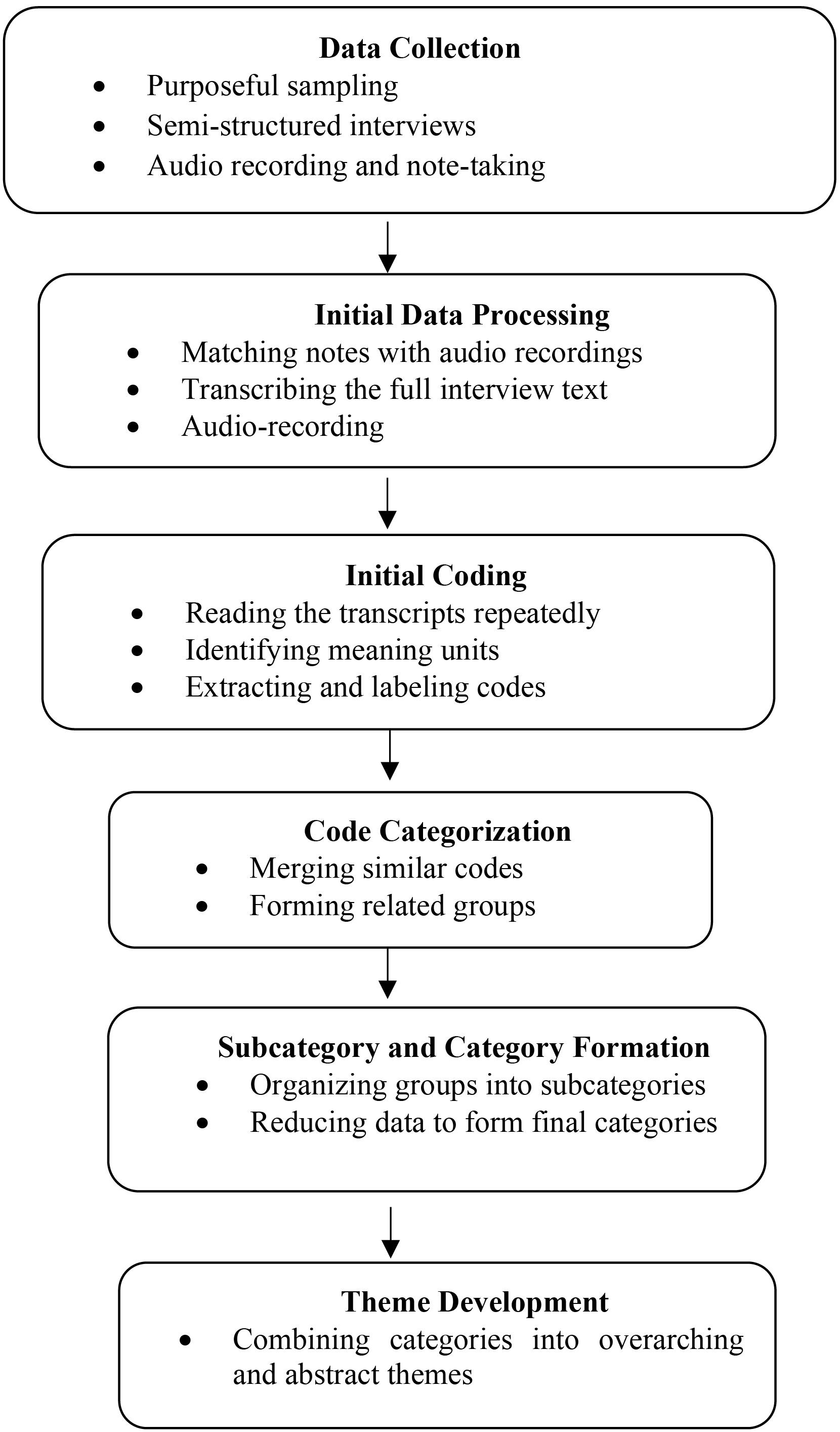
Figure 1.
The Process of Extracting and Analyzing Codes
.
The Process of Extracting and Analyzing Codes
The validity of qualitative research findings was ensured using the criteria proposed by Guba and Lincoln, including credibility, transferability, dependability, and confirmability (17). Credibility was considered with the participation of a trained interviewer and the allocation of enough time and accuracy to analyze the data. For transferability, all stages of the study were recorded to make it possible to follow up at each stage, and data were collected and analyzed at the same time. Regarding dependability, a copy of the documents and interviews was given to a researcher not participating in the study to express their opinion. To achieve the confirmability criterion in this study, the text of some interviews, extracted codes, and categories were given to the researcher’s colleagues who were familiar with the qualitative data analysis, and they were asked to verify the accuracy of the data coding process.
It should be noted that the present study was conducted qualitatively using content analysis, mainly aiming to extract themes and categories related to the attitudes and experiences of infertile individuals. Accordingly, psychological concepts, such as “attitude”, “subjective norms”, and “perceived behavioral control”, were used as a theoretical framework in data analysis. Nonetheless, this study was not explicitly designed based on a specific psychological or health education model. Therefore, in the study, these concepts were extracted from the data as qualitative findings rather than a pre-existing theoretical model.
Results
The participants of this study consisted of 11 women and 8 men. The age of female participants averaged 33.6 years. In terms of education level, 72% of women had a high school or lower education, and 40% possessed a university education. The average age of male participants was 38.4 years. As regards the education level of men, 62% had high school or lower education, and 38% possessed a university education.
After defining the initial concepts, the primary codes were extracted from the interviews. The extracted codes were reviewed and summarized several times and then divided into subcategories and main categories based on suitability and similarity to finally form the themes. The themes resulting from the categories were attitudes, subjective norms, and perceived behavioral control. All these concepts are the constructs of the planned behavior theory. The participants’ knowledge about some contextual factors (e.g., the issue of inheriting a child resulting from donated sperm, the paternal and maternal relations of the child resulting from this method, and the moral and legal concerns of receiving donated sperm) was also investigated in this study. The results of the interviews are presented separately for male and female participants.
The Interview Results for the Studied Women
From the 11 interviews conducted with women, 172 primary codes were extracted and analyzed in detail. The 40 finally extracted codes were reduced to 7 codes, followed by extracting 10 subcategories and 4 categories. The arrangement of themes, main categories, subcategories, and codes is represented in Table 1.
Table 1.
Themes, Categories, Subcategories, and Codes for Receiving Donated Sperm in Infertile Women
|
Code
|
Subcategory
|
Category
|
Theme
|
| Fear of disclosing the method |
Psychological concerns |
Perceived disadvantages |
Attitude |
| Differentiation from the real child |
| The child’s information in the future |
| Guilty feelings in women |
| A feeling of necessity in women |
| Men’s feelings of inferiority |
| Others’ negative views on the resulting child |
| Non-acceptance of the husband |
| Father’s lack of interest in the child |
Emotional concerns |
| Companions’ lack of interest in the child |
| The child’s lack of belonging to the father |
| The child’s non-mahram status |
Religious concerns |
| The sperm donor’s non-mahram status |
| Method’s unacceptability in Islam |
| Not surrendering to God’s providence |
| Method’s unacceptability in society |
Social concerns |
| Preference for other ARTs in society |
| High cost of the method |
Emotional concerns |
| Constantly rising costs |
| Couples’ mood improvement |
Pleasant feelings |
Perceived advantages |
| Motherhood enjoyment |
| Parental experience |
Pleasant experiences |
| Pregnancy experience |
| Fetal development experience in the mother’s womb |
| Childbirth experience |
| Child upbringing experience |
| Preservation of couples’ lives |
Marital life stability |
| Companions’ negative opinions about the method |
Family norms |
Important companions’ pressure |
Subjective norms |
| Strong opposition |
| The issue of being blamed by others |
| Destigmatization of not childbearing |
Childbearing |
Control of the existing situation |
Perceived behavioral control |
| The issue of overcoming male fertility problems |
Note. ART: Assisted reproductive technology.
The attitude theme included two categories (perceived disadvantages and advantages) and five subcategories (psychological, emotional, religious, social, and economic concerns). Most of the studied women’s attitudes were not positive toward receiving donated sperm because they believed that men would not be involved in the fertility process. For example, “I would like to have a child from my husband. I would prefer to have no child rather than having one through receiving donated sperm” (Participant 7).
Overall, four women had a positive attitude toward using the receiving donated sperm method because they thought they could bear a child and contribute to the fertility process. “Although the sperm belongs to someone else, I can at least get pregnant here. The baby is in my belly and feeds on me. I’ll give birth to the infant” (Participant 5). Participant 10 denoted, “It’s no problem, and it is better to get donated sperm than a divorce. Someone refers to an orphanage, but the mother becomes pregnant here, and the child is inside her belly”.
Another perceived disadvantage of receiving donated sperm in the psychological concern subcategory was that others negatively view a child resulting from donated sperm, and this view is difficult for the mother. Participant 9 uttered, “Many people don’t get along with this method. They look at that child in a different way. This method is still unknown”.
The other psychological concern of mothers was the fear of disclosing the receipt of donated sperm. For example, a participant expressed, “If others find out, the family may have no feelings toward the child. For example, my father-in-law loves his newly born grandson/granddaughter very much... if he finds out that our child came from donated sperm, he may have no feeling about it” (Participant 1). Participant 6 stated, “If I use this method, I don’t want anyone to know. I am bothered with the words and actions of the people around me”.
As mentioned by the participants, a perceived disadvantage of receiving donated sperm in the emotional concern subcategory is that the resulting child does not belong to the current father, who does not feel paternity. Participant 11 uttered, “The baby is not my husband’s and is from another man. My husband may not like the baby”. Another participant denoted, “A man is not involved in the fertility process with donor sperm. My husband may say that is not his baby” (Participant 5).
In the current study, according to most women, a major disadvantage of the receiving donated sperm method was religious concerns. These concerns included the non-mahram status of the child, the sperm owner, the unacceptability of the method in Islam, and the lack of surrendering to God’s order. Related examples included, “I feel it is not the right thing to do. I would rather get a baby from the nursery to be halal. Say, maybe the child is not mahram to my husband or me” (Participant 6). “We wished that we would be given a child based on the providence of God and recourse to Imam Hossein (as). My husband says that you cannot ask God for something by force” (Participant 9). “I think this is not a good thing in Islam. Another important question for me and my husband is whether or not the child is mahram” (Participant 2).
The unacceptability of the method in society and preference for other ART methods among people were reported among the women’s social concerns as the other disadvantages of the receiving donated sperm method. For example, Participant 1 expressed, “I think it is better to get a donated egg than donated sperm because it is more accepted in our society...” “Many people do not get along with this method. The child is looked at in a different way. This method is not yet known. They say that there is nothing wrong with receiving donated eggs for women, and it is more acceptable...” (Participant 9). “It’s really not known for some people... they may be upset... or may disagree. Most of them agree that the woman takes eggs to use the donated sperm. The child of donated sperm is from another man” (Participant 10).
Another major concern of infertile women was the economic concern, including the high cost of the method and the continuous rise of costs, which was an obstacle to using this ART method. For example, Participant 4 mentioned, “Our main problem is the cost of this method. If the cost is not too high, I will do it myself. My husband disagrees at first. He might agree if we talk to him. It is possible to do”.
The perceived advantages consisted of three subcategories, namely, pleasant feelings, enjoyable experiences, and strength of shared life.
The studied women believed that a benefit of receiving donated sperm would be pleasant feelings, such as improving the couple’s mood and motherhood enjoyment. For example, Participant 2 stated, “It is a good thing for the couple’s spirit. Say, a few years may pass, and the child grows up, etc. God will do a favor, and they will have their own children. It is much better than having no child because half of the child’s genes are inherited from his/her mother, and the other half are inherited from someone else”. Another participant indicated, “I think being a mother is so joyful that it’s worth it” (Participant 4).
The studied women asserted that the other benefits of this method would be enjoyable experiences, such as the experiences of pregnancy, fetal growth in the mother’s womb, childbirth, and upbringing. For example, “It’s true that the sperm belongs to someone else, but here I can at least get pregnant. It’s in my belly and feeds on me. I give birth to the baby” (Participant 5). “When you adopt the child from the orphanage, that child comes into the family, and his/her future may be too bad... if the baby is a boy, you should go for a proposal, or if it is a girl, it is not good at all psychologically. As if the child is not mine, but if the child is born through artificial insemination donated sperm, no one knows; you grow it in your belly. It’s just like your own child, and it is much better than adopting an orphanage child” (Participant 1).
All the studied women agreed that an important advantage of this method was to preserve the couple’s life. For example, “I think it’s no problem to get donated sperm; it’s better than a divorce. One refers to an orphanage to adopt a child, but, using this way, the mother becomes pregnant, and the child is inside her belly” (Participant 10). “Some may have children after 20 years. It’s a good way to save their marriage” (Participant 11).
The subjective norms included the important companions’ pressure or opinions around the couple regarding receiving donated sperm. Most of the studied women believed that their companions strongly opposed the use of this method and had negative opinions in this regard. For example, Participant 6 mentioned, “Companions strongly oppose, have old ideas, and do not accept these methods”. “Companions oppose 100%”.
Regarding the perceived behavioral control theme, most of the studied women thought that receiving donated sperm leads to bearing a child and controlling the existing situation by removing the stigma of being childless and overcoming male fertility problems. Some opinions of the studied women are exemplified here. “People always say they can’t have children. It’s a good way to put an end to these words” (Participant 5). “I heard that donated sperm is used if the problem is from the husband” (Participant 6). Donated sperm can be used for those whose husbands are weak or are infertile. It’s a good method for those who can have children in this way” (Participant 8).
The participants’ knowledge about some underlying factors (e.g., the donor’s knowledge and personal characteristics, the inheritance of the child resulting from the donated sperm, and the parentage relation of the child resulting from this method) was also investigated in this study.
Except for one subject, all the intended women were interested in the anonymity of the sperm donor. “In my opinion, it’s better not to know them rather than becoming curious about how they looked like, whether they ate halal food, etc. I think they are better to be anonymous” (Participant 2).
“One can become curious, but it is better not to see them” (Participant 6). “It’s better to be anonymous and not know them. Your mind won’t get involved” (Participant 8). One of the participants had a different opinion: “I would rather get to know that man because it’s important for me to know the person in terms of health, sperm health, or other problems” (Participant 10).
Most of the studied women believed that a child resulting from the donated sperm method would be rightful to inherit like a real child. Participant 2 stated, “In my opinion, the real parents are those who raise the child. He/she does not inherit from the sperm owner. I don’t care. He is our child, and we want to raise him/her with this hope. We have no problem with his/her inheritance”.
Regarding the relation and parental feeling, most women thought that this feeling is more present in the mother than in the father because the mother experiences pregnancy and is involved in the fertility process. For instance, Participant 6 indicated, “The mother’s feelings don’t differ because she gets pregnant and the baby grows inside of her belly. I feel that the father doesn’t have much paternal sense, as he sees himself a step lower than the sperm donor”. “I think it would be better if you get a donated egg and your husband is healthy because her husband is the baby’s father, and then you raised the baby in your womb. In the process of receiving donated sperm, the mother actually feels more like a mother than a father on the husband’s behalf. I think the father has no feelings” (Participant 1). “The sperm donor is gone. This child inherits from the present father because he spends time and energy and raises the child” (Participant 6).
The Results of Interviews With the Studied Men
From the eight interviews conducted with men, 280 initial codes were extracted and analyzed in detail. Then, 48 finally extracted codes were reduced to seven codes. Next, six subcategories and four main categories were extracted by examining the main codes. The arrangements of themes, main categories, subcategories, and codes are presented in Table 2.
Table 2.
Themes, Main Categories, Subcategories, and Codes for Receiving Donated Sperm in Infertile Men
|
Code
|
Subcategory
|
Category
|
Theme
|
| Men’s feelings of inferiority |
Unpleasant feelings |
Perceived disadvantages |
Attitude |
| The issue of being blamed by companions |
| Concerns about future events |
| The issue of achieving the fatherhood dream |
Pleasant feelings |
Perceived advantages |
| Hopefulness |
| Mood improvement |
| Prevention of adoption problems |
More preferred method |
| Prevention of marital disputes |
| Prevention of couples’ separation |
| Opposition from companions |
Marital life stability |
|
Subjective norms |
| Companions’ negative opinions about the method |
| Strategies for resolving infertility problems |
Family norms |
|
Perceived behavioral control |
The attitude theme was divided into two main categories (perceived advantages and disadvantages) and four subcategories, including unpleasant feelings, pleasant feelings, the more preferred method, and marital life stability. Half of the surveyed men believed that receiving donated sperm as a treatment method would be a good option for childbearing. The choice of this method can influence the decision-making process of infertile people, depending on the couple’s satisfaction, the existing cultural context, and the opinions of the couples’ companions as important factors. For example, Participant 4 mentioned, “It might be good as a last choice to avoid life’s challenges, but the couple’s opinion is important anyway”. In addition, Participant 1 declared, “I think that because our citizens are almost traditional, they don’t accept such things easily; it may be accepted somewhat easier in the new generation because they think differently”.
On the other hand, half of the surveyed men presented completely negative opinions about receiving donated sperm and stated that they would never accept this method as an infertility treatment. One of the participants stated, “Some people agree, but I’m really not happy with it” (Participant 6). Another participant uttered, “I don’t accept it at all; the donated sperm belongs to someone else. It’s true that the mother takes the trouble, but nothing is from her own husband” (Participant 7).
The negative and unpleasant feelings associated with a child resulting from receiving donated sperm (e.g., worries about future events, men’s feelings of inferiority, and the like) were mentioned among the disadvantages of childbearing resulting from receiving donated sperm by about half of the participants. According to most of them, these are the most important and influential factors in predicting the intention to receive donated sperm. Concerning humiliation and dishonor, one of the participants expressed, “The father will feel bad and may feel that he was not able to bear a child. He will be upset thinking that this is not my child, and he will feel frustrated” (Participant 1). “A tension may happen in life, or if a tension happens in life, the wife may say that this child is not yours at all. They may agree on that at first, but later they may face a problem” (Participant 5).
All the participants reported the benefits of a child obtained from donated sperm (e.g., pleasant feelings, the preferred method over adoption, and the continuity and stability of marital life). As an example of pleasant feelings, one of the participants stated, “You become a father and achieve one of your main dreams. This method helps some people who have tried for several years and still do not have children” (Participant 6).
Most men believed that this method would be preferable to adoption because the latter may cause problems in the future. For example, Participant 2 denoted, “Getting donated sperm is much better than referring to welfare trying to adopt a child who may find their real parents after some time and...”. Participant 1 indicated, “The child you receive from the welfare is someone else’s child, and welfare monitors the child’s maintenance conditions!!! But a child born from the receiving donated sperm method is at least a part of the mother’s being without the welfare’s monitoring over it”.
The participants believed that receiving donated sperm could also prevent the couple’s separation and divorce. “The most important gain is that it stops the separation of many couples. This is a solution, and even couples can keep this issue a secret to stop many future problems” (Participant 4).
The theme of subjective norms included the pressure or opinions of couples’ important companions about receiving donated sperm. Based on the beliefs of most participants, the couple’s family (if they are consulted) plays an important role in making a decision to receive donated sperm. Even though most of the participants stated that their companions refused to accept this method. For example, Participant 8 mentioned, “By the way, I once talked to my parents about this issue, but they opposed it and said that you should bear a child yourself”. Participant 1 stated, “Most likely, my companions think the same as me about receiving donated sperm, and I think they dislike it too”.
The perceived behavioral control theme included bearing a child and controlling the existing situation. Most men believed that receiving donated sperm relies on the couple’s agreement and determines the use of this treatment method and the control of the existing situation. For instance, Participant 2 stated, “I will definitely do this if my sperm has a problem; receiving donated sperm is a good choice to bear a baby”. Participant 2 indicated, “It depends on the couple; as a last option, it is a good choice to save their life. It doesn’t matter, and it is not a big concern. I talked to my wife about this issue, and we have no problem with it”.
The men’s knowledge about some underlying factors (e.g., knowing the donor and his personal characteristics, the inheritance of the child resulting from donated sperm, and the parentage relation of the child resulting from this method) was evaluated in this investigation as well.
Most of the surveyed couples thought that they had better know the sperm donor because some human characteristics are completely hereditary, and some are partially hereditary (e.g., intelligence, temperament, shape, physical appearance, and the like). “About intelligence quotient (IQ), it is very important that sperm donors have a good IQ” (Participant 4). “It is very important to have a filtering system to record the donors’ features, say age, education, appearance, ethnicity, culture, etc. (Participant 4). “It is importantly better that we know the personality and other features of the sperm donor” (Participant 5).
All the studied men believed that the child resulting from the sperm donation method could be rightful to inherit like a real child. “They can inherit because the child is theirs. There is no problem with inheritance because the baby grows up inside the mother’s womb” (Participant 1). “Inheritance is their right. The party who agrees to bear a child in this way must think about and guarantee his/her future” (Participant 6). “That’s your child. She/he has a birth certificate and is like your real child” (Participant 8).
Regarding the relation and parentage feelings, most men indicated that the child resulting from receiving donated sperm should be like their real child, who could create parental feelings. For example, a participant stated, “You’ve taken the duty, and you are like the child’s real parents” (Participant 8).
Discussion
The present qualitative study focused on infertile people’s viewpoints about receiving donated sperm at the Infertility Center of Fatemieh Hospital in Hamadan. Overall, our results demonstrated that the pressure of important companions, such as the couple’s family (subjective norms), and the perceived behavioral control to overcome male infertility problems are among the factors influencing the couple’s attitude toward receiving donated sperm as one of the ARTs in couples. In Iran, an Islamic country, sperm donation as one of the ARTs is among the most controversial jurisprudential and moral issues (18); there is controversy about the child’s parentage, inheritance, marriage with mahrams, and the mahram status of the child resulting from donated sperm. However, donated sperm is used as one of the ARTs in some infertility centers.
Based on our results, the attitude theme included perceived advantages and disadvantages of using donated sperm in infertile couples. Psychological, emotional, religious, social, and economic concerns were reported by the studied women as the disadvantages of receiving donated sperm. Some of these concerns were the fear of disclosure, the child’s information in the future, companions not interested in the child, the non-mahram status of the child and the sperm owners, and the method’s unacceptability in society. In the studied men, having unpleasant feelings, such as feelings of humiliation, being blamed by others, and having concerns about the future were mentioned among the disadvantages of this method. The use of ARTs suffers from many challenges, one of which is the fear of disclosing the method. For example, the results of a meta-analysis indicated that 23% of parents disclosed the use of sperm donation to their children, 44% intended to inform their children, 13% were hesitant, and 20% intended to never disclose this method (19). Onah et al found that the studied Nigerian women disagreed with the use of donated sperm for some reasons, such as the psychological and emotional effects of raising a child from donated sperm and the conflict between this method and their religious beliefs. Moreover, men disagreed with the method due to contradictions between this method and their religious and moral beliefs and its adverse effects on future fertility (20). Considering that our lifestyles and behaviors are largely influenced by the traditions and general culture of society, some concerns, such as canonical ambiguity, custody, inheritance, and the mahram status, are raised by infertile people (21). Barnes et al presented evidence that a widespread ethical issue among Ghanaian infertile couples was disagreement between them regarding the use of donated sperm; in particular, they observed that men strongly disagree and oftentimes completely refuse to treat infertility (22). The use of ARTs is still highly ambiguous among the general population. Religious conflicts about the use of ARTs and the feeling of involvement in God’s work are among the major challenges for infertile couples. For example, some Christians and Muslims believe that fertility is an endowment from God; thus, it is wrong to use ARTs to replicate what is biologically created by God (22). According to the results of a review study, obtaining a jurisprudential viewpoint was particularly important for 70% of infertile people (23). Goharshahi et al pointed out concerns such as the possible interactions of companions and society with a child resulting from third-party methods and the method disclosure to the child in the future (21). In a study by Bagheri Lankarani, infertile couples declared that the male’s sexual identity is an important part of his identity, which is ignored by using donated sperm. Indeed, using this method is a sign of a man’s inability in the process of childbearing, which can negatively affect the couple’s life in the future. Further, the future of a child resulting from donated sperm cannot be guaranteed (24). The findings of Goharshahi et al confirmed that it is extremely difficult for men to admit infertility and accept embryo or sperm donation, as it breaks their pride. Similarly, Iranian women reportedly accept donated sperm with great difficulty due to the traditional and cultural context of Iranian society, but they accept embryos more easily. Concerns about the future have also been documented in previous studies (21). For example, a typical concern is the absence of a real sense of paternity because the person knows that he did not contribute significantly to bearing this child, and this causes an improperly formed sense of belonging and a child not replete with the parents’ love in a conventional manner (21). It has been suggested that men should definitely consult a mental health specialist before receiving donated sperm if they have not disclosed the status of receiving donated sperm for fertility to people other than their spouses and think this situation to be disastrous and exhausting (25). Regarding social acceptance, there are reports of concerns, such as rejection of the child by the family and relatives and humiliation by the companions and society. It seems that society’s information regarding ARTs should be increased both in the medical and sociocultural fields to further prepare people to accept these methods (21). De Berardis et al asserted that the incompatibility of this method with cultural, religious, and social benefits was stated as an important challenge by 61% of the subjects (23).
Despite the various challenges mentioned by the subjects concerning the use of donated sperm for childbearing, they also reported some benefits, such as pleasant feelings, life stability, and parental experience. A previous study indicated that maternal identity is acquired by the mother during the pregnancy process, childbirth, and child care and raising (26). Hajhosseini and Mohaddesi stated that the appearance of a child results in more positive feelings experienced by couples and their increased sense of value and self-esteem. In particular, the mother’s experience of maternity feelings positively changes individual feelings toward femininity and restores their damaged identity (26). Help in life stability, intimate spouse relationships, morale improvement, and motivation of parents are also among the positive aspects of using ARTs (21). Most studies have focused more on the challenges of using these methods. Thus, further studies are required regarding the benefits of using ARTs in the lives of infertile couples. The reported evidence may reduce couples’ countless worries in the future and help them in this context.
In our study, subjective norms consisted of important companions’ pressure. Subjective norms imply one’s belief that most of the significant norms others in one’s life think one should or should not perform the behavior (27). Most of the female and male participants indicated that their companions strongly disagreed with choosing this method for childbearing. In addition to problems such as trying to achieve fertility, undergoing costly and boring treatments in the marital life of infertile couples (28), encountering problems resulting from infertility treatments, and waiting for positive treatment results, the important companions’ pressure dimension redoubles the burden for such couples (29); this issue leads to unstable couples’ relationships, followed by hesitation and frustration in their marital life (28). Difficulty in convincing couples’ families to use ARTs has been emphasized in previous studies (21). In Iranian culture, the couples’ families think that they have the right to choose the ART and engage in this procedure. Couples are blamed and sometimes rejected if they use third-party ARTs (30). This is one of the reasons that couples prefer not to disclose and reveal the details of their fertility procedure. The available evidence shows that the lack of emotional support from the family and companions, sarcastic words, and family discrimination are very annoying for infertile couples and are mentioned as one of the couples’ concerns regarding the family and companions’ reactions to the use of ARTs. This issue may result from the low society’s information about the problems of infertile people and infertility treatment methods (21). Accordingly, it seems necessary to improve people’s attitudes and information about the problems of infertile couples and their urgent need for companions’ support and companionship to adapt to emerging issues.
Regarding the perceived behavioral control theme, most participants believed that receiving donated sperm could lead to bearing a child and controlling the existing situation by the destigmatization of not bearing a child and overcoming male fertility problems. Perceived behavioral control implies how much a person feels he/she is in command of enacting the given behavior (27). In fact, couples can decide to choose to receive donated sperm by increasing their perceived behavioral control regarding this treatment. Despite their inner desire, even some couples have sometimes been forced to choose this type of treatment as the only solution to treat their infertility to overcome male infertility problems (21).
In this study, infertile people thought that the sperm donor’s characteristics, such as temperament, moral health, IQ, appearance, and the like, were also important to them, and most participants declared that it would have been better and more logical if the donor could remain anonymous. The tendency to the method confidentiality has also been confirmed in other studies (30,31). Latifnejad Roudsari et al confirmed that individual characteristics, physical features, moral and physical health, received cost, and availability were among the criteria for receiving gametes for couples. This criterion could be considered to increase couples’ confidence and further follow-up of the treatment process (30). Infertile couples have been shown to prefer receiving sperm from strangers if they use donated sperm (32). Goharshahi et al believed that the anonymity of the donor couple reduces legal and emotional interference for the donor and recipient couples in the future; on the other hand, the human rights of these children require that they be informed about their birth procedure (21). However, this issue is still in its infancy in Iran, and the cultural and ideological differences between Iran and other countries have been compared in a few studies (33). Some of the reasons raised for sperm donor anonymity include confidentiality maintenance to avoid being judged by others, impassible use of a familiar donor, and lack of attention to the consequences of a familiar donor (30). Thorup et al found that half of the couples studied in Sweden received information about the donor’s identity, and the other couples planned to search for the donor’s identity in the future. In their study, all but one of the couples talked with their children before the age of seven regarding their fertilization method with donated sperm (34). This difference may result from the sociocultural differences of infertile couples in different societies. In Iranian culture, for example, people prefer that the children and companions not be informed about the employed method, and the couples themselves mostly tend not to know the donor. It seems necessary to conduct studies on the importance of the donor’s characteristics and the method disclosure time based on the cultural context of the target population to further clarify the differences in the populations.
The present study could add new findings to the literature related to third-party ARTs and elaborate on the use of the receiving donated sperm method from infertile couples’ viewpoints in Iran as a religious society. However, our study suffers from some limitations. Although it was attempted to consider the maximum diversity based on age, education level, and socioeconomic status among infertile people eligible for the study, the limited number of participants and the research limitation to the city of Hamadan reduce the generalizability of the results.
Conclusion
Our findings revealed that a couple’s attitude toward donor sperm, pressure from family (subjective norms), and perceived control over male infertility influence choosing donor sperm as an ART method. Cultural and religious contexts impact acceptance, creating diverse attitudes and barriers across societies. Ethical, religious, and social concerns often cause hesitation. Legal and social support can reduce barriers. Accurate understanding of factors in each society enables targeted planning to promote ART use. It seems that counseling services and public education campaigns appear to help inform practice. Practical recommendations include developing age-specific counseling protocols and expanding financial support to increase access to sperm donation for different populations.
Acknowledgments
We are grateful to all the couples who participated in this study.
Competing Interests
The authors declare that they have no competing interests.
Ethical Approval
This study was approved by the Ethics Committee at Hamadan University of Medical Sciences (Code IR.UMSHA.REC.1402.375). All methods were performed in accordance with the Declaration of Helsinki and relevant regulations. All participants completed a written informed consent form.
Funding
This work was financially supported by the Vice-Chancellor for Research and Technology, Hamadan University of Medical Sciences, Iran (No. 14025244072).
References
- Isikoglu M, Senol Y, Berkkanoglu M, Ozgur K, Donmez L, Stones-Abbasi A. Public opinion regarding oocyte donation in Turkey: first data from a secular population among the Islamic world. Hum Reprod 2006; 21(1):318-23. doi: 10.1093/humrep/dei274 [Crossref] [ Google Scholar]
- Kindregan CP, White D. International fertility tourism: the potential for stateless children in cross-border commercial surrogacy arrangements. Suffolk Transnatl Law R 2013; 36:527-626. [ Google Scholar]
- Craig JR, Jenkins TG, Carrell DT, Hotaling JM. Obesity, male infertility, and the sperm epigenome. Fertil Steril 2017; 107(4):848-59. doi: 10.1016/j.fertnstert.2017.02.115 [Crossref] [ Google Scholar]
- Masoumi SZ, Parsa P, Darvish N, Mokhtari S, Yavangi M, Roshanaei G. An epidemiologic survey on the causes of infertility in patients referred to infertility center in Fatemieh Hospital in Hamadan. Iran J Reprod Med 2015; 13(8):513-6. [ Google Scholar]
- World Health Organization (WHO). Infertility. WHO; 2020. Available from: https://www.who.int/health-topics/infertility#tab=tab_1.
- Zegers-Hochschild F, Adamson GD, de Mouzon J, Ishihara O, Mansour R, Nygren K. International Committee for Monitoring Assisted Reproductive Technology (ICMART) and the World Health Organization (WHO) revised glossary of ART terminology, 2009. Fertil Steril 2009; 92(5):1520-4. doi: 10.1016/j.fertnstert.2009.09.009 [Crossref] [ Google Scholar]
- Akhondi MM, Behjati Ardakani Z, Arefi S, Sadri Ardekani H, Arabi M, Zarnani AH, et al. A close look at natural and in vitro fertilization as well as the need for donated gametes in treatment of infertility. Payesh 2007;6(4):307-21. [Persian].
- Aramesh K. Iran’s experience with surrogate motherhood: an Islamic view and ethical concerns. J Med Ethics 2009; 35(5):320-2. doi: 10.1136/jme.2008.027763 [Crossref] [ Google Scholar]
- Latifnejad Roudsari R, Allan HT, Smith PA. Looking at infertility through the lens of religion and spirituality: a review of the literature. Hum Fertil (Camb) 2007; 10(3):141-9. doi: 10.1080/14647270601182677 [Crossref] [ Google Scholar]
- Hossein Rashidi B, Malek Afzali H, Haghollahi F, Abedini M, Eslami M. The utilization of infertility services by infertile couples in Iranian infertility clinics in 2012-2014. Iran J Obstet Gynecol Infertil 2017; 20(2):1-12. doi: 10.22038/ijogi.2017.8709 [Crossref] [ Google Scholar]
- Behjati Ardekani Z, Akhondi MM, Yaghmaie F, Milanifar AR. Consultations and health assessments in surrogacy. J Reprod Infertil 2008;9(2):107-14. [Persian].
- Cohen J, Jones HW Jr. Worldwide legislation. In: Textbook of Assisted Reproductive Techniques. CRC Press; 2004.
- Kilic S, Ucar M, Yaren H, Gulec M, Atac A, Demirel F. Determination of the attitudes of Turkish infertile women towards surrogacy and oocyte donation. Pak J Med Sci 2009; 25(1):36-40. [ Google Scholar]
- Bamdad S, Ahmadi A. Public Perspectives Towards Third-Party Reproduction in Iran. Budapest, Hungary: European Population Conference; 2014.
- Afshani SA, Abdoli AM, Hashempour M, Baghbeheshti M, Zolfaghari M. The attitudes of infertile couples towards assisted reproductive techniques in Yazd, Iran: a cross sectional study in 2014. Int J Reprod Biomed 2016; 14(12):761-8. [ Google Scholar]
- Rabiei N, Bahreini F, Yavangi M, Artimani T, Mohammadpour N. Knowledge and attitude of infertile people toward assisted reproductive techniques in Hamadan, Iran. Med J Islam Repub Iran 2022; 36:54. doi: 10.47176/mjiri.36.54 [Crossref] [ Google Scholar]
- Guba EG, Lincoln YS. Competing paradigms in qualitative research. In: Denzin NK, Lincoln YS, eds. Handbook of Qualitative Research. Thousand Oaks: Sage Publications; 1994. p. 105-17.
- Ghafourizad M, Amirian A. Investigating the jurisprudential and legal considerations of sperm donation in the treatment of infertility. Med J Mashhad Univ Med Sci 2020; 62(6):1834-42. doi: 10.22038/mjms.2020.19189.[Persian] [Crossref] [ Google Scholar]
- Tallandini MA, Zanchettin L, Gronchi G, Morsan V. Parental disclosure of assisted reproductive technology (ART) conception to their children: a systematic and meta-analytic review. Hum Reprod 2016; 31(6):1275-87. doi: 10.1093/humrep/dew068 [Crossref] [ Google Scholar]
- Onah HE, Agbata TA, Obi SN. Attitude to sperm donation among medical students in Enugu, south-eastern Nigeria. J Obstet Gynaecol 2008; 28(1):96-9. doi: 10.1080/01443610701811928 [Crossref] [ Google Scholar]
- Goharshahi S, Soleimanian AA, Heydarnia A. Psychological challenges of infertile males seeking infertility alternative therapies: a qualitative study. Qom Univ Med Sci J 2020; 14(9):69-84. doi: 10.52547/qums.14.9.69.[Persian] [Crossref] [ Google Scholar]
- Barnes T, Abakah-Nkrumah G, Anim-Boamah O, Sefogah PE. Legal and ethical challenges in assisted reproductive technology practice in Ghana. Ghana Med J 2024; 58(1):78-85. doi: 10.4314/gmj.v58i1.11 [Crossref] [ Google Scholar]
- De Berardis D, Mazza M, Marini S, Del Nibletto L, Serroni N, Pino MC. Psychopathology, emotional aspects and psychological counselling in infertility: a review. Clin Ter 2014; 165(3):163-9. doi: 10.7417/ct.2014.1716 [Crossref] [ Google Scholar]
- Bagheri Lankarani N. Attitudes of infertile couples to sperm donation: the role of religious beliefs. J Fam Res 2016;12(2):215-36. [Persian].
- Fisher JR, Hammarberg K. Psychological and social aspects of infertility in men: an overview of the evidence and implications for psychologically informed clinical care and future research. Asian J Androl 2012; 14(1):121-9. doi: 10.1038/aja.2011.72 [Crossref] [ Google Scholar]
- Hajhosseini M, Mohaddesi V. Experience of adoption and the formation of maternal identity in adoptive infertile women. Womens Stud Sociol Psychol 2019; 17(4):7-36. doi: 10.22051/jwsps.2020.27704.2060.[Persian] [Crossref] [ Google Scholar]
- Sharma M. Theoretical Foundations of Health Education and Health Promotion. Jones & Bartlett Learning; 2021.
- Patel A, Sharma PS, Narayan P, Binu VS, Dinesh N, Pai PJ. Prevalence and predictors of infertility-specific stress in women diagnosed with primary infertility: a clinic-based study. J Hum Reprod Sci 2016; 9(1):28-34. doi: 10.4103/0974-1208.178630 [Crossref] [ Google Scholar]
- Ghafari E, Zarean M, Rowshani S. Lived experience of infertile men from fatherhood through adoption. Journal of Population Association of Iran 2024; 18(36):139-81. doi: 10.22034/jpai.2024.2022532.1327.[Persian] [Crossref] [ Google Scholar]
- Latifnejad Roudsari R, Hadizadeh Talasaz F, Simbar M, Khadem Ghaebi N. Challenges of donor selection: the experiences of Iranian infertile couples undergoing assisted reproductive donation procedures. Iran J Obstet Gynecol Infertil 2014; 16(88):1-13. doi: 10.22038/ijogi.2014.2509.[Persian] [Crossref] [ Google Scholar]
- Shani C, Yelena S, Reut BK, Adrian S, Sami H. Suicidal risk among infertile women undergoing in-vitro fertilization: incidence and risk factors. Psychiatry Res 2016; 240:53-9. doi: 10.1016/j.psychres.2016.04.003 [Crossref] [ Google Scholar]
- Ghorbani B, Behjati Ardekani Z. Openness about a child’s origins in surrogacy in comparison with adoption & ART. J Reprod Infertil 2008;9(2):130-6. [Persian].
- Mirblouk F, Asgharnia M, Solimani R, Fakor F, Salamat F, Mansoori S. Comparison of sexual dysfunction in women with infertility and without infertility referred to Al-Zahra Hospital in 2013-2014. Int J Reprod Biomed 2016; 14(2):117-24. [ Google Scholar]
- Thorup E, Sydsjö G, Lampic C. Same-sex mothers’ experiences of equal treatment, parenting stress and disclosure to offspring: a population-based study of parenthood following identity-release sperm donation. Hum Reprod 2022; 37(11):2589-98. doi: 10.1093/humrep/deac194 [Crossref] [ Google Scholar]